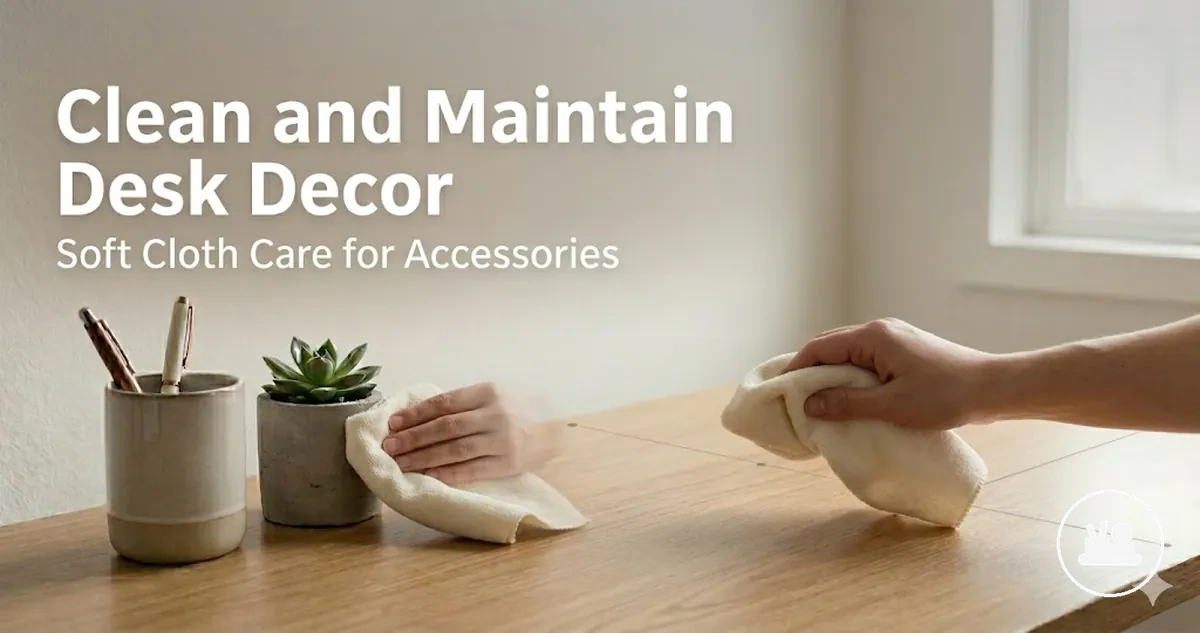
Care and Maintenance of Desk Decor Accessories
Care and maintenance of desk decor accessories refers to the ongoing cleaning, preventive care, and damage avoidance needed to keep workspace items presentable, hygienic, and usable in daily desk conditions. Desk decor accessories can collect dust, fingerprints, moisture, and residue because they sit close to hands, stationery, drinks, screens, and open work surfaces. Maintenance is not only about making accessories look clean; it can also help reduce surface wear and support durability when the care method fits the material type. Cleaning sensitivity depends on the surface finish, coating, and exposure level, so the same accessory category may need different handling in different workspaces. A wood tray, metal pen holder, and acrylic organizer may respond differently to moisture, abrasion, and residue buildup, which makes material variability the first maintenance boundary.
Desk decor accessories should be maintained with a material-aware approach rather than a single universal cleaning routine. Preventive care usually starts with limiting dust accumulation, moisture exposure, rough handling, and clutter pressure before deeper cleaning becomes necessary. Maintenance intensity varies by material type, surface finish, coating quality, workspace exposure, and how often the accessory is touched or moved. This means cleaning sensitivity and durability should be judged by the accessory’s surface behavior, not only by its decorative role. The next level of care separates maintenance logic across wood, metal, acrylic, matte, and glossy finishes.
Materials, Finishes, and Factors That Affect Cleaning Desk Decor Accessories
Cleaning sensitivity and maintenance requirements for desk decor accessories are determined primarily by material type and surface finish. Different material systems can respond differently to dust, moisture, residue, and routine handling because surface behavior is influenced by both the base material and its finish. The relationship between material properties and maintenance sensitivity is closely connected to materials and finishes, where surface characteristics shape long-term care considerations. A wood, metal, or acrylic surface may respond differently depending on coating quality and exposure conditions. Understanding maintenance needs is therefore best approached through a material → finish → sensitivity → maintenance implication framework.
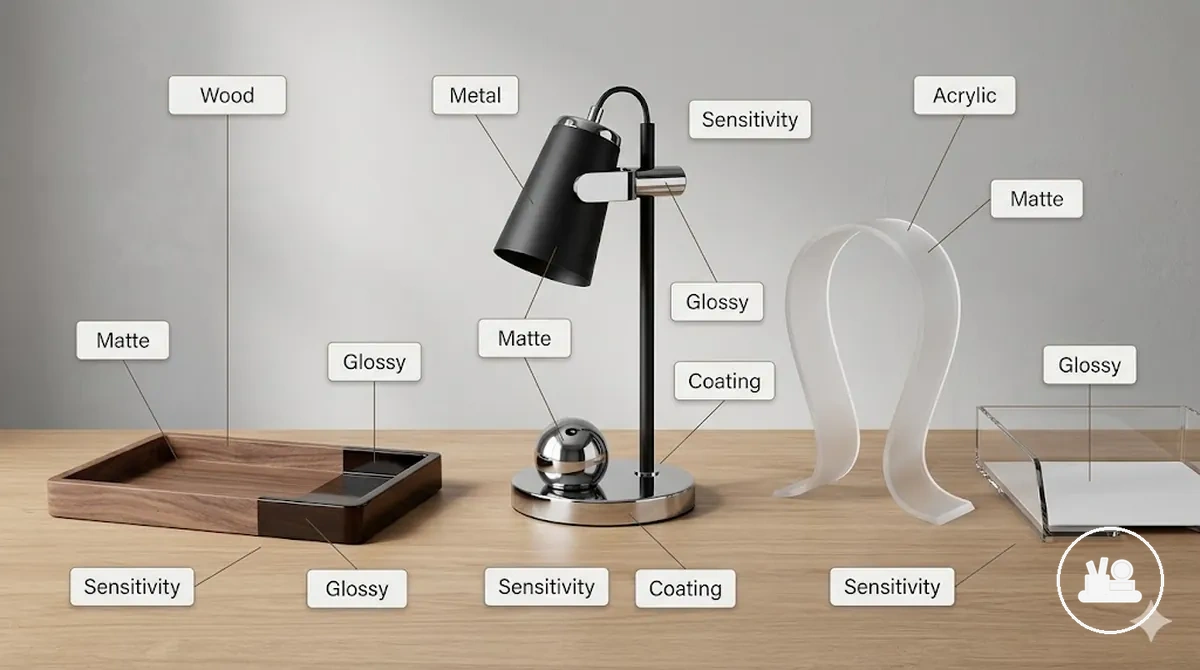
The table below outlines how material type and finish can influence cleaning sensitivity and maintenance implication without prescribing specific cleaning methods.
| Material | Finish | Sensitivity | Maintenance Implication |
|---|---|---|---|
| Wood | Matte or sealed | Varies by coating and exposure | Surface response may depend on finish quality and environmental conditions |
| Metal | Coated or uncoated | Often influenced by coating condition | Maintenance needs can change when surface protection changes over time |
| Acrylic | Glossy | May show higher surface sensitivity | Visual appearance can depend on how the surface responds to handling and exposure |
| Acrylic | Matte | Different from glossy finishes | Surface appearance may vary according to coating characteristics |
Material type alone does not determine maintenance requirements. Identical materials may behave differently because coating quality and environmental exposure can change surface response over time. Glossy and matte finishes may also show different cleaning sensitivity even when applied to the same base material. Why do identical materials behave differently? Coating quality and environmental exposure change how a surface responds to routine use and maintenance conditions. These distinctions provide useful comparison points across wood, metal, acrylic, matte, and glossy surfaces.
How to Clean Desk Decor Accessories (Wood, Metal, and Acrylic Methods)
Cleaning desk decor accessories starts with selecting a cleaning approach that matches material sensitivity and finish type. Different materials may respond differently to moisture, residue, friction, and drying conditions, so a surface-safe method depends on the characteristics of the item being cleaned. Wood, metal, and acrylic surfaces can require different levels of caution because surface response may vary with coating condition and exposure history. The goal is to remove contaminants while reducing unnecessary risk to finish integrity. A practical cleaning sequence typically follows four stages.
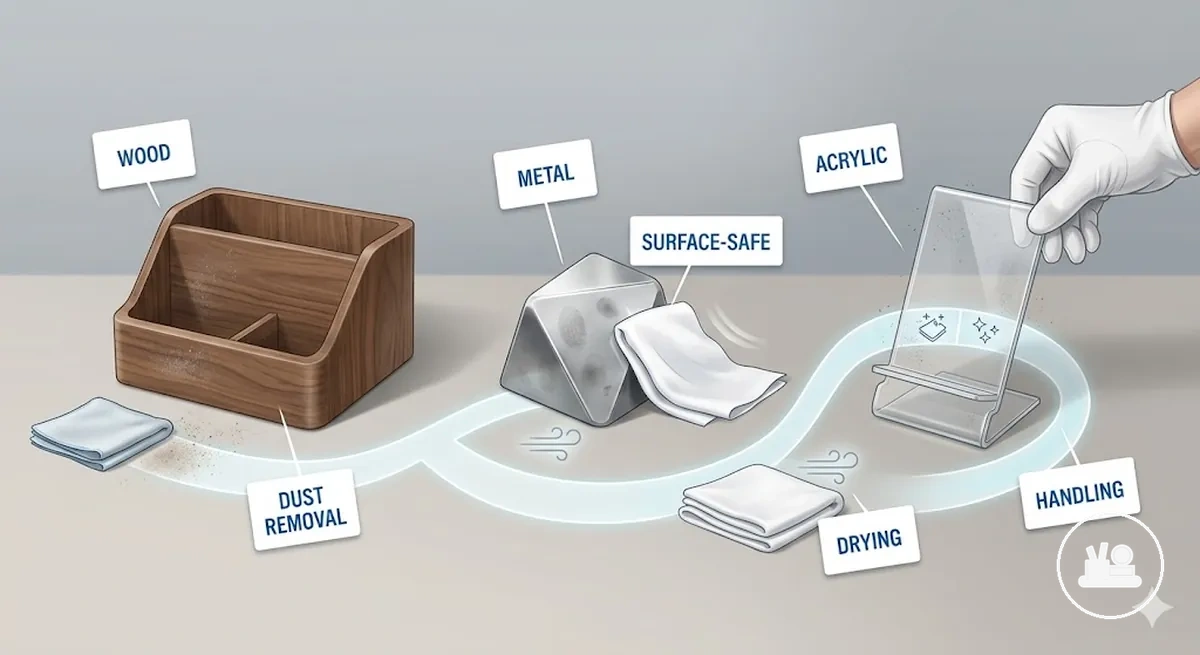
- Dust Removal: Remove loose dust and surface particles using an approach that suits the material type and finish condition.
- Surface-Safe Cleaning: Select a cleaning method and cleaning agent that align with material sensitivity and coating characteristics.
- Controlled Drying: Manage drying in a way that limits unnecessary moisture exposure when finish integrity may be affected.
- Protective Handling Awareness: Consider handling practices that may influence future cleaning needs, surface wear, and appearance.
When only light dust is present, the cleaning approach may focus mainly on dust removal with limited surface contact. Residue buildup often requires more attention because accumulated oils, spills, or particles can interact differently with a finish. The relationship between material sensitivity, cleaning method selection, and risk factor becomes more important as contamination increases. A wood surface may respond differently from a metal surface, while acrylic may show different surface behavior depending on finish characteristics. These conditions support separating cleaning decisions by material category.
A suitable cleaning approach depends on matching the material, finish condition, and exposure level to an appropriate method. Drying remains part of the process because retained moisture may influence surface appearance and long-term protection. Cleaning outcomes can vary according to how closely the selected method aligns with material sensitivity. Surface-safe decisions may help support finish integrity when conditions are assessed correctly. Material-specific limitations should remain the primary caution boundary.
Wood Desk Decor Care and Surface Protection Techniques
Wood desk decor accessories require maintenance methods that account for moisture sensitivity, heat exposure, and surface abrasion. The response of wood decor to cleaning and handling often depends on wood type and finish type because surface protection levels can vary. Finished wood surfaces may provide a different level of resistance than unfinished or matte surfaces, which can carry a higher absorption risk under certain conditions. Moisture exposure, friction, and prolonged contact with heat sources may affect surface appearance or condition over time. These characteristics make finish-related absorption and abrasion the primary risk factors.
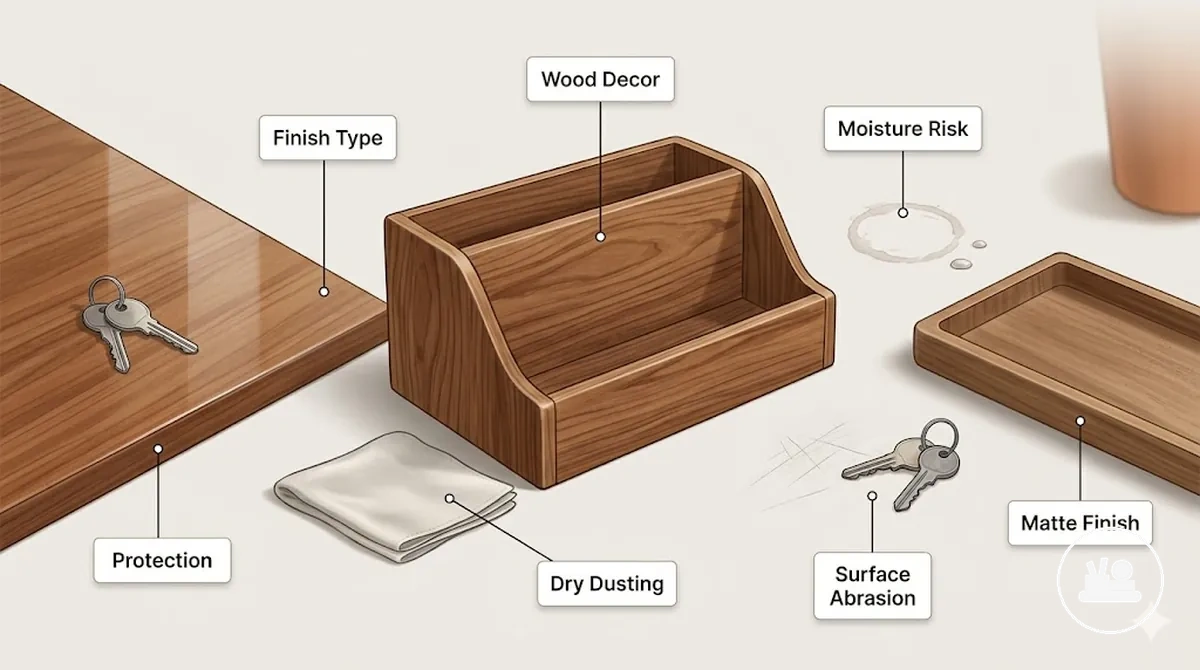
Wood decor maintenance typically focuses on reducing exposure to conditions that may increase wear or absorption risk. Key considerations may include:
- Dry dusting to reduce particle buildup that could contribute to surface abrasion during routine handling.
- Minimally damp wiping when surface residue requires attention and the finish type can tolerate limited moisture exposure.
- Protective handling habits that help reduce unnecessary contact with heat, moisture, and abrasive surfaces.
- Additional caution for unfinished or matte wood surfaces because absorption risk may be higher than on more protected finishes.
Maintenance outcomes often depend on the relationship between wood type, finish type, moisture sensitivity, and exposure conditions. Care methods that align with surface characteristics may help support appearance and longevity over time. Because wood surfaces can respond differently to moisture and abrasion, caution should increase when finish protection appears limited or uncertain.
Metal Desk Decor Cleaning and Preventing Tarnish or Corrosion
Metal desk decor accessories require maintenance that accounts for coating condition, oxidation risk, and moisture exposure. The behavior of metal decor often depends on whether the surface is coated or uncoated because a coating can influence how the metal finish responds to environmental conditions. Tarnish or corrosion may develop when oxidation risk increases through repeated exposure to moisture, residue, or surface wear. Maintenance therefore focuses on preserving coating condition and finish integrity rather than aggressively treating the surface. Understanding coating-dependent behavior is the foundation of managing long-term corrosion risk.
When metal decor is exposed to moisture, fingerprints, or environmental residue, oxidation risk may increase depending on the metal type and coating condition. Routine dust removal can help limit particle accumulation that may contribute to finish wear over time. Controlled polishing should remain within the limits of the existing coating because excessive abrasion may affect surface protection on certain finishes. Moisture exposure should be minimized where practical because prolonged contact can increase the likelihood of tarnish or corrosion under some conditions. Preventive handling and finish-aware maintenance can help support corrosion prevention.
Acrylic Desk Decor Cleaning Without Scratches or Clouding
Acrylic desk decor accessories require cleaning methods that prioritize surface clarity and account for scratch-sensitive behavior. Acrylic decor can respond differently to cleaning contact because surface hardness, friction, and chemical exposure may influence visible appearance over time. Even minor abrasion can contribute to micro-scratches that affect transparency or finish quality. Surface clarity is often preserved through cleaning approaches that reduce unnecessary friction and limit exposure to unsuitable cleaning agents. Improper cleaning practices may increase the risk of clouding or surface damage.
Acrylic decor is usually maintained through gentle cleaning methods that emphasize microfiber contact, controlled solution use, and careful anti-static handling. Microfiber materials can help reduce scratch risk when removing dust or residue from the acrylic surface. Cleaning solutions should remain compatible with acrylic sensitivity because certain forms of chemical exposure may contribute to clouding under some conditions. Anti-static handling practices may help reduce particle attraction that can increase cleaning frequency and surface contact. Because acrylic surfaces can be sensitive to abrasion and chemical interaction, preventive care should remain the primary caution boundary.
Dusting and Routine Maintenance for Desk Decor Accessories
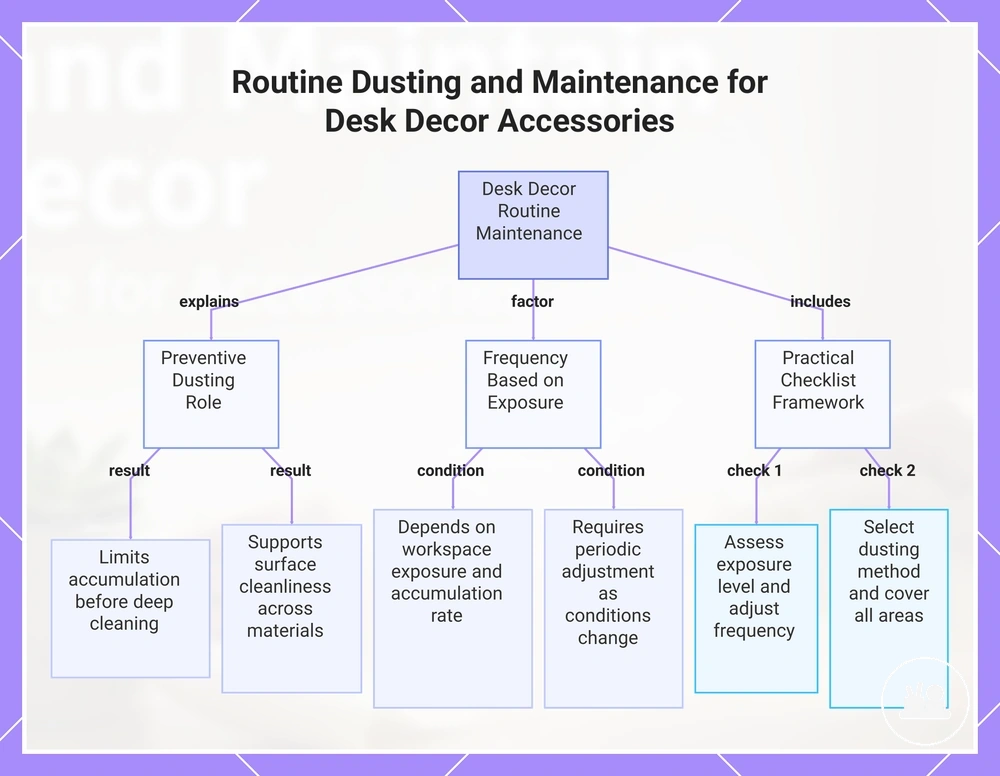
Routine maintenance of desk decor accessories begins with dusting because it helps limit dust accumulation before deeper cleaning becomes necessary. Dusting serves as a preventive maintenance layer that supports surface cleanliness by reducing buildup across different materials and finishes. Appropriate frequency depends on workspace exposure, surface location, and the rate at which particles collect in the environment. As dust accumulation increases, cleaning frequency may also need adjustment to maintain appearance and reduce buildup-related surface impact. The checklist below provides a simple framework for organizing routine maintenance decisions.
When desk decor accessories are placed in open, high-traffic, or dust-prone environments, dust accumulation may occur more quickly and influence maintenance frequency. Routine maintenance can be organized through exposure-based observation rather than fixed schedules. A practical checklist includes:
- Exposure Level: Assess whether workspace exposure is low, moderate, or high.
- Frequency: Adjust maintenance frequency according to visible dust accumulation.
- Tool: Select a dusting method that suits the accessory surface and finish condition.
- Coverage: Include exposed surfaces, edges, corners, and other dust-prone areas.
- Outcome: Consistent routine maintenance can help reduce buildup before deeper cleaning is required.
Because workspace exposure can change over time, maintenance schedules may also require periodic frequency adjustment.
This chart shows the role of dusting as preventive maintenance, how frequency depends on workspace exposure, and the practical checklist for routine upkeep.
Essential Cleaning Tools and Safe Supplies for Desk Decor Care
Cleaning tools for desk decor accessories influence cleaning safety because surface preservation often depends on matching the tool to the material and finish condition. A microfiber cloth, compatible cleaning solutions, and other low-abrasion tools may help support surface safety when used appropriately. Abrasion risk can increase when rough materials or unsuitable tools contact sensitive surfaces. Tool selection is therefore closely connected to long-term appearance, durability, and desk decor accessory value. A practical way to organize cleaning tools is through three compatibility-based categories.
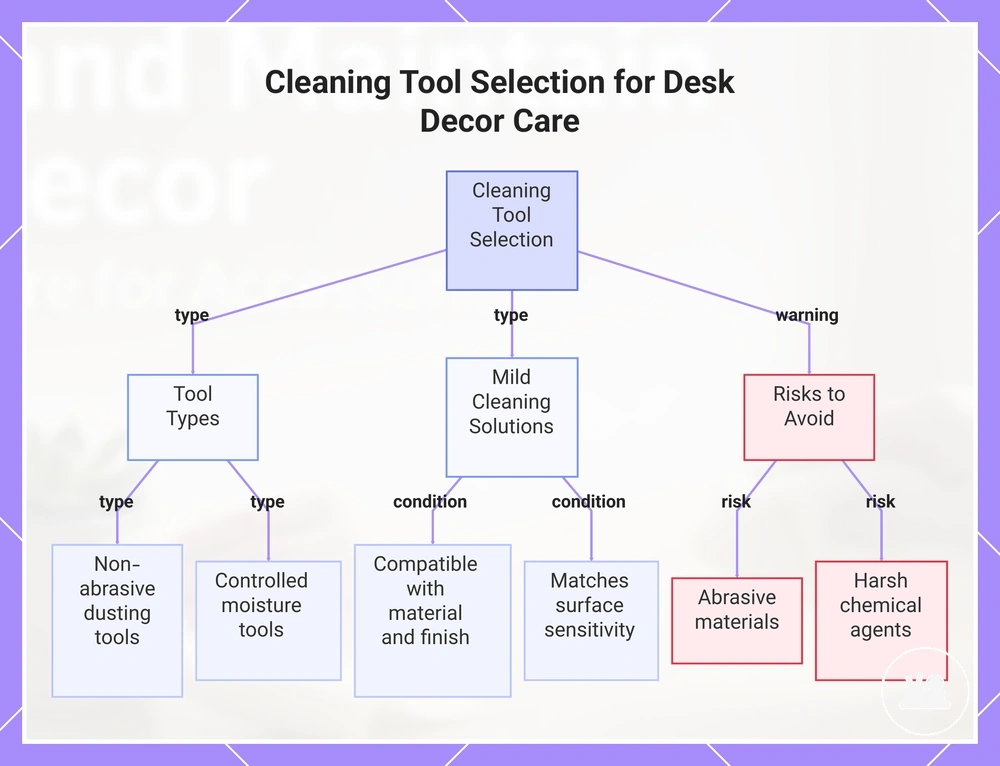
Cleaning tools should be selected according to surface sensitivity and the intended level of cleaning. The following groups provide a simple framework:
- Dry Tools: Microfiber cloth and other non-abrasive dusting materials that may help remove loose particles while reducing abrasion risk.
- Damp-Safe Tools: Soft cleaning materials suitable for controlled moisture use when the surface condition allows it.
- Mild Cleaning Solutions: Cleaning solutions that may be appropriate when compatible with the material, finish, and surface sensitivity of the accessory.
Abrasive materials and harsh chemical agents may increase the likelihood of surface wear, finish deterioration, or cleaning-related damage under certain conditions. Proper tool selection supports surface safety and can help reduce common maintenance mistakes that result from incompatible cleaning tools and supplies.
This chart shows the three compatibility-based cleaning tool categories and the risks of using abrasive materials and harsh chemicals.
Common Mistakes That Damage Desk Decor Accessories During Cleaning
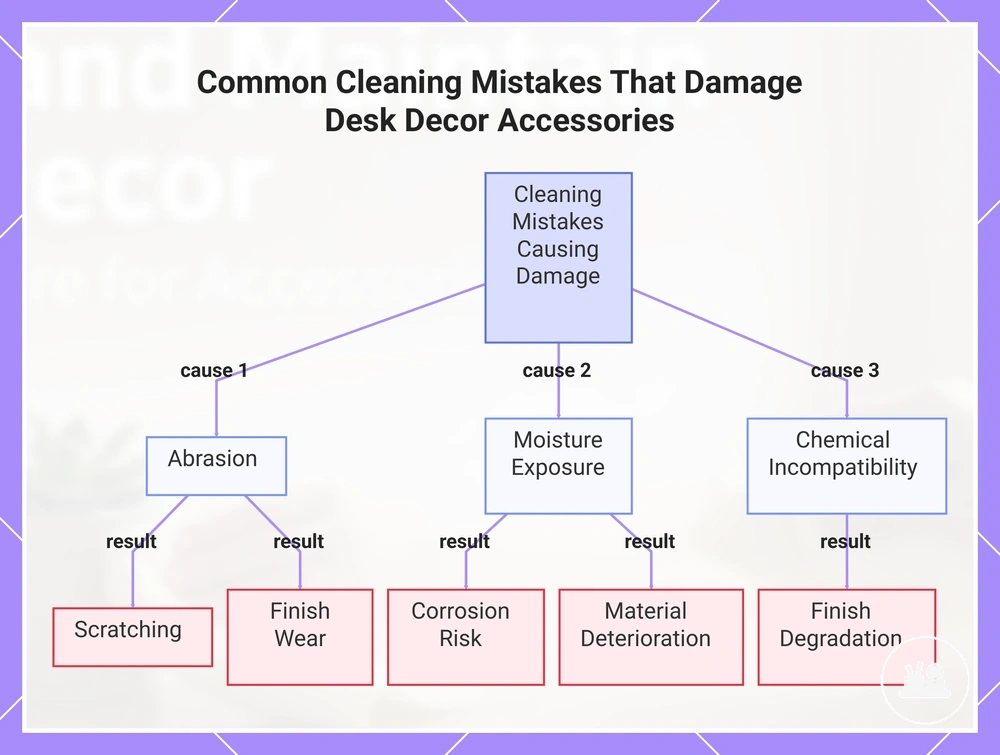
When surface damage appears after cleaning, cleaning mistakes are often a contributing factor because finish quality can be sensitive to abrasion, moisture exposure, and unsuitable chemical use. Desk decor accessories made from different materials may respond differently to the same cleaning action, which increases the importance of material-aware maintenance decisions. Abrasion can affect surface appearance through scratching or finish wear, while excessive moisture exposure may increase corrosion risk or contribute to material deterioration under certain conditions. Chemical incompatibility may also contribute to finish degradation when cleaning agents interact poorly with a surface. These relationships provide a useful framework for understanding common cleaning errors and their outcomes.
When abrasive scrubbing, prolonged moisture exposure, or unsuitable chemical use occurs, the visible outcome may depend on the material type and finish condition. Abrasion may contribute to surface damage, moisture exposure may increase corrosion risk on susceptible materials, and chemical use may accelerate finish degradation in certain situations. Understanding these error patterns can help explain why similar cleaning actions produce different results across materials. This awareness can also support better evaluation when choosing durable desk decor accessories, since long-term appearance may depend on how surfaces respond to maintenance conditions. Prevention begins with recognizing the risk mechanisms behind common cleaning mistakes.
This chart shows three main types of cleaning mistakes—abrasion, moisture exposure, and chemical incompatibility—and how each can damage desk decor accessories.
Preventing Wear, Stains, and Long-Term Surface Damage on Desk Decor Accessories
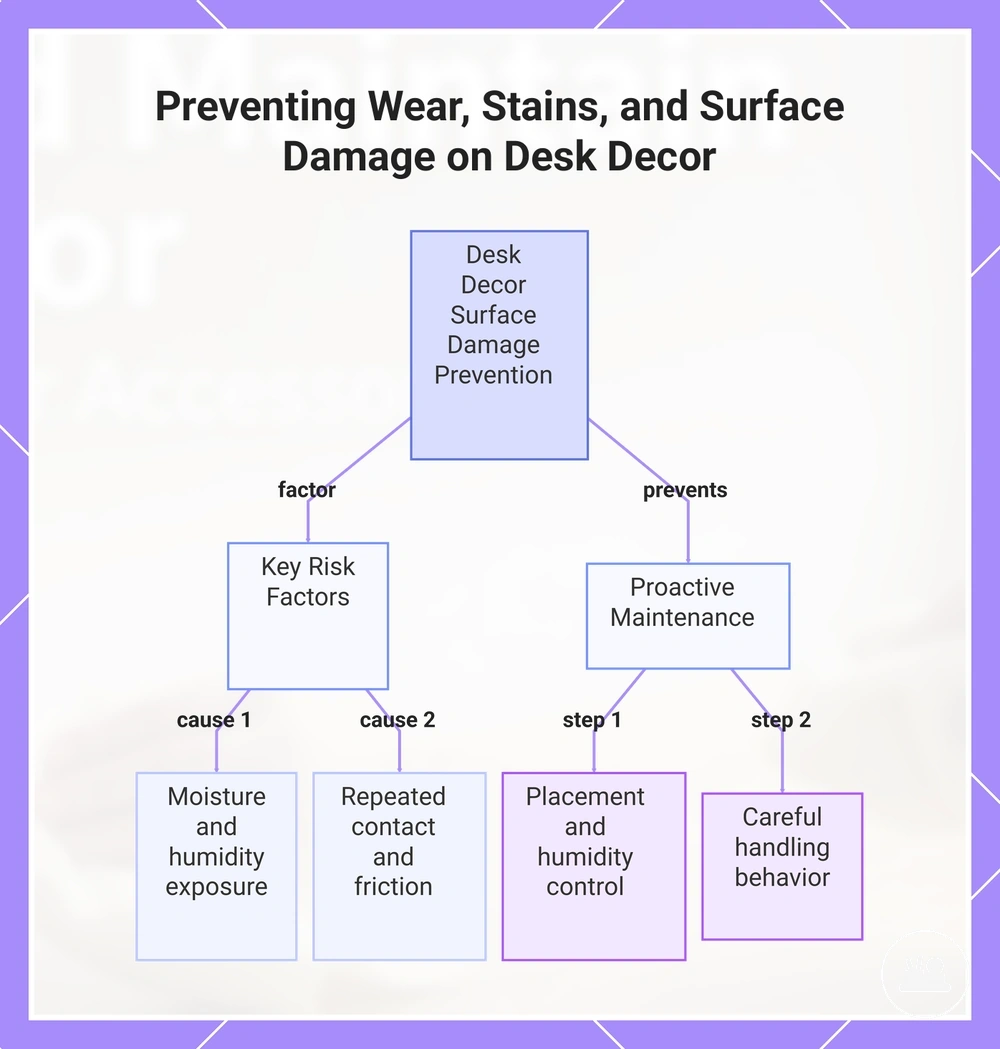
Preventing wear, stains, and long-term surface damage on desk decor accessories depends on reducing exposure to environmental and handling-related risk factors before visible deterioration occurs. Desk decor accessories may experience gradual changes in appearance when exposure to dust, moisture, sunlight, or frequent contact accumulates over time. Surface protection is often supported through placement strategy, humidity awareness, and careful handling behavior that aligns with the material and finish condition. The relationship between environment, exposure level, and material response can influence how wear develops under different usage conditions. Prevention is therefore best approached as proactive maintenance focused on limiting long-term risk.
When desk decor accessories remain in the same workspace for extended periods, environmental exposure can gradually influence surface condition depending on humidity levels, placement, and handling frequency. Humidity may affect material response in certain surfaces, while repeated contact can contribute to wear through ongoing friction and handling stress. Placement near moisture sources, heat-generating equipment, or areas with persistent environmental exposure may increase risk under some conditions. Surface protection and longevity often depend on how effectively these exposure factors are managed throughout daily use. Long-term maintenance decisions should therefore consider the surrounding environment as an ongoing exposure cue.
This chart shows the key risk factors and proactive maintenance strategies to prevent surface damage on desk decor accessories.
Frequently Asked Questions About Cleaning and Maintaining Desk Decor Accessories
What is an appropriate maintenance frequency for desk decor accessories? Maintenance frequency depends on workspace exposure, material type, and visible dust or residue accumulation.
Desk decor care is usually more effective when maintenance is adjusted to actual conditions rather than a fixed schedule. Accessories in open or higher-exposure environments may require attention more often than those in protected locations.
Can the same cleaning approach be used on all desk decor accessories? No, material compatibility can vary according to the surface, finish, and coating condition.
Wood, metal, acrylic, and mixed-material accessories may respond differently to moisture, friction, or cleaning agents. Material compatibility should be considered when an accessory combines multiple materials or includes delicate finishes.
Should delicate-finish accessories receive different care? In many cases, yes, because delicate finishes may show visible surface changes more easily than more protected surfaces.
Glossy, matte, coated, and unfinished finishes can have different sensitivity levels. This cleaning FAQ helps resolve uncertainty by recognizing that maintenance frequency, material compatibility, and desk decor care decisions often depend on finish condition and environmental exposure.
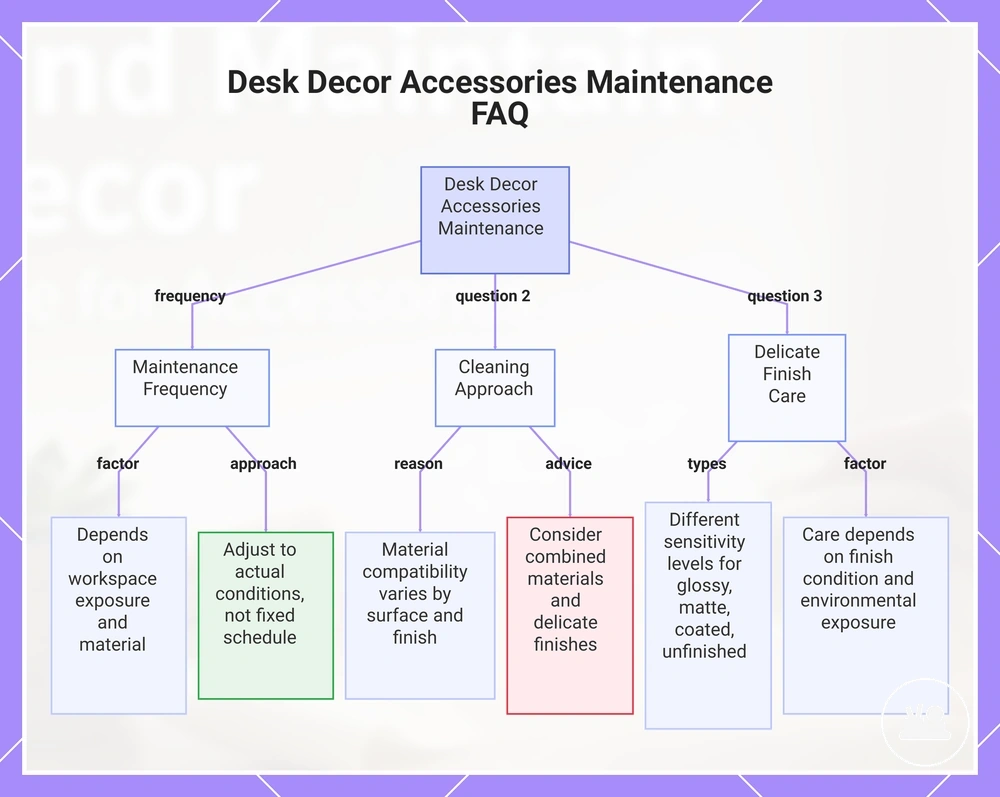
This chart summarizes the key factors for cleaning and maintaining desk decor accessories, covering maintenance frequency, material compatibility, and care for delicate finishes.