
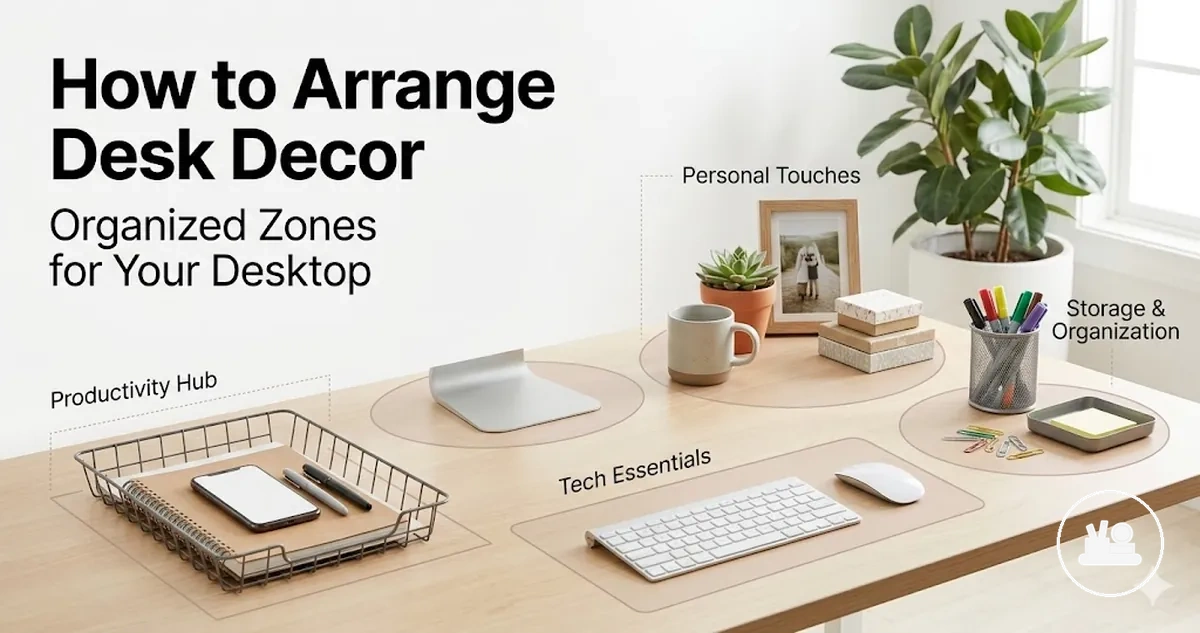
Desk Decor Accessories Arrangement as a Structured Approach to Balanced and Functional Workspace Layout
Desk decor accessories arrangement means placing decorative and functional desk items in a controlled layout that supports usability, organization, and visual clarity. It is not only styling a surface; it is a workspace structuring method that decides where each accessory belongs, how much space it should occupy, and whether it improves access or adds clutter. A good arrangement can make desk decor accessories easier to use while keeping the main work area clear. The right configuration may vary by desk size, daily workflow, and the mix of trays, holders, lamps, plants, mats, or storage pieces. The main principle is to balance functionality with visual balance before choosing exact placement methods.
A structured arrangement can make a workspace feel clearer because each accessory has a defined role and position. Functional pieces, such as organizers or trays, may support workflow when they are placed near the items they group or control. Decorative pieces can improve visual order when they use spacing, symmetry, or contrast without taking over the usable desk surface. Layout clarity also supports clutter control because unnecessary items become easier to notice and remove. A disorganized desk often mixes storage, decoration, and active work items in the same area, which can make access less direct. A structured desk separates these roles so the surface can remain usable, balanced, and easier to adjust through structured methods.
Arranged desk state: desk decor accessories are grouped by purpose, placed with enough spacing, and aligned with the way the workspace is used.
Disorganized desk state: accessories compete for surface space, interrupt access to work items, and reduce visual balance through weak placement logic.
On a compact desk, arrangement may depend more on vertical storage, smaller accessories, and open surface area. On a larger desk, the same idea may shift toward zones, symmetry, and clearer separation between work tools and decorative accents. A writing-focused setup may need more direct access to pens, paper, and trays, while a screen-focused setup may need fewer foreground objects and stronger cable or accessory control. These differences make desk decor arrangement a practical process rather than a fixed style rule. The next layer is to break the layout into principles, zoning, and steps so each accessory supports the workspace instead of simply filling it.
Core principles for balanced desk decor arrangement and functional workspace clarity
Arrangement principles are decision rules that guide how desk decor accessories are positioned to support balance, accessibility, and visual hierarchy within a workspace. These principles help evaluate layout quality before any specific styling or placement choice is made. A structured arrangement considers how desk decor accessories relate to one another, how easily they can be reached, and how clearly they contribute to the overall layout. The goal is not to fill available space but to organize it with purpose. Because workspace needs may vary by desk size and usage pattern, arrangement principles provide a flexible framework rather than a fixed formula. Three core principles guide most desk decor accessory layouts: spatial balance, prioritization of essential items, and usability-first placement.
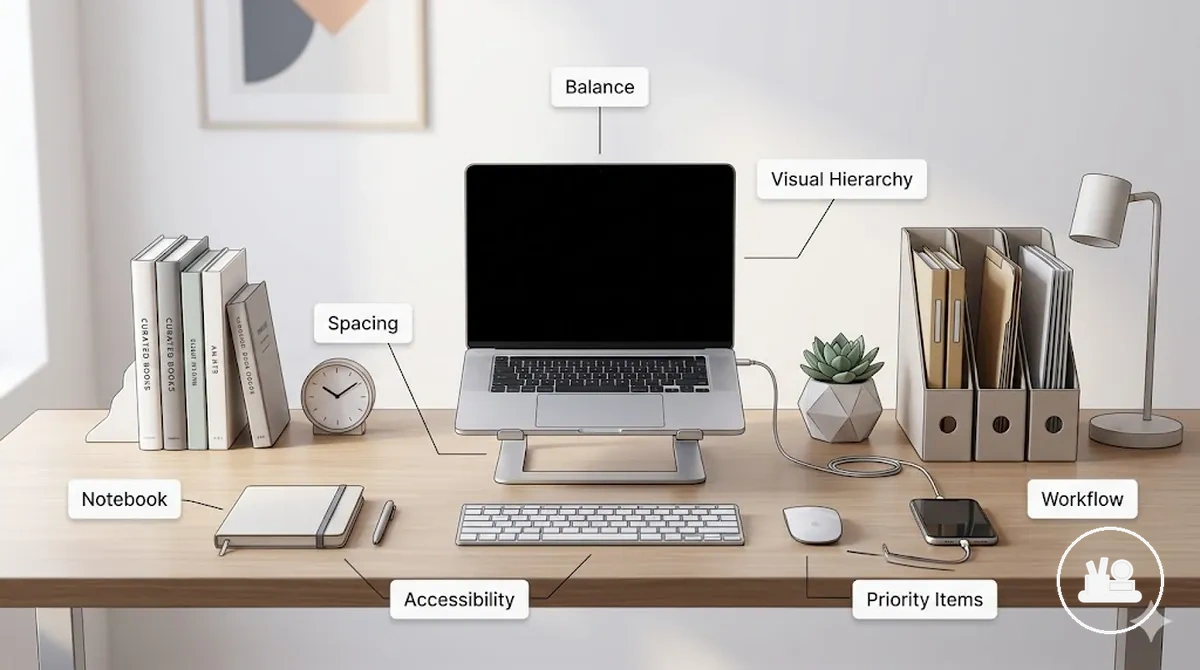
Spatial balance focuses on spacing and distribution so desk decor accessories do not visually overwhelm one area while leaving another underused. Prioritization of essential items places frequently used accessories where accessibility can support a smoother workflow and more direct access. Usability-first placement evaluates each accessory by its function before its decorative role, which may help maintain organization while preserving visual balance. Visual hierarchy reinforces this principle by giving important items greater prominence while supporting elements remain secondary. In work, study, and hybrid desk setups, the balance between decoration and function may shift according to daily activities and workspace demands. When these principles are applied together, desk decor accessories can contribute to a layout that feels organized, accessible, and visually clear while remaining adaptable to changing needs.
Desk decor zones and layout planning for functional workspace organization
Desk zoning is a spatial organization method that assigns specific functions to different areas of a desk to improve layout clarity and workspace usability. Instead of treating the desk as a single surface, desk zoning divides it into workspace zones that support distinct purposes. This approach helps desk decor accessories occupy meaningful positions based on their role rather than available space alone. A structured layout can make organization easier to evaluate because each area has a defined function. The exact zoning pattern may vary according to desk dimensions and daily usage requirements. Most desk layouts can be understood through a primary work zone, a storage area, and a visual balance zone.
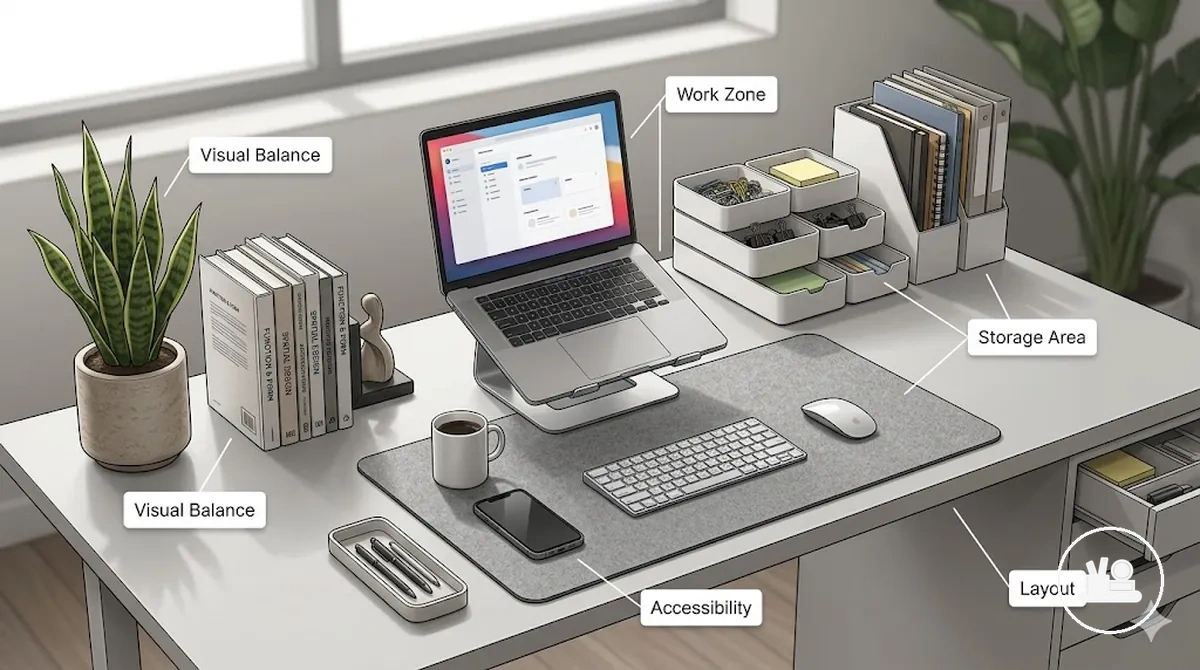
The following workspace zones illustrate how desk zoning supports organization and clarity.
| Zone | Purpose | Effect on Layout |
|---|---|---|
| Primary Work Zone | Supports active tasks and frequently accessed items | Can improve usability and workflow visibility |
| Storage Area | Holds supporting accessories and less frequently used items | May reduce surface congestion and support organization |
| Visual Balance Zone | Accommodates decorative desk decor accessories | Can contribute to visual balance without dominating the workspace |
These workspace zones work together as a planning framework rather than a fixed arrangement pattern. On compact desks, zoning may require greater overlap between functions, which is often discussed in small desk arrangement strategies. Larger desks may allow clearer separation between the primary work zone, storage area, and visual balance zone. The purpose of desk zoning is not to prescribe exact placement but to create a layout structure that supports accessibility, organization, and clear use of space. As desk size and accessory combinations change, desk zoning can adapt while maintaining functional workspace organization.
Step-by-step process for arranging desk decor accessories in a structured workspace layout
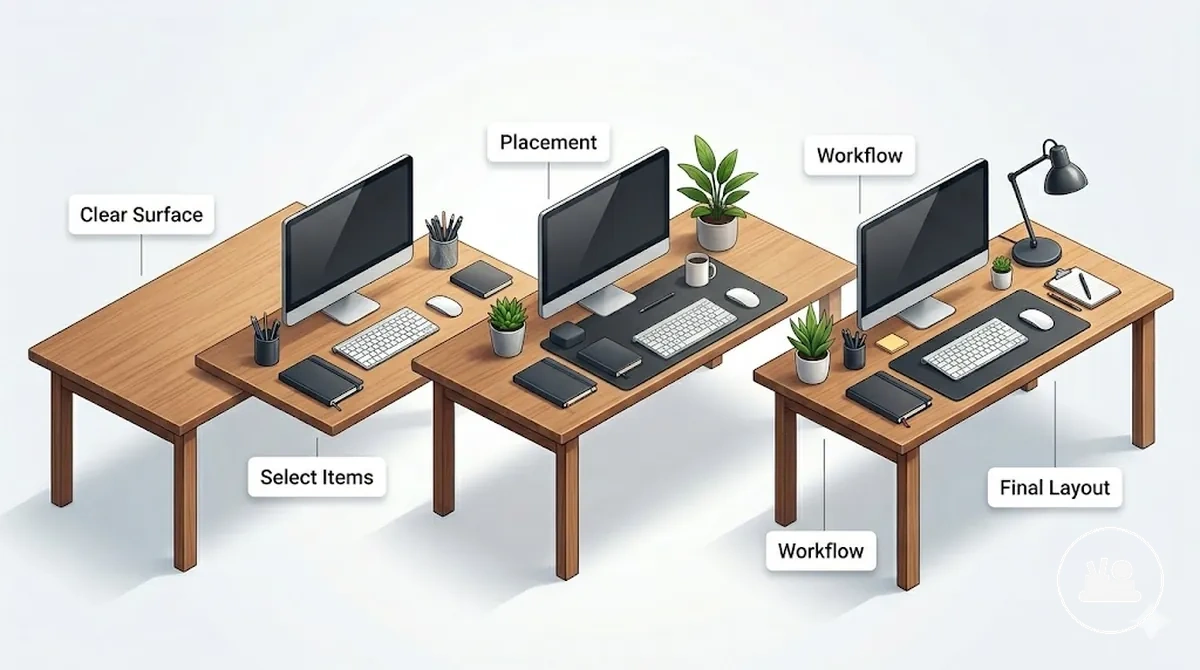
The arrangement process starts with workspace clearing so desk decor accessories can be evaluated and positioned with purpose. Removing unnecessary items creates a clearer view of available space and helps identify which accessories support organization and workflow. This approach allows placement decisions to be based on function rather than convenience. A structured arrangement process typically moves from preparation to positioning and then to final refinement. The exact layout may vary by desk size, accessory selection, and daily use patterns. Following a clear sequence can help create a workspace that remains organized and visually consistent.
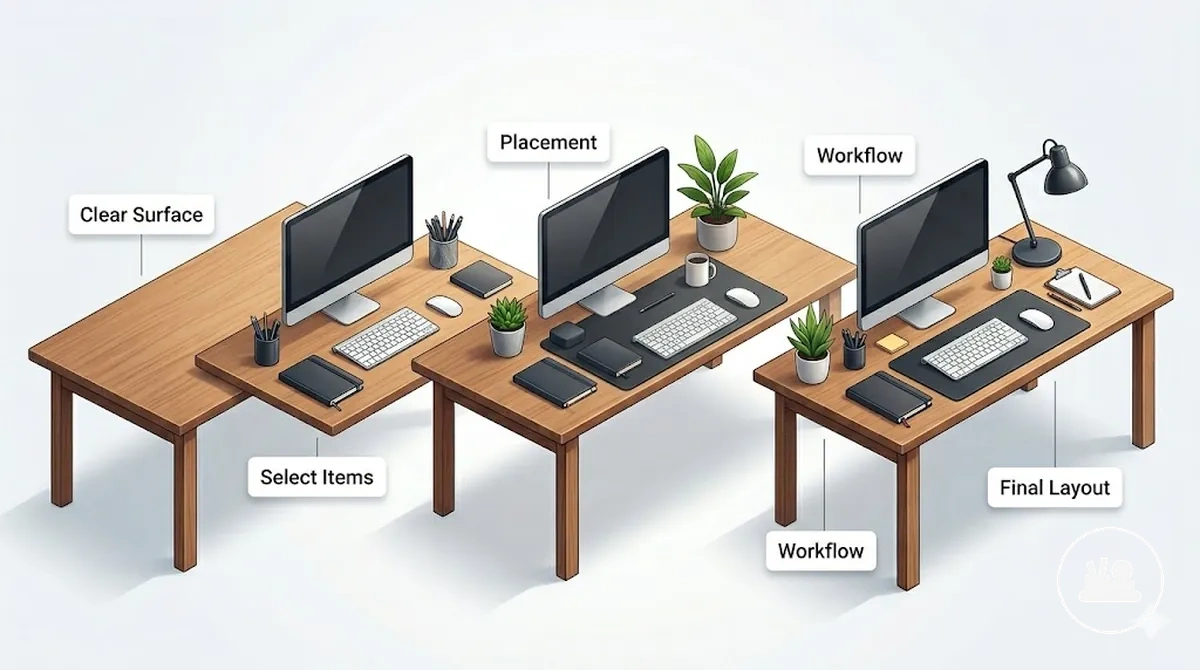
The following steps outline a practical sequence for completing the arrangement process.
- Clear the desk surface to establish a clean foundation for evaluating desk decor accessories and available workspace.
- Select the accessories that support organization, usability, or visual enhancement within the intended layout.
- Place frequently used items in accessible locations so workflow can remain direct and easier to maintain.
- Position supporting accessories around primary items to improve organization without reducing access to essential tools.
- Adjust spacing between accessories so placement appears deliberate and visual congestion may be reduced.
- Review the overall arrangement to identify accessories that no longer contribute to functionality or layout clarity.
- Align decorative and functional elements to create a balanced final placement that supports both organization and visual order.
When the sequence is completed, desk decor accessories can function as part of a coordinated workspace layout rather than as separate objects competing for attention. The final arrangement may be refined over time if workflow requirements, accessory combinations, or workspace conditions change.
Styling vs organizing desk accessories for visual balance and practical usability
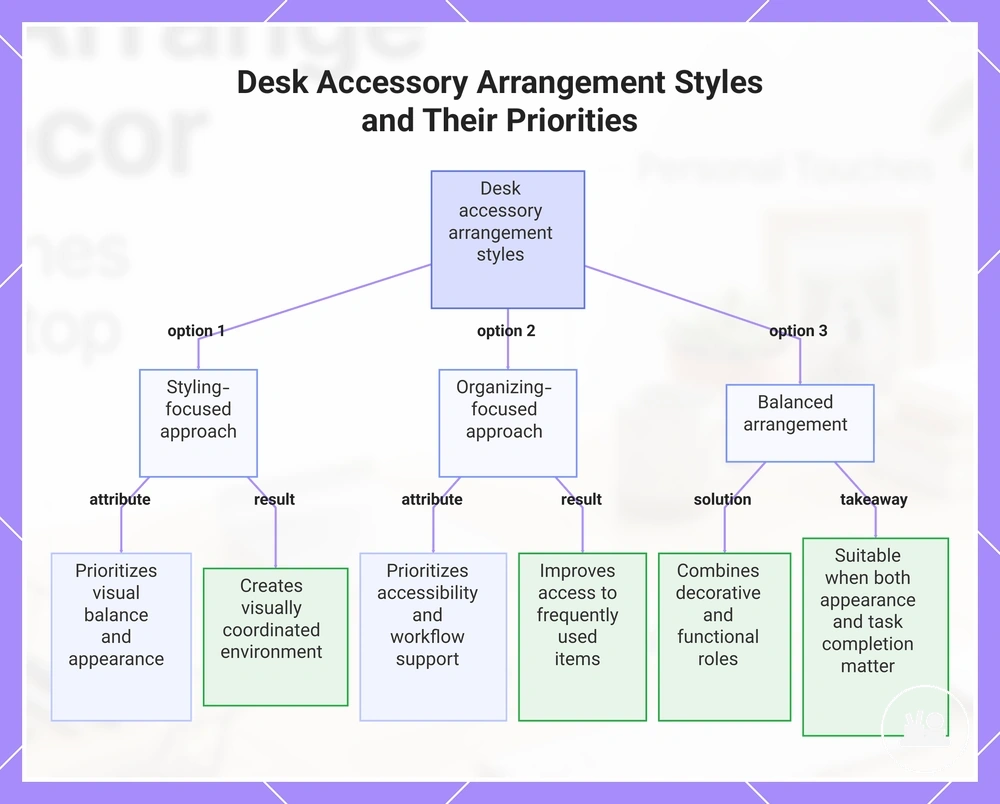
Desk decor accessories arrangement depends on whether aesthetics or functional efficiency receives greater emphasis within the workspace. A styling-focused approach prioritizes visual balance, appearance, and decorative cohesion, while an organizing-focused approach prioritizes accessibility, order, and workflow support. Neither arrangement style is inherently superior because suitability often depends on how the workspace is used. Styling may help create a more visually coordinated environment, while organizing may help improve access to frequently used items. Many desk layouts combine both approaches to balance appearance and practical usability. The comparison is best understood through visual impact, usability, and workflow clarity.
A styling-focused arrangement uses desk decor accessories primarily as visual elements. The key attribute is aesthetic presentation, which can create a more intentional and balanced appearance. An organizing-focused arrangement uses desk decor accessories primarily as functional elements. The key attribute is organization, which may make tools and accessories easier to locate and access during daily activities. For users evaluating functional vs decorative desk accessories, the distinction often depends on whether decorative value or practical support receives greater priority within the layout.
Visual impact, usability, and workflow clarity can change according to the arrangement style. Styling-focused layouts may emphasize symmetry, decorative placement, and visual consistency. Organizing-focused layouts may emphasize accessibility, efficient placement, and reduced surface congestion. In a workspace where appearance is a primary consideration, styling elements may receive greater attention. In a workspace centered on task completion, organizing elements may receive greater emphasis. A balanced arrangement can combine both approaches by assigning desk decor accessories clear decorative and functional roles.
This chart compares the styling-focused and organizing-focused approaches to desk accessory arrangement, along with a balanced approach, highlighting their key priorities and outcomes.
Desk tray organizer and storage placement techniques for efficient desk arrangement
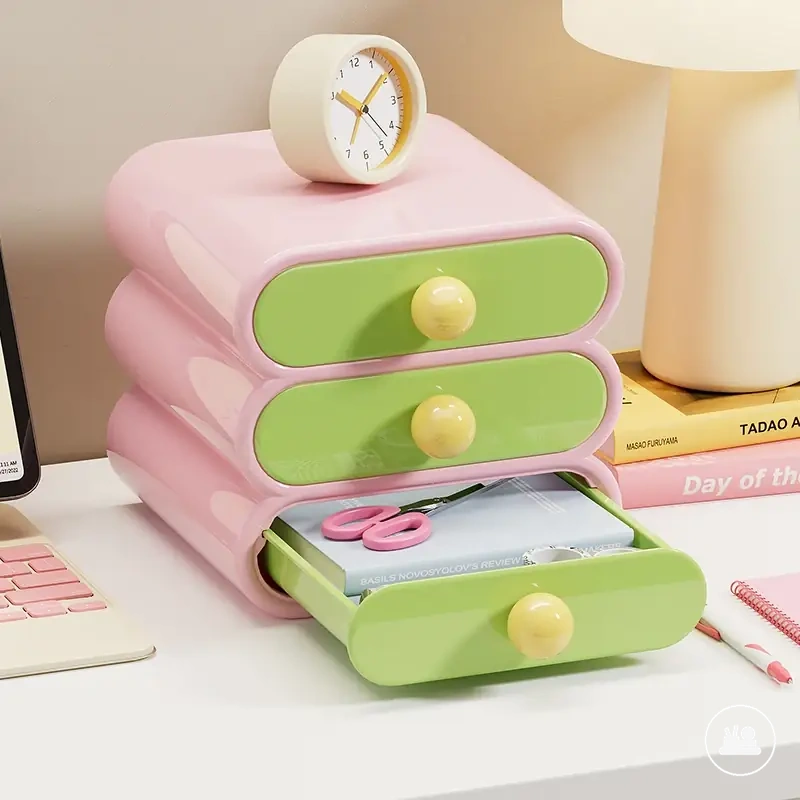
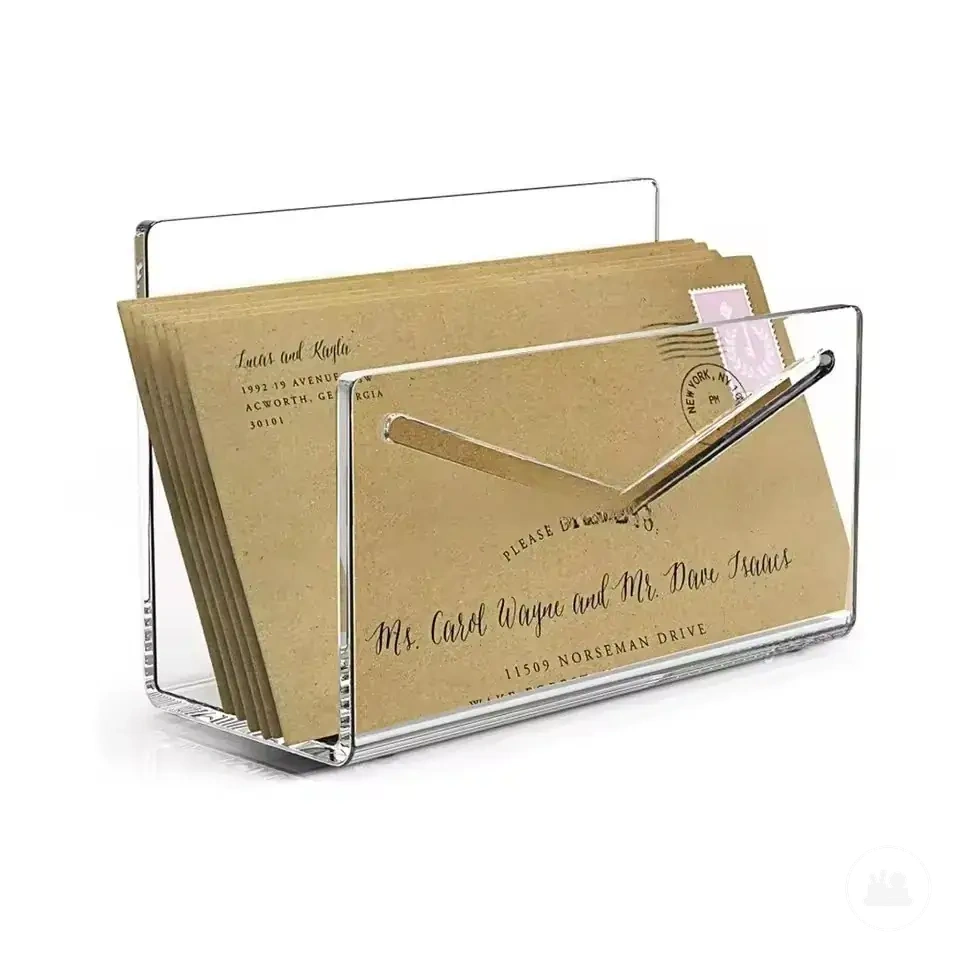
A desk tray organizer can reduce clutter and improve workflow clarity by grouping related items and keeping essential accessories easier to access. The primary role of a desk tray is to create structured placement for small objects that might otherwise occupy active workspace areas. An organizer can improve accessibility when items are arranged according to how often they are used. Functional grouping helps keep related accessories together, which may make retrieval more predictable during daily tasks. Placement decisions are often more effective when they support workflow patterns rather than available space alone. As a result, desk tray organizers can contribute to a more organized and efficient desk arrangement.
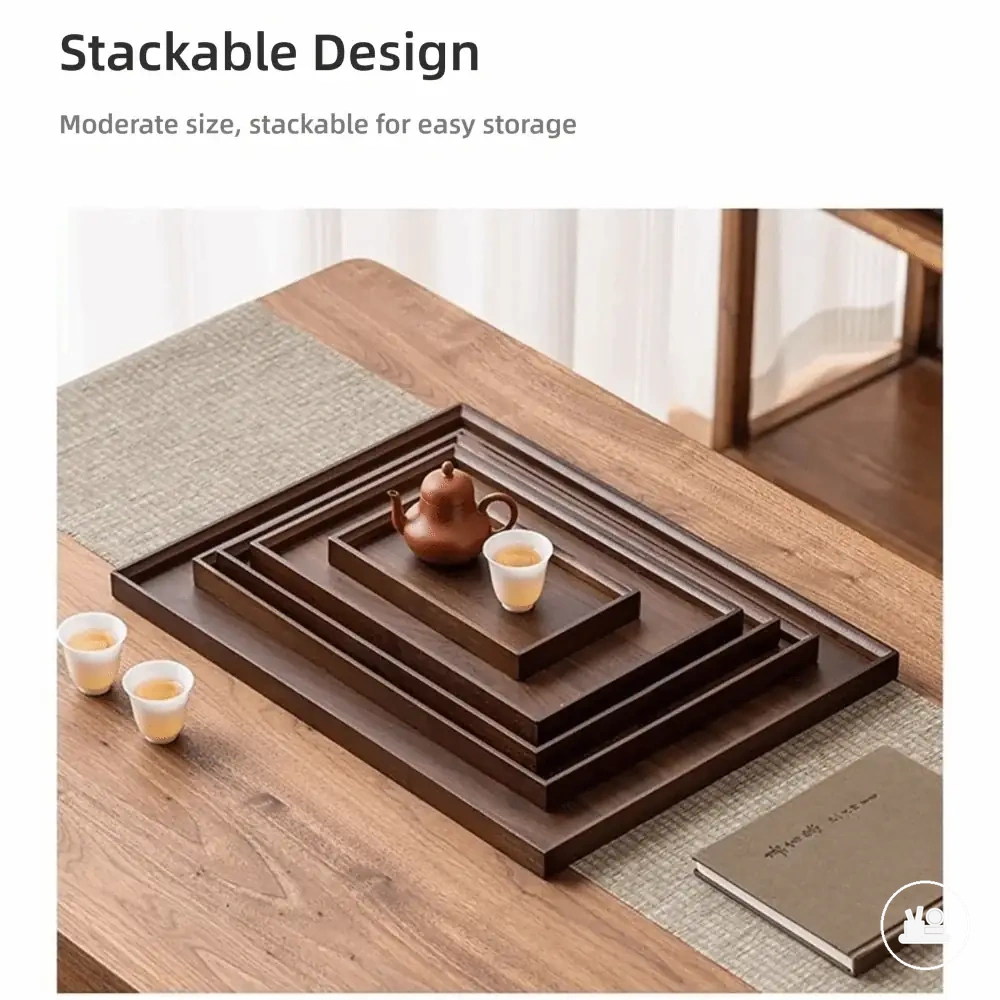
Here are product examples that may make comparison easier. Before buying, always review the compatibility criteria, essential features, and product details.


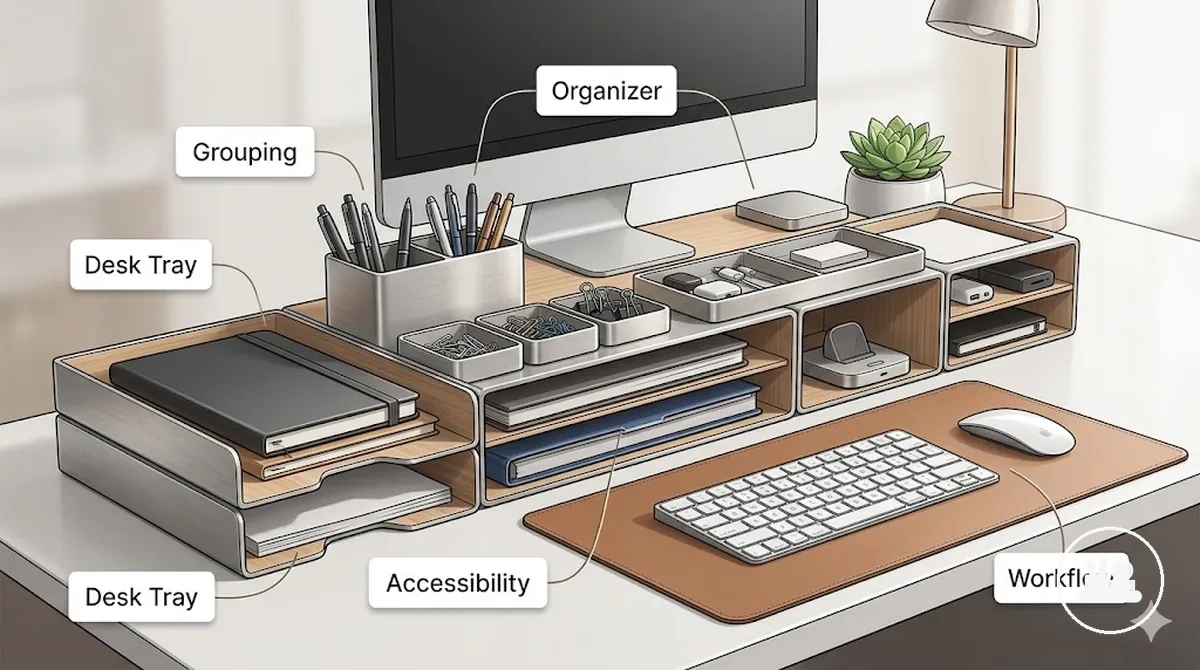
The following checklist supports practical organizer placement and usage.
- Frequency-based placement: Place frequently used items in a desk tray or organizer within comfortable reach so accessibility can support everyday workflow.
- Reach optimization: Position organizers near the activity area where stored items are most often used to reduce unnecessary movement.
- Functional grouping: Keep related accessories together so grouping improves organization and makes item retrieval more consistent.
- Desk tray → placement rule → efficiency outcome: A desk tray placed near active work areas can keep commonly used items accessible and may reduce surface clutter.
- Organizer → placement rule → efficiency outcome: An organizer assigned to specific item categories can improve accessibility and support workflow clarity.
- Accessibility review: Reassess placement periodically to determine whether stored items remain easy to reach and relevant to current workspace needs.
When desk tray and organizer placement aligns with usage patterns, grouping and accessibility can work together to support a more efficient workspace. The exact arrangement may change over time, but a structured storage approach often helps maintain organization and workflow clarity.
How to arrange small desk decor accessories in compact workspace environments
Small desk arrangement prioritizes vertical storage and minimal surface occupation so essential desk decor accessories can remain useful without overwhelming the workspace. A small desk often has limited usable area, which makes placement decisions important for accessibility and workflow. Vertical storage can move accessories away from active work areas while keeping them available when needed. A compact layout may benefit from multi-functional accessories because fewer separate items occupy the surface. Space-saving placement focuses on preserving usability while reducing visual and physical congestion. As a result, a minimal setup can support organization when accessories are selected and arranged according to workspace constraints.
- Limited surface area → vertical storage → more usable workspace: Shelves, risers, or elevated organizers can move accessories upward and help preserve active desk space.
- Small desk constraint → multi-functional accessories → reduced footprint: Accessories that combine storage and decorative functions may reduce the number of separate items required.
- Compact layout requirement → grouped placement → improved accessibility: Keeping related desk decor accessories together can make retrieval easier and reduce scattered placement.
- Restricted workspace → reduced footprint design → clearer organization: Smaller accessories may support a more efficient arrangement when space is limited.
- Minimal setup goal → selective accessory use → lower visual congestion: Choosing only relevant accessories can help maintain workspace clarity.
- Workflow constraint → proximity-based placement → easier daily use: Frequently used items may remain closer to active work areas while secondary items occupy supporting positions.
These space-saving adaptations focus on workspace efficiency rather than decorative minimalism. Users seeking a style aligned with minimal desk decor may apply similar placement strategies, while users prioritizing organization can explore clutter-free desk decor accessories approaches. When vertical storage, compact layout planning, and functional placement work together, a small desk can remain organized, accessible, and visually balanced despite limited space.
Here are product examples that may make comparison easier. Before buying, always review the compatibility criteria, essential features, and product details.
Common mistakes in desk decor arrangement and clutter control strategies
When clutter develops despite adding desk decor accessories, arrangement errors are often linked to placement decisions, weak zoning, or visual imbalance. Arrangement errors occur when accessories occupy space without supporting workflow, accessibility, or layout clarity. Even an organized collection of desk decor accessories can appear cluttered if related items are distributed without a clear placement pattern. Weak zoning may cause functional and decorative items to compete for the same workspace area. Visual imbalance can emerge when accessories are concentrated around a single focal point or side of the desk. Identifying these issues early can help prevent workflow disruption and maintain a more organized workspace.
| Mistake | Cause | Effect | Correction |
|---|---|---|---|
| Overcrowding | Too many desk decor accessories occupy active work areas | Clutter may reduce accessibility and interrupt workflow | Remove low-priority items and preserve space for active tasks |
| Weak zoning | Functional and decorative accessories share the same placement area | Workspace organization may become less predictable | Separate accessory groups according to their intended use |
| Visual imbalance | Accessories are concentrated on one side or around a single feature | The layout may feel uneven and visually distracting | Adjust distribution and apply principles related to visual balance with accessories |
| Scattered grouping | Related accessories are stored in different locations | Item retrieval may require more effort and disrupt workflow | Keep similar accessories together to improve placement logic |
| Minimal setup clutter | Few accessories are present but placement lacks structure | A minimal setup may still appear crowded or inefficient | Refine placement according to usage patterns and available space |
These arrangement errors often develop gradually and may become noticeable when workflow efficiency or visual clarity declines. Preventive adjustments focused on zoning, placement consistency, and imbalance correction can help reduce recurring clutter while supporting a more functional and visually balanced desk arrangement.