Minimal Desk Decor Accessories for a Clean Workspace
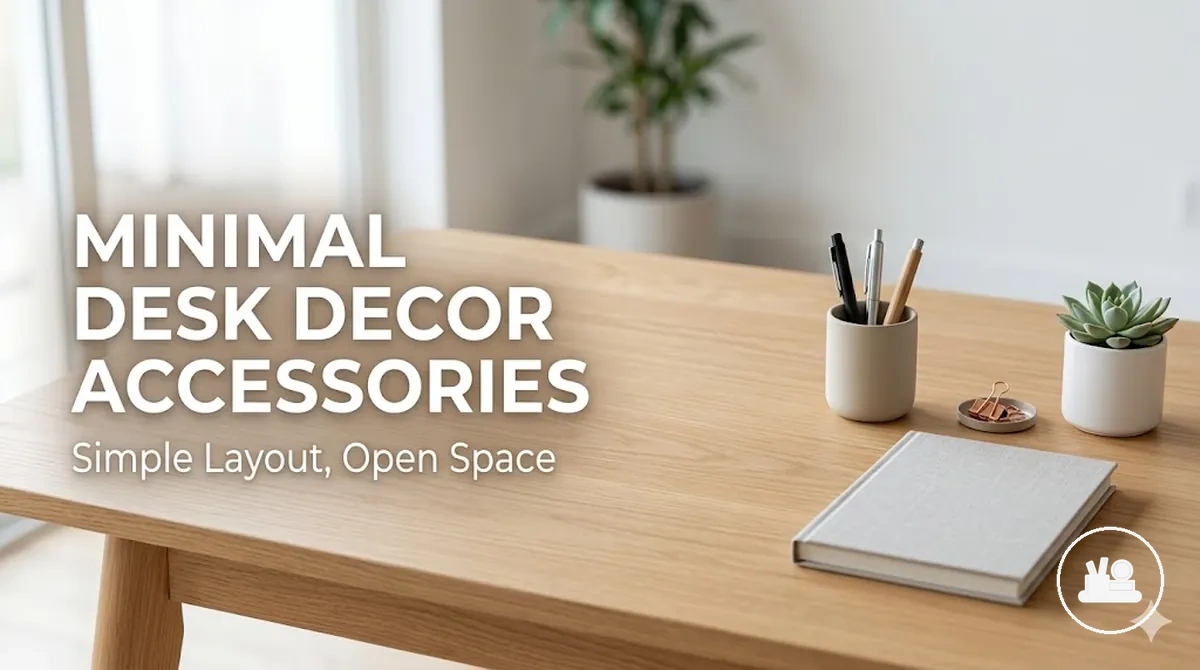
Minimal desk decor accessories are desk items that support a clean workspace through restrained styling, useful storage, open surface area, and low visual noise. They belong inside the broader category of desk decor accessories, but their role is narrower: they should help the desk feel calmer and easier to use without making decoration the main purpose.
A minimal accessory fit depends on desk size, storage needs, color palette, material finish, and daily-use habits. A tray, organizer, mat, pen holder, cable piece, or small decorative object can fit the minimal style when it reduces scattered items or supports visual order. The same item can feel excessive when it adds bulk, contrast, or unnecessary surface activity.
This page treats minimal desk decor accessories as a style-fit and decision-support topic, not as a product list. The goal is to clarify what belongs inside minimal desk decor before moving into accessory types, neutral style signals, selection criteria, open-space control, and common mistakes that can make a desk look busy.
What Counts as Minimal Desk Decor Accessories
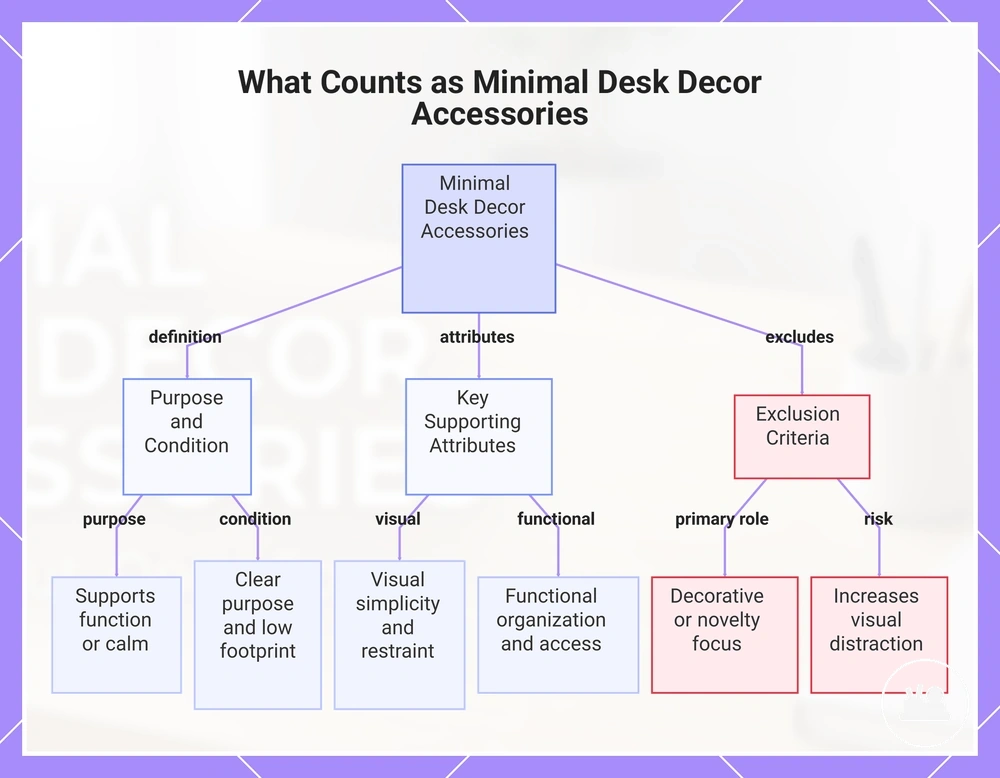
Minimal desk decor accessories are desk items that support function or visual calm without adding unnecessary surface noise. Their purpose is to improve workspace clarity through practical use, restrained appearance, or both, while avoiding elements that compete for attention on the desk.
An accessory typically fits a minimal workspace when it serves a clear purpose and maintains a low visual footprint. Organizers, trays, pen holders, desk mats, cable-management pieces, and small storage items can align with minimal design when they help contain frequently used objects, reduce clutter, or preserve usable surface space. The minimal condition depends on how the accessory contributes to order and usability rather than on the accessory type alone.
Visual attributes such as simple forms, muted colors, limited ornamentation, and controlled material contrast often support a minimal appearance. Functional attributes such as organization, accessibility, and surface management can further improve workspace clarity by reducing visual distractions and keeping essential items easy to reach.
Minimal desk decor accessories differ from decorative or novelty-focused items whose primary role is display. Decorative pieces may still fit a minimal workspace when they support visual calm and remain proportionate to the available space, but items that increase visual distraction or unnecessary surface density generally fall outside the minimal category.
This chart explains what qualifies as a minimal desk decor accessory, its key attributes, and what is excluded.
Minimal Accessory Types That Support a Clean Desk
Minimal accessory types support a clean desk when they reduce clutter, improve organization, or make essential items easier to manage without increasing visual distraction. Their value comes from function, visibility control, and efficient use of surface space rather than decoration alone.
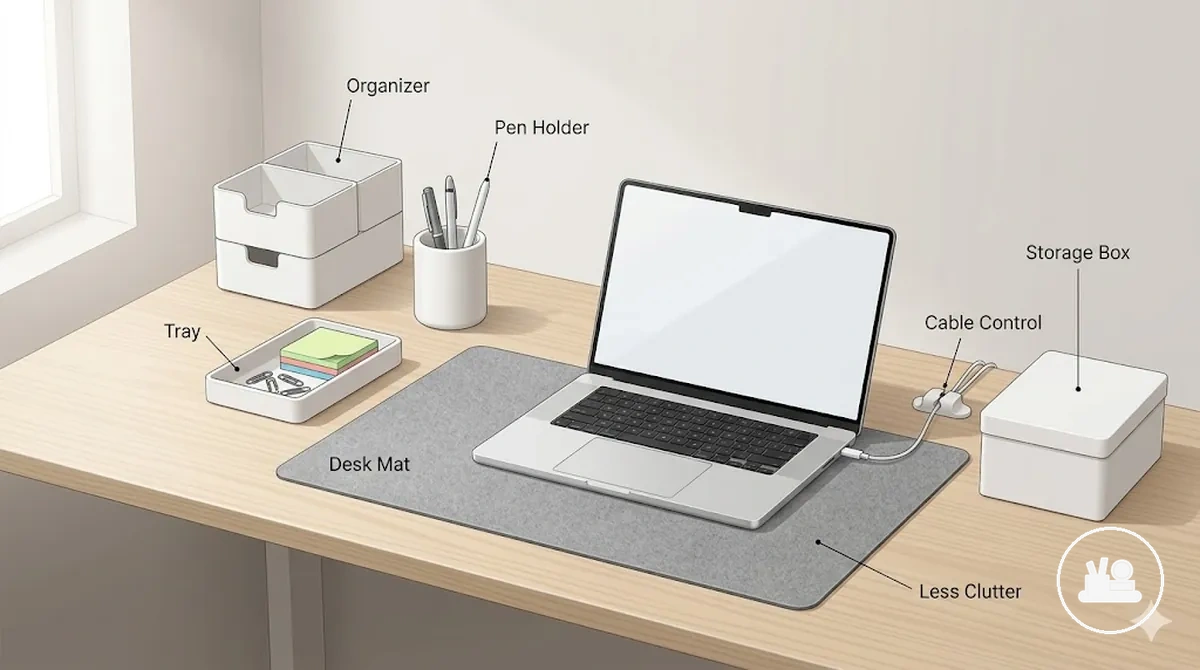
- Organizers: Organizers can group frequently used items into a defined area, which may reduce scattered objects and make the workspace easier to navigate.
- Trays: Trays help contain small everyday items in a single location, reducing visual fragmentation across the desk surface.
- Pen holders: Pen holders keep writing tools accessible while limiting loose items that can contribute to visual clutter.
- Desk mats: Desk mats can establish a defined work zone and create a more unified appearance across the main working area.
- Catchall pieces: Catchall containers provide a designated place for small objects that might otherwise accumulate in multiple locations.
- Storage boxes: Storage boxes can keep less frequently used items nearby while reducing the amount of visible desk content.
- Cable organizers: Cable organizers help manage cords and connections, which often improves both visual order and usable workspace.
These accessory types fit a minimal desk most effectively when each item serves a clear purpose and contributes a distinct organizational function. For readers exploring broader desk decor accessory ideas, the minimal approach typically prioritizes clutter reduction, visibility control, and practical utility over added surface activity.
Minimal Desk Organizers and Desktop Trays
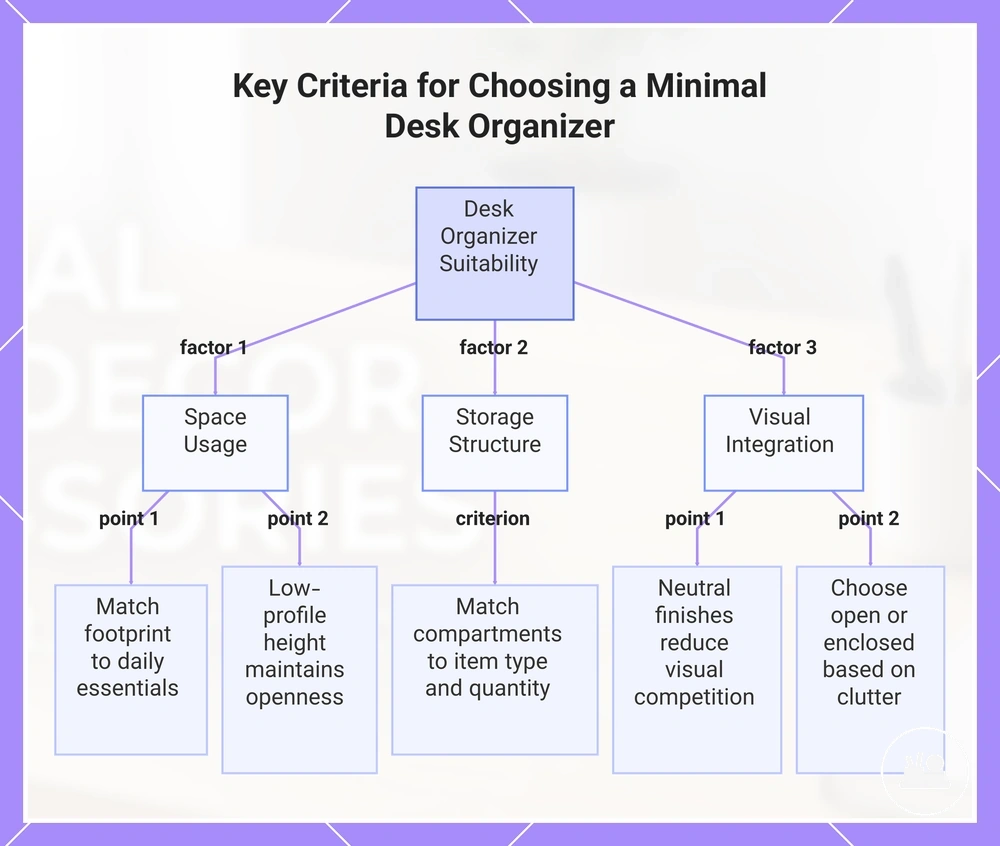
Minimal desk organizers and desktop trays serve as storage anchors when they group related items and reduce surface clutter without overwhelming the workspace. Their suitability depends on how effectively they improve organization while maintaining visual simplicity and easy access.
Footprint is often the first criterion to evaluate. Organizers and trays that use only the space required for daily essentials can help preserve open desk areas, while oversized pieces may reduce visual clarity and limit usable workspace.
Compartments affect how items are grouped and retrieved. Separate sections can improve organization when different tools need clear placement, but excessive compartmentalization may introduce unnecessary visual complexity. The most suitable layout depends on the quantity and type of items being stored.
Height influences both visibility and openness. Lower-profile organizers and trays often keep items accessible while maintaining clear sightlines across the desk. Taller storage pieces may be appropriate when vertical organization is needed, provided they do not create a crowded appearance.
Material, color restraint, and visibility control further shape suitability. Neutral finishes, simple textures, and limited contrast can help organizers blend into the workspace rather than compete for attention. Open trays keep frequently used items visible, while more enclosed organizers can reduce the appearance of clutter by limiting what remains in view.
This chart shows the three main criteria—space usage, storage structure, and visual integration—that determine whether a desk organizer or tray is minimally effective.
Pen Holders, Desk Mats, and Small Catchall Pieces
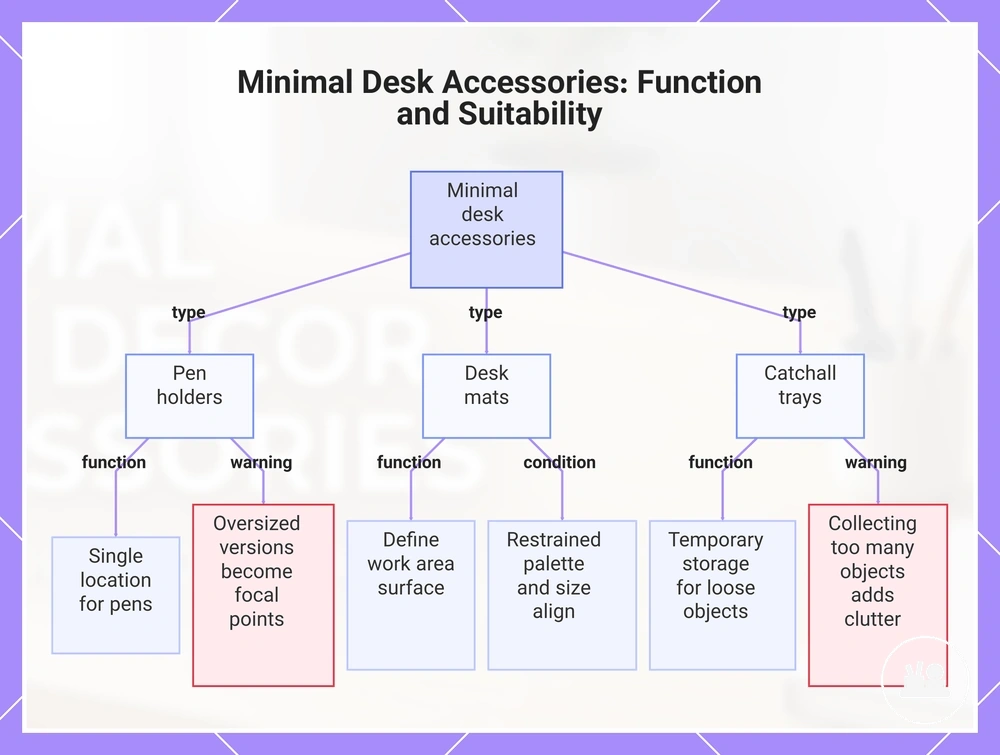
Pen holders, desk mats, and small catchall pieces support a minimal desk when they serve a specific function and help reduce visual noise. Their suitability depends on whether they simplify item management and keep the workspace visually controlled rather than adding decorative complexity.
Pen holders are designed to keep writing tools in a single location. Unlike larger organizers that manage multiple categories of items, pen holders address a narrow function. Compact designs can support visual order, while oversized or highly decorative versions may become unnecessary focal points.
Desk mats help define a work area by creating a consistent surface beneath commonly used items. A restrained color palette, simple texture, and appropriately sized mat often align more closely with minimal design than options that introduce strong visual contrast or busy patterns.
Catchall trays and small containers provide temporary storage for loose everyday objects. Their effectiveness depends on whether they prevent small items from spreading across the desk. When these containers collect too many unrelated objects, they may contribute to visual clutter instead of reducing it.
These accessories differ from organizers because they usually perform a single, localized task rather than creating a broader storage system. In a minimal workspace, each accessory should justify its presence through clear utility while occupying only the space needed for its function.
This chart shows the three main types of desk accessories for a minimal workspace, their specific functions, and the conditions that determine their effectiveness.
Neutral Colors and Low-Contrast Style Signals
Neutral colors and low-contrast style signals support a minimal desk by reducing visual weight and helping accessories integrate into the workspace rather than compete for attention. A minimal appearance often depends on how visually calm the overall arrangement feels, not simply on how many items are present.
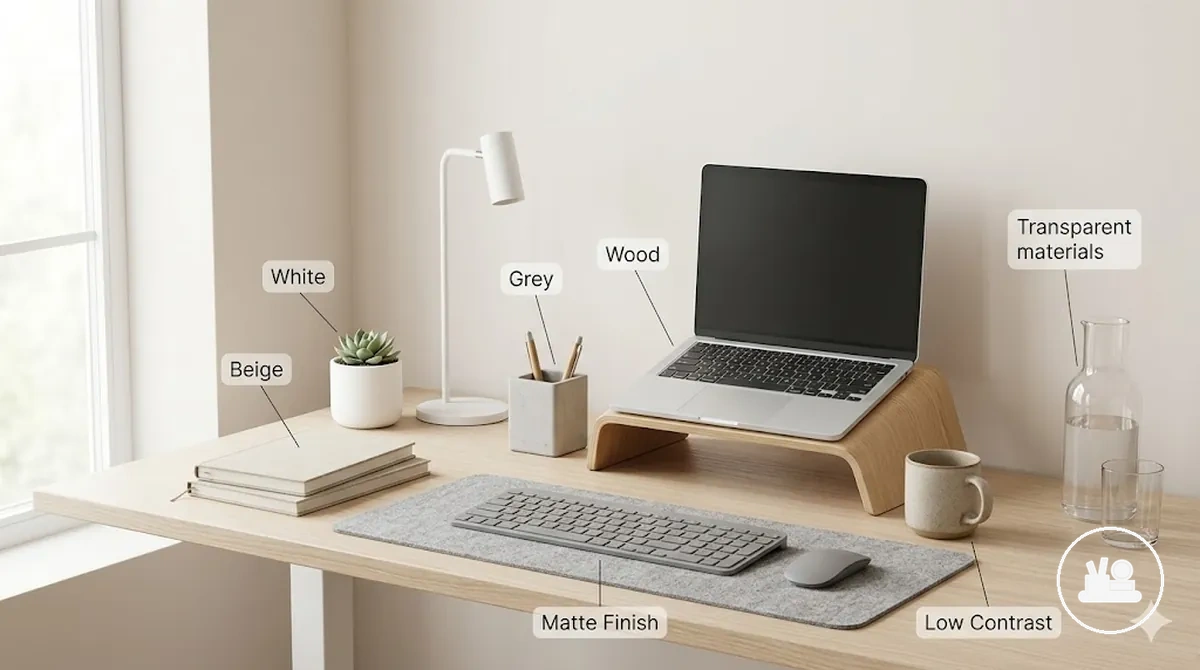
Low-contrast palettes typically rely on colors that transition smoothly across the desk surface. White, beige, grey, natural wood tones, and transparent materials can help soften visual boundaries between accessories and surrounding elements, which may contribute to a more cohesive appearance.
Matte finishes often support visual restraint because they draw less attention to reflections and surface highlights. Transparent materials can serve a similar role by providing utility while maintaining a lighter visual presence. The effect depends on surrounding colors, lighting conditions, and the overall desk arrangement.
Neutral styling should be viewed as a visual-weight control rather than a rigid design rule. A minimal workspace can still include contrast when it is intentional and proportionate. The goal is usually to maintain visual continuity and reduce unnecessary focal points rather than eliminate variation entirely.
These style signals influence perception more than function. For readers interested in visual balance with desk accessories, neutral tones and controlled contrast can help a workspace appear more organized while keeping essential accessories visible and accessible.
Color Consistency Across Muted Tones
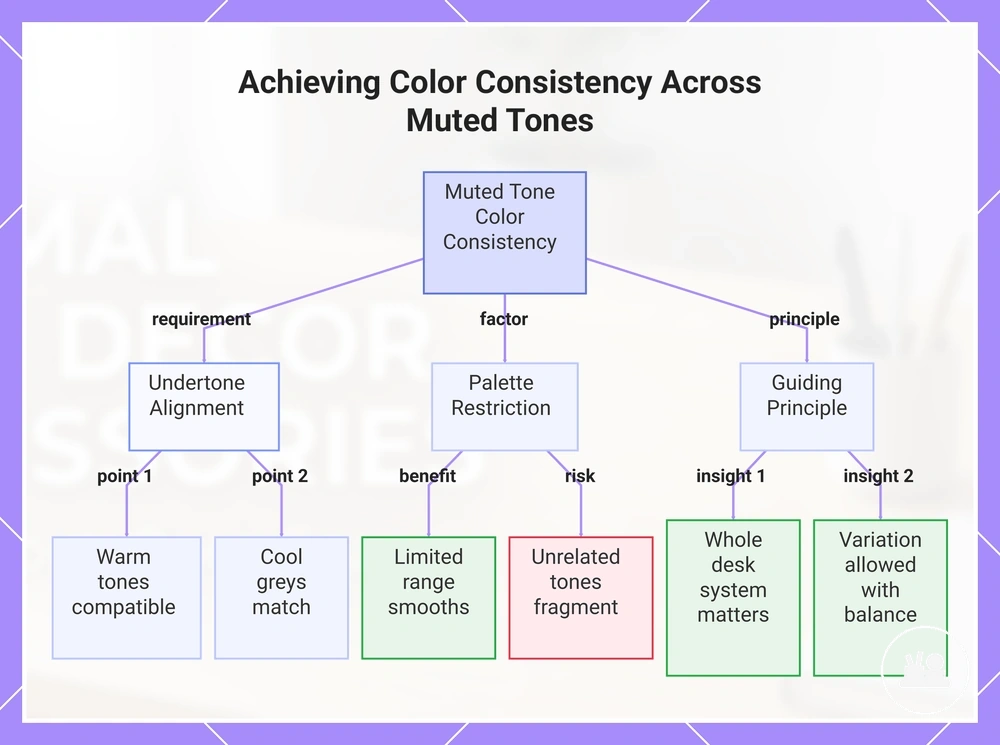
Color consistency across muted tones depends on how well desk surfaces and accessories share compatible undertones and maintain a restrained palette. A minimal workspace often appears more cohesive when colors relate to one another rather than compete for attention.
Undertone alignment is a primary criterion. Warm-toned woods, beige accessories, and similar muted shades can create a more unified appearance when their underlying color temperature feels compatible. Cooler greys and neutral surfaces may achieve a similar effect when paired with accessories that follow the same visual direction.
Palette restriction helps control visual complexity. A limited range of muted colors can make transitions between desk mats, trays, organizers, and other accessories appear smoother. When multiple unrelated tones are introduced, the workspace may feel more fragmented even if each item is individually minimal.
Visual harmony comes from the relationship between the entire desk system rather than any single accessory. Surface finishes, material appearance, and color intensity influence how colors are perceived together. Small variations can often work well when they support the overall palette instead of creating isolated focal points.
Color consistency functions as a guiding principle rather than a strict rule. A minimal desk can still include variation when the overall arrangement maintains a balanced and visually connected appearance.
This chart shows the two main criteria for color consistency in muted tones and the guiding principle behind creating a cohesive workspace.
Simple Materials, Matte Finishes, and Soft Textures
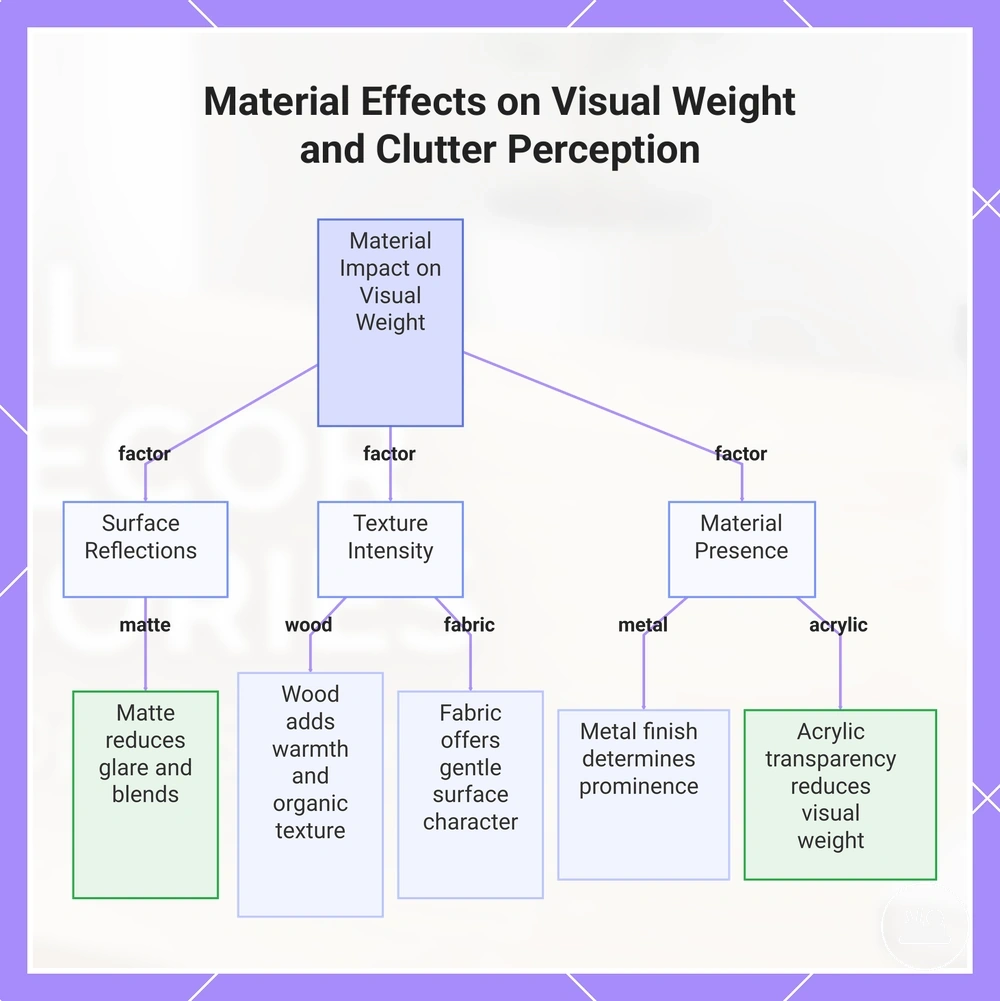
Simple materials, matte finishes, and soft textures influence visual weight by affecting how strongly desk accessories attract attention within a workspace. In a minimal setup, material characteristics often shape clutter perception because surface reflections, texture intensity, and material presence influence how the eye moves across the desk.
Matte finishes generally create a more subdued appearance than reflective surfaces. By reducing visible glare and strong highlights, matte accessories can blend more naturally into the surrounding environment, which may support a calmer visual impression.
Wood materials often introduce visual warmth and organic texture, while metal materials can create a more defined and structured appearance. The perceived prominence of metal depends on its finish, as muted or brushed surfaces may draw less attention than highly reflective alternatives.
Acrylic materials can appear visually lighter because they allow surrounding surfaces and objects to remain partially visible. Fabric finishes and soft textures often contribute a gentler surface character, which may soften visual transitions between accessories without creating strong focal points.
Material selection affects perception through contrast, reflection, and texture rather than through color alone. A minimal desk often appears more cohesive when matte, wood, metal, acrylic, and fabric elements work together with a consistent visual rhythm instead of competing for attention.
This chart shows how material characteristics influence visual weight through surface reflection, texture intensity, and material presence.
How to Choose Minimal Desk Decor Accessories Without Over-Styling
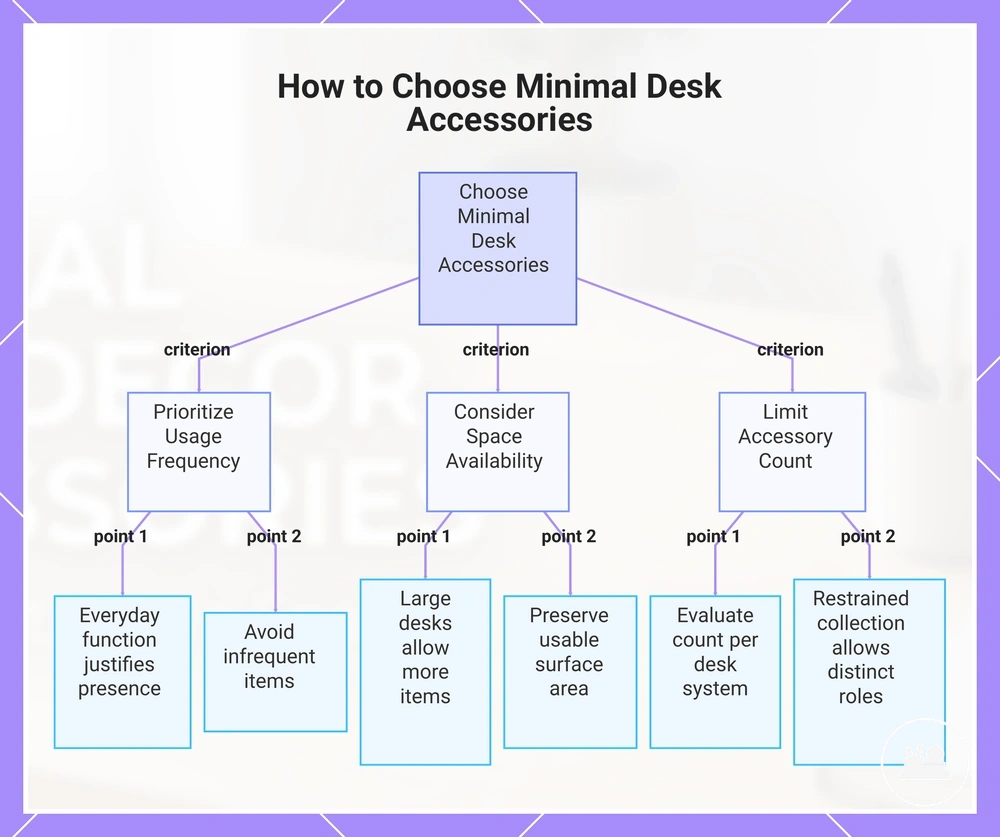
Choosing minimal desk decor accessories depends on restraint, function, and workspace clarity. An accessory is usually a stronger fit for a minimal desk when it serves a clear purpose, supports regular use, and does not introduce unnecessary visual activity.
Usage frequency is a primary selection criterion. Accessories that contribute to everyday organization, accessibility, or workflow often justify their presence more effectively than items used infrequently. When an item performs a consistent function, it is more likely to support a minimal workspace.
Space availability influences how many accessories a desk can accommodate while maintaining visual openness. Larger work surfaces may support multiple functional items without appearing crowded, while smaller desks often benefit from a more restrained selection. Preserving usable surface area is usually more important than filling empty space.
Accessory count should be evaluated as part of the overall desk system rather than through a fixed limit. Even simple accessories can increase visual density when too many objects compete for attention. A restrained collection often allows each item to maintain a distinct role without creating overlap.
Workspace clarity improves when every accessory has a defined purpose, appropriate placement, and a clear relationship to surrounding items. Selecting accessories based on function first and appearance second can help maintain a minimal desk that feels organized, intentional, and visually balanced.
This chart shows the three main criteria for selecting desk accessories that maintain minimal aesthetics and workspace clarity.
Fit, Capacity, and Daily-Use Criteria
Fit, capacity, and daily-use criteria depend on how well a desk accessory matches available space, storage requirements, and everyday workflow. An accessory is typically more suitable for a minimal workspace when its size, function, and placement support usability without reducing workspace clarity.
Footprint is a key fit condition because it determines how much surface area an accessory occupies. Accessories that use only the space required for their function can help preserve working space, while oversized items may make the desk feel more crowded than necessary.
Capacity should align with actual usage needs. Limited capacity can lead to overflow and visible clutter, while excessive capacity may introduce unnecessary bulk. A closer relationship between storage volume and daily requirements often supports a cleaner desk arrangement.
Reach influences functional fit by affecting how easily an accessory can be used during routine tasks. Frequently accessed items are often more effective when placed within comfortable reach, while occasional-use accessories may be better suited to secondary locations.
Frequency of use helps determine whether an accessory deserves permanent desk space. Items used regularly often justify visible placement, whereas less frequently used accessories may not need constant access. For users evaluating desk decor accessories for small desks, considering footprint, capacity, reach, and usage frequency together can support a more practical and balanced selection process.
Matching Accessory Sets Without Visual Bulk
Matching accessory sets depend on proportional sizing, repetition, and visual density rather than matching alone. A coordinated set can support a minimal workspace when each piece has a clear function and the group does not make the desk appear crowded or overly styled.
Proportional sizing is often the first factor to evaluate. Accessories that share a compatible scale and fit the available workspace can create visual continuity, while oversized matching pieces may increase visual weight even when the design remains consistent.
Repetition can reduce visual fragmentation because related materials, shapes, or finishes often create a more unified appearance. However, repeated elements may become visually dominant when too many matching accessories occupy the same area or compete for attention.
Visual density determines whether a matching set supports or weakens minimal design. A small number of coordinated accessories can make the workspace feel organized, while a larger collection of matching items may still create clutter perception if the desk surface becomes overly occupied.
The decision to use a matching set should be based on balance rather than uniformity. Matching accessories often work best when each piece has a clear purpose, appropriate size, and sufficient spacing, allowing visual consistency without adding unnecessary bulk.
Minimal Desk Accessories for Open Space and Clutter Control
Minimal desk accessories are most compatible with open-space goals when they preserve surface clearance, reduce visual congestion, and support organization without occupying unnecessary workspace. The relationship between accessories and clutter control depends on how each item contributes to spatial clarity.
Surface clearance is often the strongest indicator of whether a desk feels open or crowded. Accessories that contain loose items, manage cables, or consolidate small objects can help maintain usable workspace, while accessories that occupy space without improving organization may reduce visual openness.
Vertical storage can support clutter control when desk space is limited. Moving selected items upward through shelves, stands, or raised organizers may reduce horizontal spread and free working areas, provided the added height does not create excessive visual density.
Reducing redundant items is another important principle. Multiple accessories that perform similar functions can increase visual complexity without adding meaningful utility. A minimal workspace often benefits from accessories that serve distinct purposes and limit overlap.
Open space preservation depends on balancing organization with restraint. For readers exploring desk decor without clutter, a useful evaluation method is to consider whether each accessory clears, contains, or simplifies the workspace rather than adding another layer of management.
This chart shows the key principles that determine whether desk accessories support open space and reduce clutter, based on surface clearance, vertical storage, and reducing redundancy.
When Minimal Accessories Fit Better Than Modern or Decorative Desk Styles
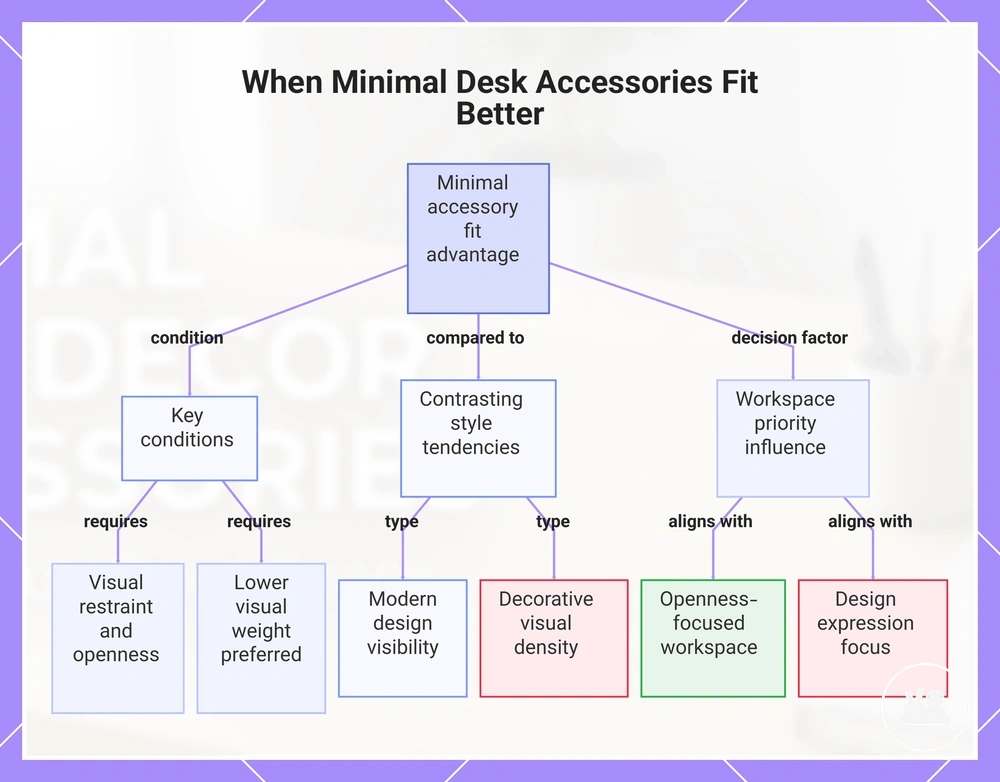
Minimal accessories fit better than modern or decorative desk styles when visual restraint, spatial openness, and lower visual weight are more important than making accessories a design feature. The choice depends on whether the workspace is intended to emphasize clarity or visual expression.
Minimal desk accessories typically prioritize function and a subdued presence. Modern desk styles can also support clean organization, but they may introduce stronger material contrasts, distinctive forms, or visible design elements that attract more attention within the workspace.
Decorative desk styles often place greater emphasis on display value and personal expression. While decorative accessories can add character, they may increase visual density when multiple objects compete as focal points across the desk surface.
Visual weight creates the clearest distinction between these approaches. Minimal accessories generally aim to blend into the workspace, modern accessories often balance utility with design visibility, and decorative accessories are more likely to contribute visual emphasis. None of these approaches is inherently superior; suitability depends on the intended atmosphere and workspace priorities.
Boundary clarity helps guide the decision. A workspace focused on openness and clutter reduction may align more closely with minimal accessories, while a stronger design-oriented setup may favor modern desk decor accessories. The most appropriate style depends on the desired balance between visual restraint and visual expression.
This chart shows the conditions under which minimal desk accessories outperform modern and decorative styles, and how workspace priorities influence the choice.
Common Minimal Desk Decor Mistakes That Make a Desk Look Busy
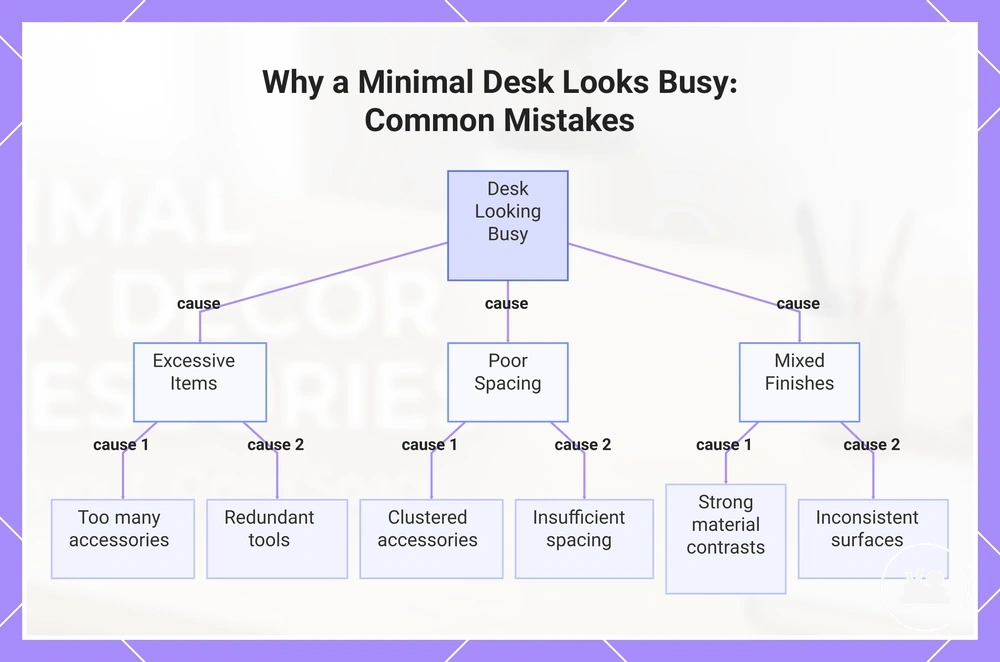
When a minimal desk looks busy, the cause is often too many visible items, insufficient spacing, redundant tools, or competing finishes rather than a lack of organization. Identifying the source of visual density can help restore a cleaner and more restrained appearance.
Too many accessories can weaken the effect of minimal design even when each item is individually simple. A desk may appear crowded when objects compete for attention or occupy space that could otherwise remain open.
Poor spacing is another common error. Accessories placed too close together can create the impression of a single dense cluster, while more deliberate spacing often improves visual separation and helps preserve openness across the workspace.
Redundant tools can add visual complexity without adding meaningful utility. Multiple organizers, trays, or containers that serve similar functions may increase clutter perception, whereas a clearer distinction between accessory roles often supports a more streamlined setup.
Mixed finishes can also make a desk appear busier than intended. Strong contrasts between materials, textures, or surface treatments may introduce additional visual activity. A more consistent relationship between finishes often supports spatial clarity and reinforces the restrained character associated with minimal desk decor.
This chart identifies the main causes of visual density in a minimal desk setup.