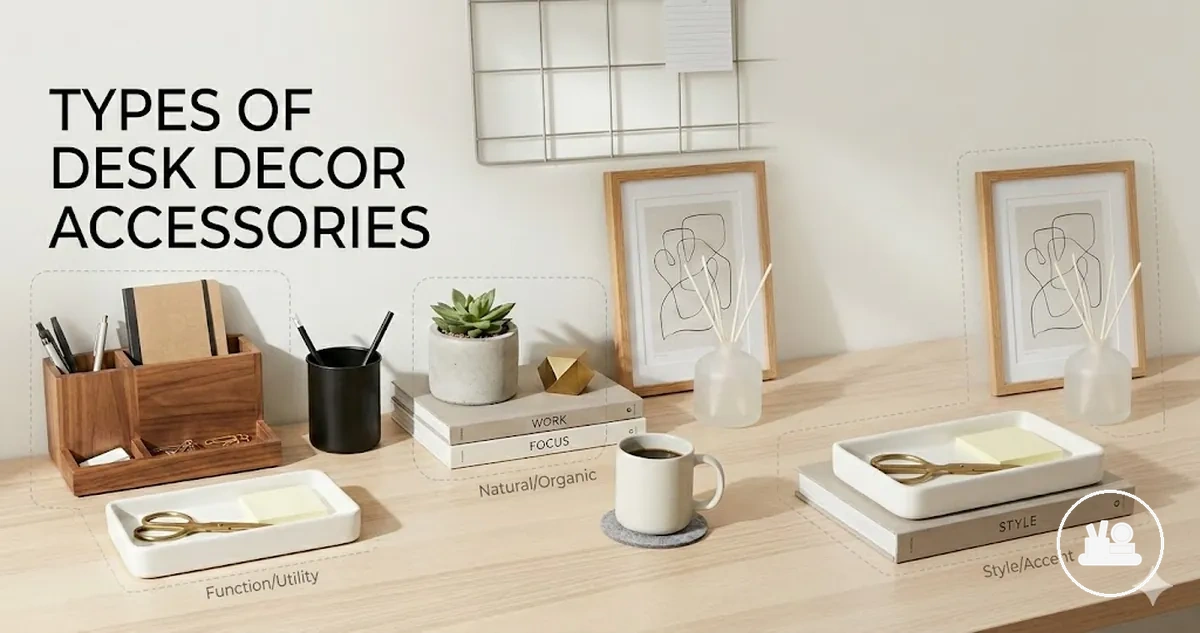
Types of Desk Decor Accessories as a structured classification system for workspace decision-making
Desk decor accessories are a classification system that organizes workspace items by function, material, and visual purpose, helping users understand how different elements relate within a structured environment. This system connects directly to the desk decor accessories hub by establishing a clear framework for categorization rather than treating items as isolated objects. It defines how workspace components are grouped to improve clarity in selection and arrangement. The classification exists to reduce ambiguity in understanding what belongs in a workspace setup and why specific groupings matter. It also supports a structured way of interpreting how different accessories contribute to overall workspace composition.
This classification improves selection clarity by separating desk decor accessories into structured categories that reduce decision complexity in workspace design. It helps users distinguish between functional requirements and visual contributions, which often overlap in unstructured setups. By organizing items through functional types and decorative types, the system supports more consistent workspace organization and more predictable selection outcomes. This structure may vary depending on workspace needs, but it consistently prioritizes clarity in how accessories are evaluated and grouped.
The next level of organization introduces how these categories expand into functional and decorative groupings that shape practical and visual balance within a workspace. This transition helps users interpret how classification logic connects to real selection behavior, especially when refining choices through criteria such as utility, aesthetics, and spatial balance. These grouping principles also connect to choosing desk decor accessories, where classification becomes a decision-support tool for more structured evaluation.
Core functional vs decorative classification of desk decor accessories
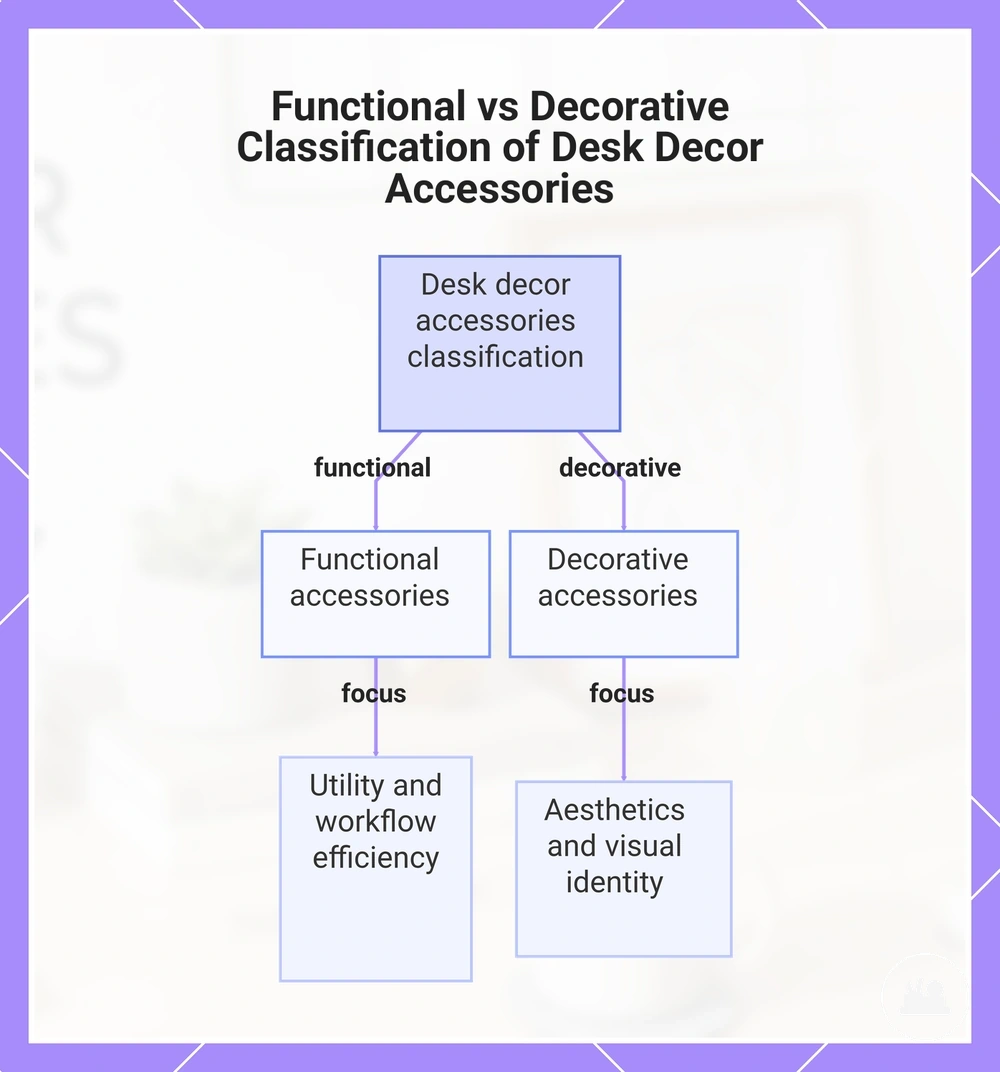
The functional vs decorative split in desk decor accessories defines how workspace design separates utility-driven elements from aesthetic-driven elements, allowing clearer structure in workspace organization. This division helps clarify how desk decor accessories relate to what desk decor accessories include by establishing a classification boundary between operational function and visual identity. It exists to improve desk organization by making it easier to distinguish items that support workflow efficiency from those that contribute to aesthetics. In workspace design, this separation supports more consistent evaluation of purpose and placement. It also provides a stable framework for interpreting how different elements contribute to overall workspace structure.
This classification is structured around two primary categories that define how desk decor accessories contribute to workspace design and desk organization:
- Functional accessories: Focus on utility and workflow efficiency, supporting practical tasks and structured desk organization.
- Decorative accessories: Focus on aesthetics and visual identity, shaping the look and expressive character of the workspace.
This chart breaks down the two main categories of desk decor accessories and their core focuses.
Storage and organization types of desk decor accessories for workspace structuring
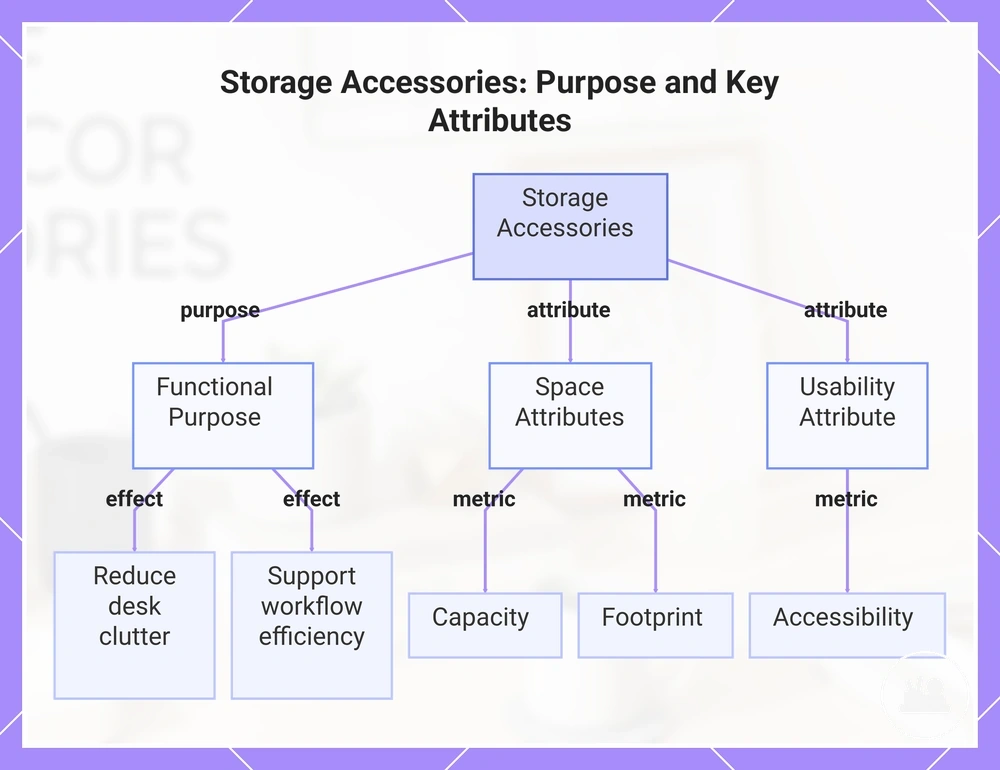
Storage accessories are desk decor accessories that function as workspace structuring tools designed to reduce clutter and improve desk organization. They define how items are arranged, stored, and accessed within a workspace to support more stable workflow efficiency. This classification focuses on how physical organization influences usability rather than visual styling. In workspace design, storage accessories typically act as the foundation for maintaining order and predictable task flow.
Storage accessories in workspace design are evaluated based on how they support usability and structure rather than appearance. The distinction between functional and decorative accessory types helps clarify that storage elements primarily serve utility and workflow efficiency, while still interacting with broader aesthetics in limited ways. Their effectiveness is shaped by measurable attributes that influence desk organization performance:
- Capacity: Determines how much material or equipment can be organized within a defined space.
- Accessibility: Impacts how quickly and efficiently stored items can be reached during workflow.
- Footprint: Defines how much physical desk space is occupied and how it affects overall workspace efficiency.
These attributes collectively determine how storage accessories contribute to clutter reduction and structured workspace efficiency. Their role remains centered on functional performance, supporting stable desk organization without shifting into decorative priorities. :contentReference[oaicite:0]{index=0}
This chart shows the functional role of storage accessories in workspace structuring and their measurable attributes for desk organization.
Pen holders, trays, and shelf-based desk organizers as storage subtypes
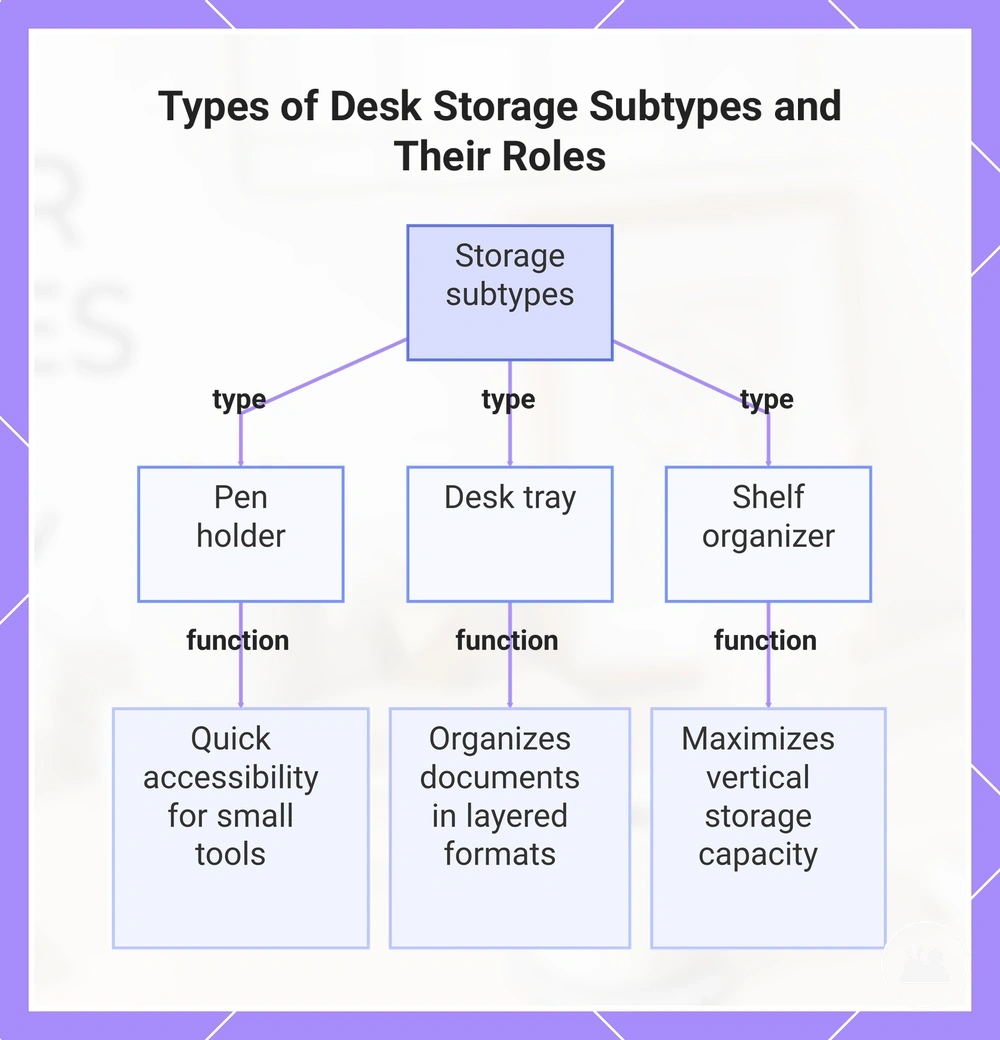
Storage subtypes refer to structured desk decor accessories such as pen holder, desk tray, and shelf organizer that share the same role of organizing tools, documents, and layered workspace elements. These storage subtypes function within storage systems to improve desk organization by separating items based on access needs and spatial structure. Their shared purpose is to support workspace efficiency by reducing clutter and improving item retrieval flow.
These storage subtypes can be differentiated based on how they manage accessibility, capacity, and space efficiency within workspace organization. Their variation also depends on physical attributes such as material, color, size, and finish, which can influence usability without changing core function.
- Pen holder: Prioritizes quick accessibility for small tools, supporting immediate workflow actions with minimal space usage.
- Desk tray: Organizes documents and flat items in layered formats, improving structured sorting and short-term access efficiency.
- Shelf organizer: Maximizes vertical storage capacity, improving space efficiency by expanding desk organization into layered storage zones.
- Comparative role: All storage subtypes differ in accessibility and footprint, but collectively support clutter reduction and workspace efficiency.
This chart shows the three main desk storage subtypes—pen holder, desk tray, and shelf organizer—and their key functions for workspace organization.
Desk mats and surface protection accessories for stability and workspace definition
Desk mats are surface protection accessories designed to improve writing stability, enhance comfort, and protect the desk surface from wear and friction. These desk mat solutions function as a physical layer between tools and the workspace, supporting consistent surface protection and improving overall durability during daily use.
Desk mats and related surface protection accessories depend on material-driven attributes such as grip, texture, durability, and comfort to determine how effectively they support writing stability and workspace usability. These properties vary based on material, color, size, finish, which influences how the surface performs under different usage conditions without changing its core protective role.
| Material | Benefit |
|---|---|
| Leather-style surface | Balanced grip and smooth writing comfort with moderate durability |
| Fabric-based surface | Improved texture and enhanced grip for controlled writing movement |
| Rubber-based surface | High grip and strong surface protection for stability during intensive use |
| Composite surface | Combined durability and comfort for consistent long-term workspace efficiency |
Desk lighting accessories as functional workspace environment enhancers
Desk lighting accessories are functional tools that provide task illumination to improve visibility, reduce eye strain, and support focus during work or study, forming a controlled lighting environment within the workspace. These elements are part of broader desk lighting systems used across different workspace setups within types classifications to support structured usability.
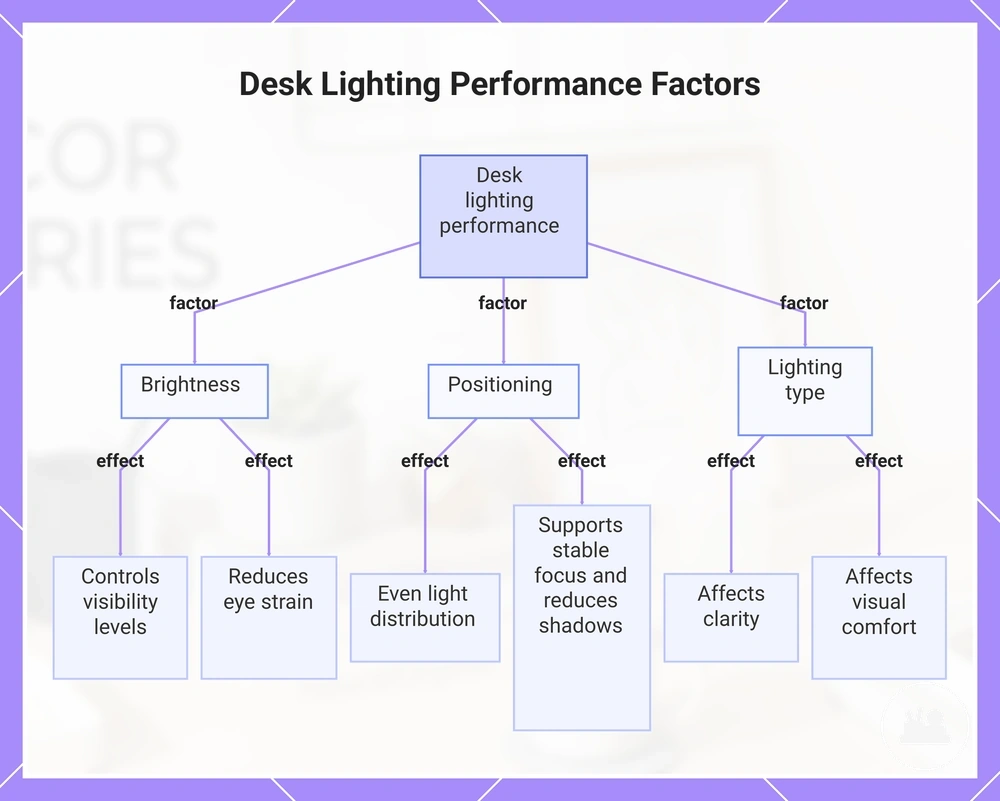
Desk lighting performance depends on brightness, positioning, and lighting type, which directly influence visibility, eye strain reduction, and focus stability during task execution. The effectiveness of these factors is shaped by how well the lighting supports consistent task illumination without disrupting comfort or workflow:
- Brightness: Controls visibility levels and helps reduce eye strain during extended work sessions.
- Positioning: Determines how evenly light is distributed across the workspace, supporting stable focus and reduced shadows.
- Lighting type: Influences task illumination quality, affecting clarity and visual comfort during detailed work.
This chart shows the three main factors that determine desk lighting performance: brightness, positioning, and lighting type, and their effects on visibility, eye strain, and focus.
Decorative desk objects as aesthetic identity and workspace personalization elements
Decorative desk objects are aesthetic-focused elements that shape workspace personality and visual identity by separating themselves from functional tools used for task execution. These decorative objects contribute to how a workspace is perceived, emphasizing aesthetics, tone, and visual identity rather than utility, and defining the overall expression of the environment.
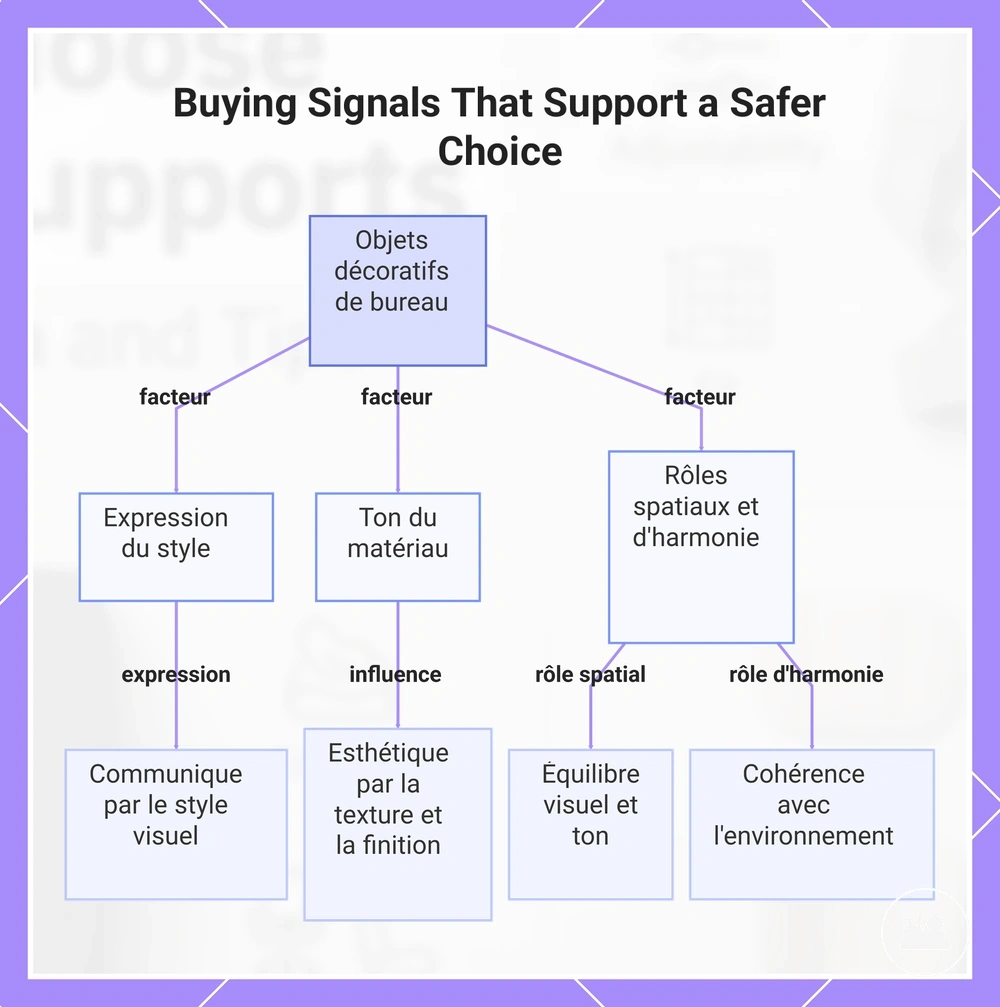
These decorative objects influence workspace personality through controlled use of style expression, material tone, spatial presence, and harmony contribution, shaping how aesthetics are experienced without interfering with functional workflow:
- Style expression: Defines how decorative objects communicate workspace personality through form, theme, and visual direction.
- Material tone: Influences aesthetics and visual identity through texture, finish, and perceived warmth or minimalism.
- Spatial presence: Shapes how decorative objects occupy space and contribute to overall visual balance and tone.
- Harmony contribution: Maintains consistency between decorative objects and surrounding elements to support unified aesthetics.
Overall, decorative desk objects function as visual identity elements that reinforce aesthetics, tone, and harmony, helping define workspace personality without overlapping with functional or storage-focused elements.
This chart shows the key attributes of decorative desk objects that shape workspace personality and visual identity.
Coordinated desk accessory sets for unified workspace styling and selection simplicity
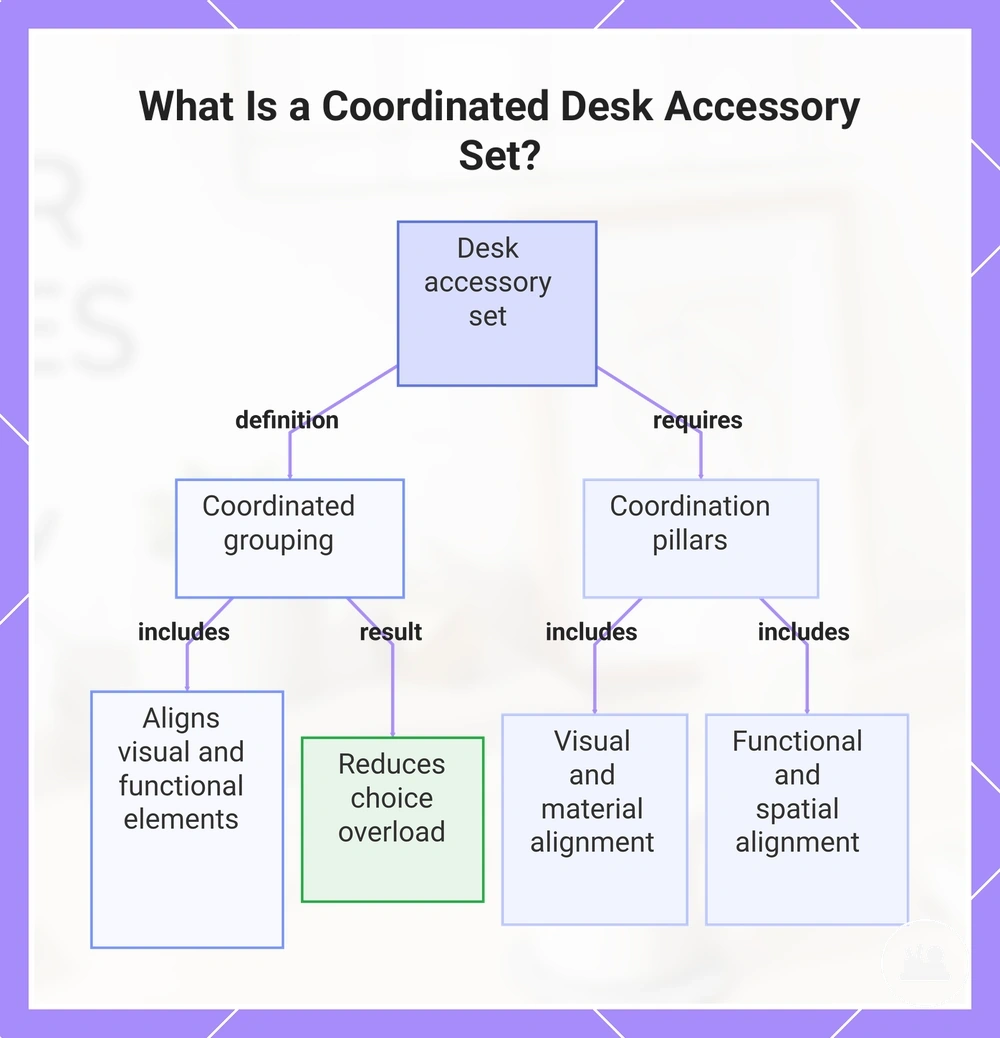
A desk accessory set is a coordinated grouping of workspace items designed through coordination to reduce selection complexity by unifying functional and visual elements into a single structured system. This coordination improves workspace cohesion by aligning multiple desk elements under a shared visual and functional direction, making /best-worth-buying/ decisions easier through reduced choice overload and clearer organization patterns.
Coordination in a desk accessory set depends on structured alignment across color harmony, material consistency, and functional compatibility, ensuring that workspace personality remains unified rather than fragmented. This approach supports selection simplicity while strengthening overall workspace cohesion through predictable design relationships:
- Color harmony: Maintains visual alignment across all elements to support a consistent aesthetic direction.
- Material consistency: Ensures similar surface qualities and finishes to reinforce coordination and visual unity.
- Functional alignment: Matches accessory roles so each item supports the same workspace use case without conflict.
- Spatial coherence: Organizes placement and proportion to strengthen workspace cohesion and reduce visual clutter.
This chart shows the definition of a coordinated desk accessory set and the key coordination dimensions that unify workspace styling and simplify selection.