Comparison of Desk Decor Accessories Across Style, Function, Space, and Value Dimensions
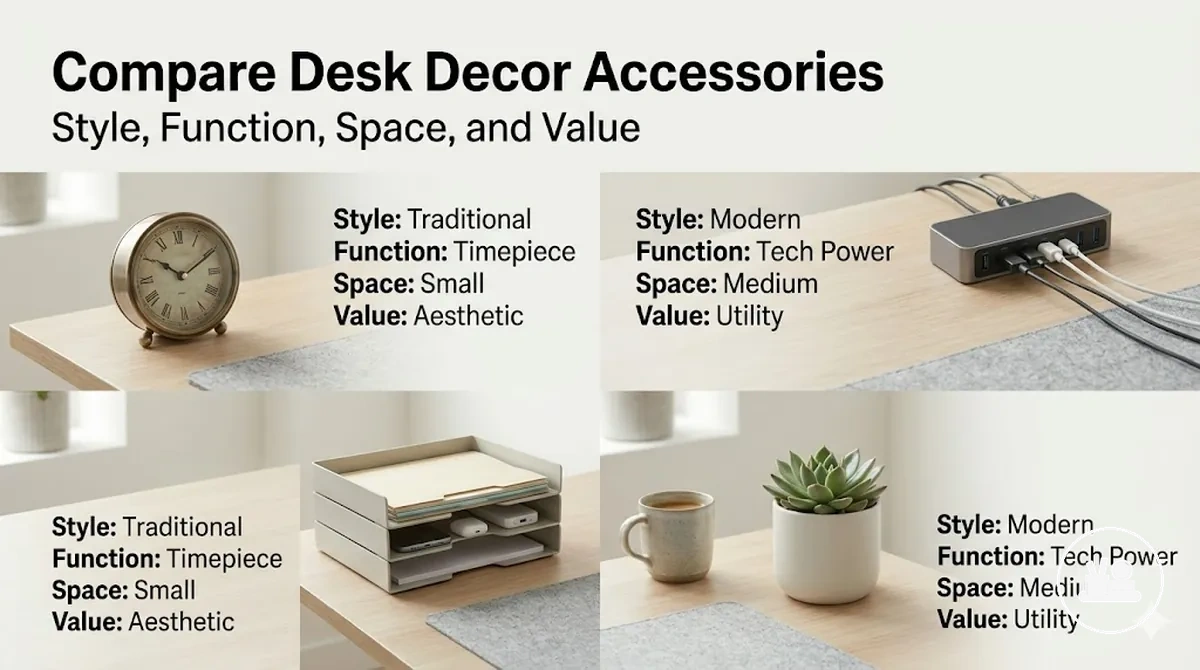
Desk decor accessories comparison depends on how each accessory affects style, function, space, and value inside a specific workspace. This section frames desk decor accessories as decision-support elements, not as isolated products or SKU-level options. The goal is to clarify how selection changes when visual fit, practical use, available desk area, and long-term value are weighed together.
Style shapes whether desk decor accessories make a workspace feel modern, minimal, warm, bold, or visually calm. Function changes the comparison by separating accessories that organize, hold, support, or improve usability from accessories that mainly adjust the look and atmosphere of the desk. Space affects selection because a compact workspace may need a smaller footprint, vertical placement, or fewer visible objects, while a larger desk may allow more decorative layering. Value depends on how usefulness, material feel, durability expectation, and daily relevance combine for the user’s situation. These dimensions work together, so a strong choice may depend on the balance between appearance, utility, available surface area, and budget fit.
This comparison does not rank individual desk decor accessories, promote specific products, or treat brands, models, merchants, or offers as the main subject. Product-level details can vary by material, size, finish, availability, and user preference, so the safer comparison is criteria-based rather than catalog-based. Desk decor accessories should stay subordinate to the workspace decision: what role the item plays, how much space it takes, how it affects the visual system, and whether its value makes sense for the intended setup.
Scope and Comparison Framework for Evaluating Desk Decor Accessories
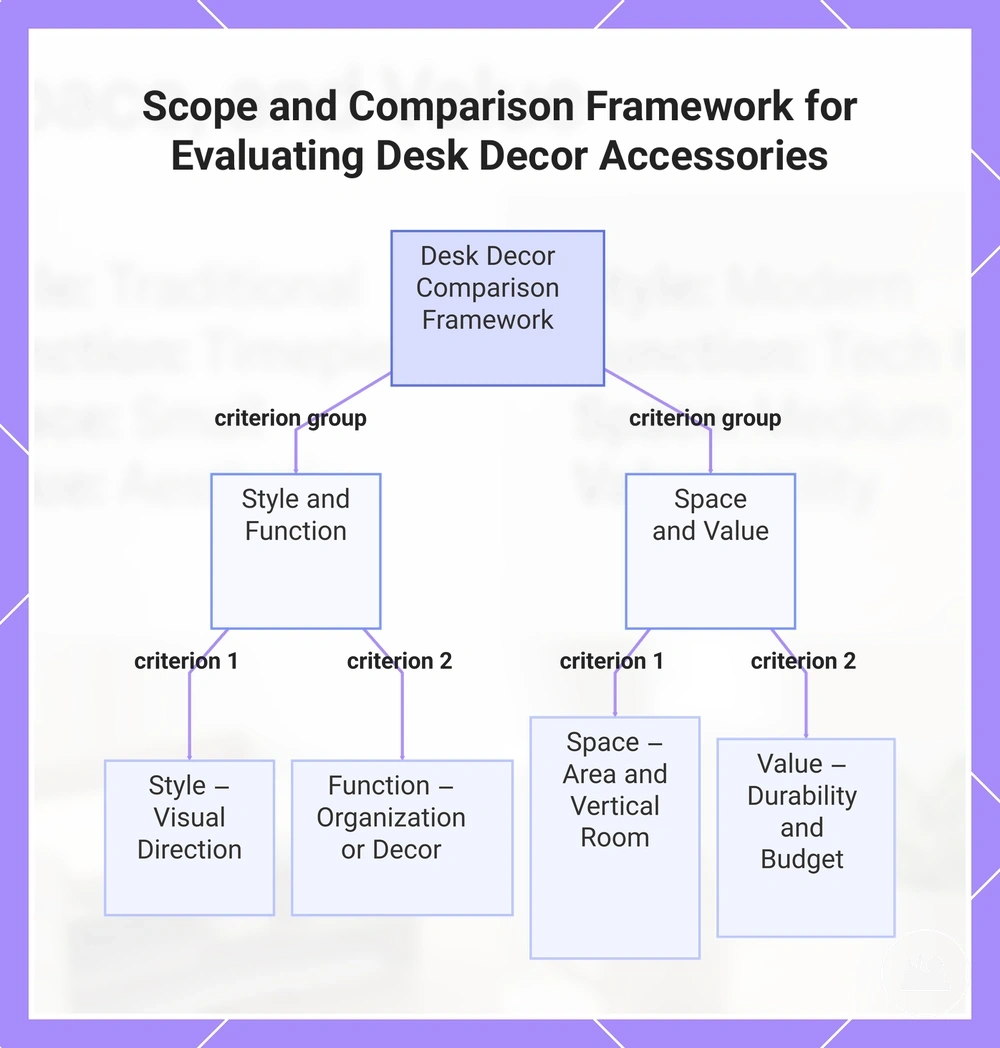
The scope of this evaluation is the criteria used to compare desk decor accessories across style, function, space, and value. This comparison framework helps keep the decision focused on how each accessory may support a workspace rather than on isolated product features.
Structured criteria make desk decor accessories easier to evaluate because each dimension answers a different decision question. Style clarifies whether an accessory fits the visual direction of the workspace. Function shows whether the accessory supports organization, usability, or mainly decorative intent. Space defines how much surface area, vertical room, or visual openness the accessory may require. Value connects the expected usefulness of the accessory with its material feel, durability expectation, and fit within the user’s budget context.
These four dimensions create the working framework for the comparison: style, function, space, and value.
This chart shows the four evaluation dimensions—style, function, space, and value—that form the comparison framework for desk decor accessories.
Style, Materials, and Visual Design Differences in Desk Decor Accessories (Modern, Minimal, Wood vs Metal)
Desk decor accessories comparison often depends on how materials, finishes, and visual design influence the overall tone of a workspace. The finish of desk decor accessories can affect whether a workspace appears refined, understated, textured, or visually prominent. Material choice also shapes perception, making desk decor accessories feel more aligned with certain aesthetic preferences and workspace environments. For a broader view of appearance-related attributes, see material, color, size, and finish.
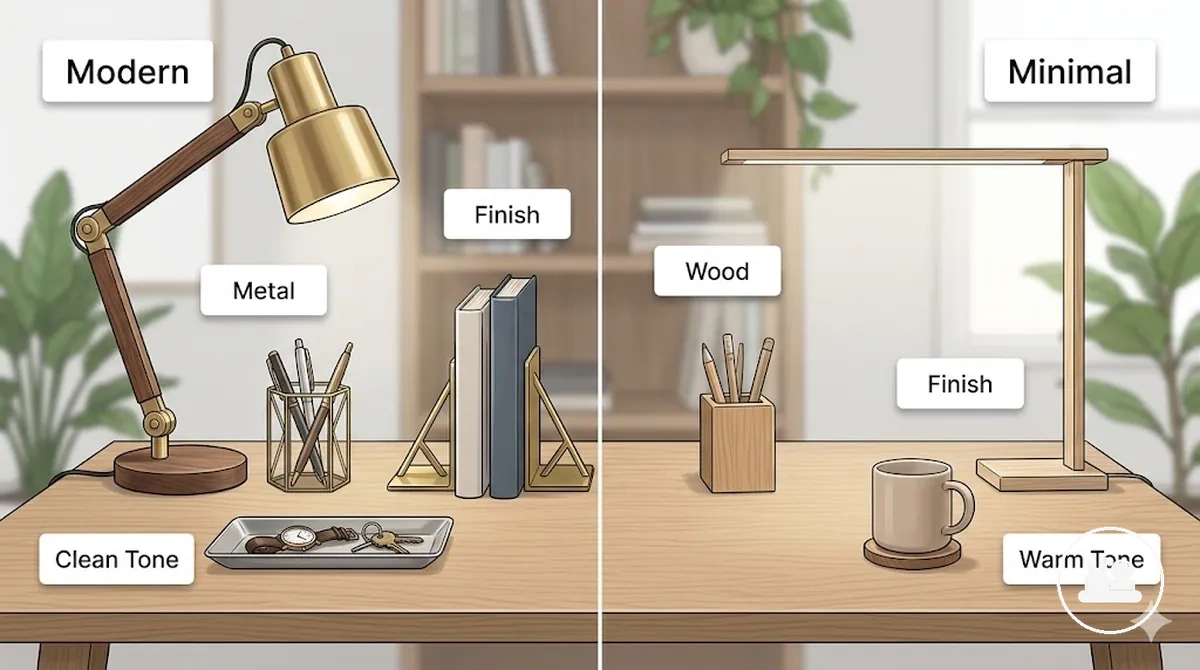
Modern desk decor accessories often emphasize clean lines, defined forms, and a visually structured tone. Minimal desk decor accessories usually reduce visual complexity and focus on simplicity and open space. Depending on workspace preferences, a modern style may create a stronger visual presence, while a minimal style may support a lighter and less crowded spatial feel. The suitability of either approach depends on the intended atmosphere and visual balance of the workspace.
Wood desk decor accessories often introduce warmth, natural texture, and a softer visual tone. Metal desk decor accessories may create a cleaner, sharper, or more industrial appearance depending on the finish and surrounding workspace elements. Perceptions of durability can vary by material type, construction, and finish, so visual impressions should not be treated as performance outcomes. These visual contrasts focus on appearance rather than utility, which differs from the considerations discussed for functional vs decorative desk accessories.
Function-Based Differences Between Decorative and Functional Desk Accessories
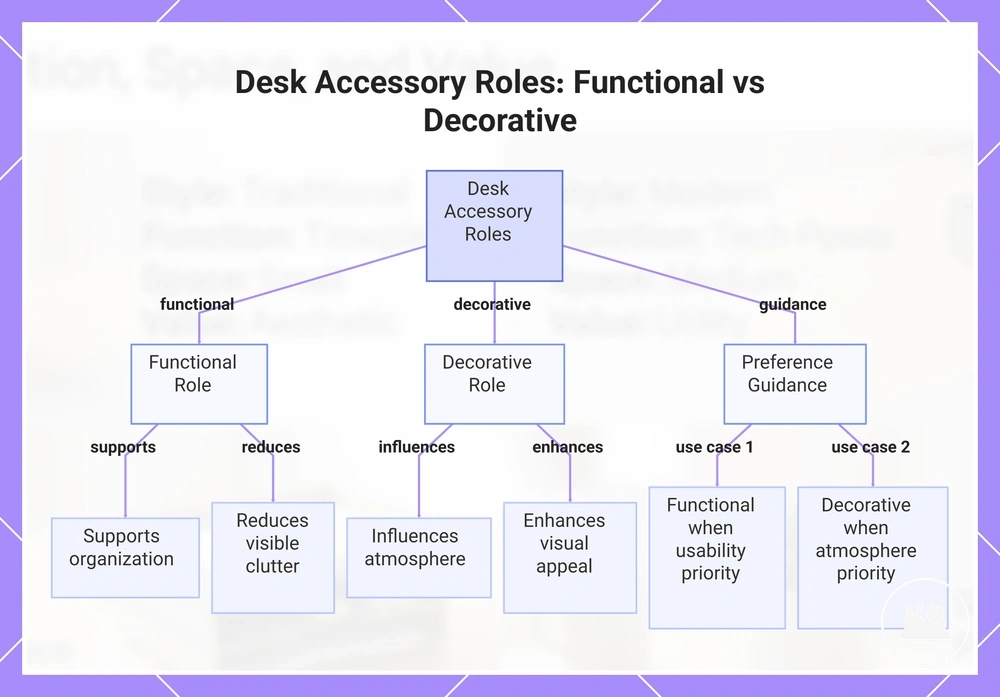
desk decor accessories can serve a functional role, a decorative role, or a combination of both, depending on their primary purpose. Functional desk decor accessories are intended to support organization and usability within a workspace, while decorative desk decor accessories are intended to influence atmosphere, visual appeal, or workspace character. The distinction is based on the role the accessory performs rather than how it looks.
Functional desk decor accessories often contribute to organization by helping arrange items, reduce visible clutter, or improve access to commonly used objects. Their usability value depends on workspace needs, task requirements, and individual work habits. Decorative desk decor accessories contribute through visual presence and environmental tone rather than direct workspace utility. This contrast is also reflected in the broader comparison of functional vs decorative desk accessories.
Functional desk decor accessories may be preferable when organization, usability, or productivity support is a higher priority. Decorative desk decor accessories may be more suitable when creating a specific atmosphere or reinforcing the visual identity of a workspace is the primary goal. In many cases, the preferred choice depends on how practical requirements and aesthetic preferences are balanced within the available workspace.
This chart shows the two main roles of desk accessories—functional and decorative—and how they differ in purpose and usage guidance.
Space and Size Constraints for Small Desk and Compact Workspace Accessories
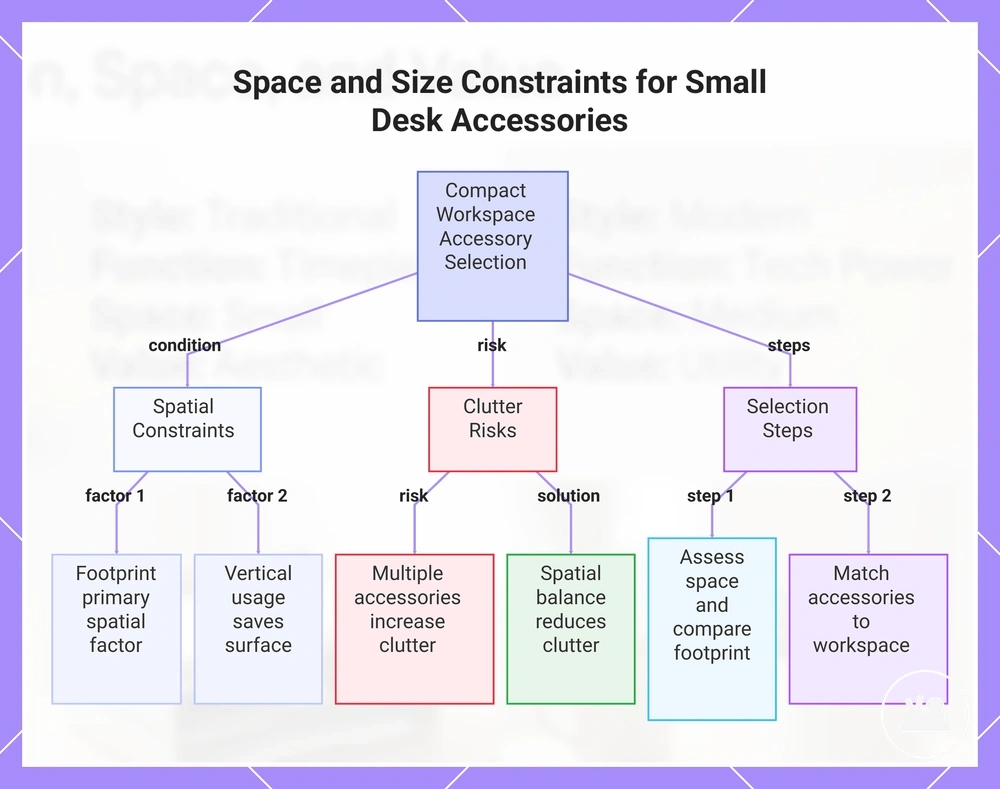
Desk decor accessories selection depends on available space, desk dimensions, and layout constraints. A compact desk often requires different choices than a standard desk because each accessory occupies a larger portion of the usable surface. When space is limited, the size, placement, and arrangement of desk decor accessories can have a greater influence on workspace flexibility and accessibility.
The footprint of desk decor accessories is a primary spatial consideration because larger items may reduce the area available for daily tasks. Vertical usage can help manage limited space by moving storage or display elements upward rather than expanding across the desk surface. Clutter risk may increase when multiple desk decor accessories compete for the same area, making spatial balance an important part of accessory selection. The suitability of a setup depends on how desk decor accessories fit within the available workspace rather than on size alone.
- Assess available space before selecting desk decor accessories.
- Compare the footprint of each accessory with the usable work area.
- Consider whether vertical placement can support a compact layout.
- Evaluate the potential for visual or physical clutter as accessories are added.
- Match desk decor accessories to the scale and constraints of the workspace.
This chart shows the key spatial constraints, clutter risks, and selection steps for choosing desk decor accessories in a compact workspace.
Cost and Value Comparison of Desk Decor Accessories by Budget and Durability
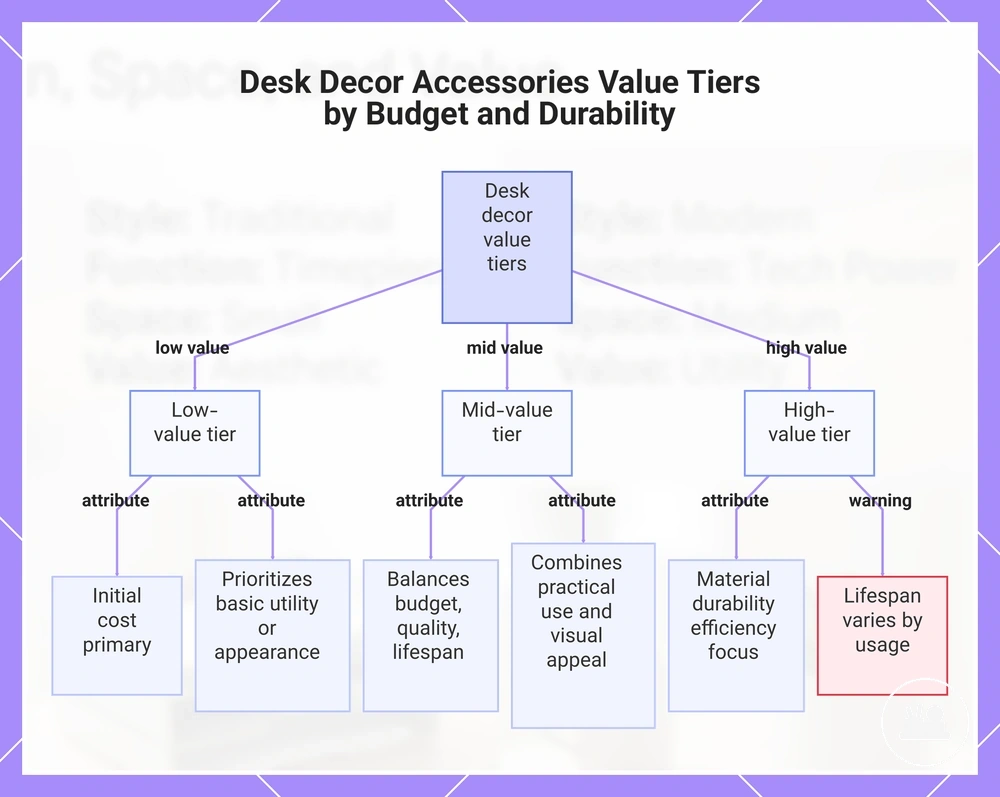
Value in desk decor accessories depends on how budget, quality, and durability align with the intended use of the workspace. Lower budget options may prioritize basic utility or appearance, while higher budget options may emphasize material quality, construction, or longer-term use expectations. The perceived value of desk decor accessories often depends on whether their attributes match the user's priorities rather than on cost alone.
Low-value tiers are commonly associated with budget-focused desk decor accessories where initial cost is the primary consideration. Mid-value tiers often balance budget, quality, and expected lifespan, offering a combination of practical use and visual appeal. High-value tiers may place greater emphasis on material quality, durability expectations, and functional efficiency, although actual lifespan can vary based on materials, usage conditions, and maintenance.
Durability influences value because desk decor accessories that remain suitable for their intended purpose over time may provide stronger long-term utility relative to their initial cost. Long-term value depends on factors such as usage frequency, material quality, and continued relevance within the workspace. For this reason, budget decisions are often more effective when durability, quality, and intended function are evaluated together as part of the overall value assessment.
This chart illustrates the three value tiers of desk decor accessories, showing how budget, quality, and durability shape each tier's value proposition.
Key Trade-Offs and Decision Criteria for Selecting Desk Decor Accessories
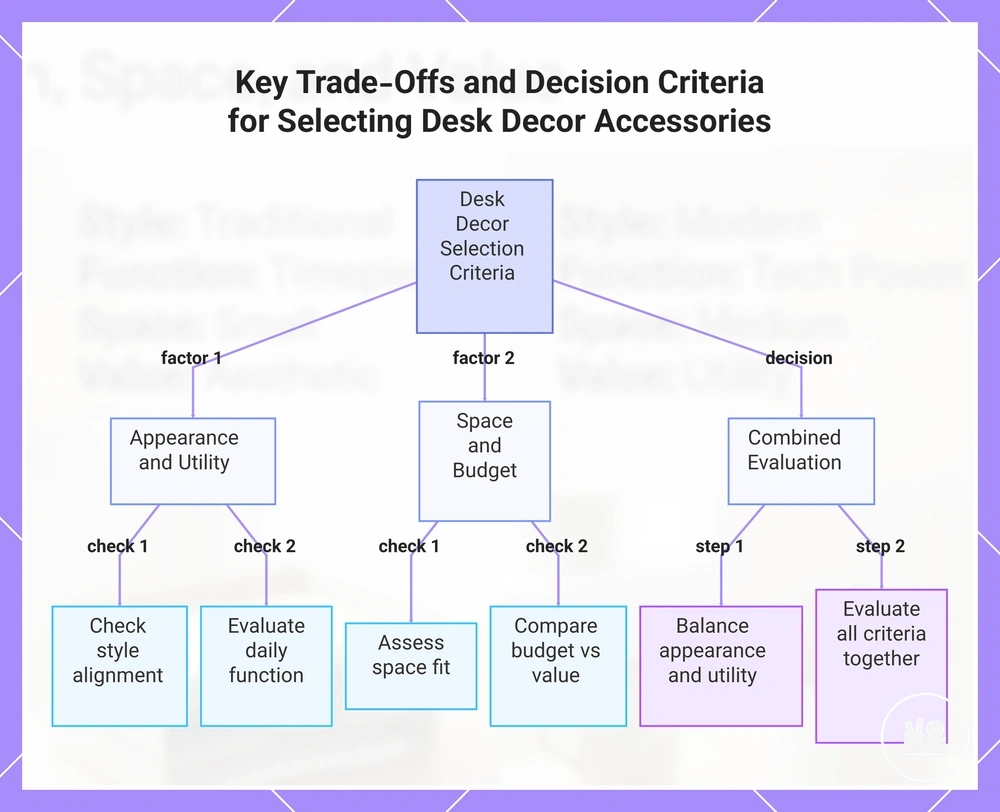
Selection of desk decor accessories depends on balancing style, function, space, and budget within the requirements of a specific workspace. The most suitable choice is usually determined by how these criteria interact rather than by any single attribute. Effective selection focuses on achieving a practical balance between visual preferences, workspace needs, spatial limitations, and spending priorities.
- Assess whether desk decor accessories align with the intended style of the workspace.
- Evaluate whether desk decor accessories provide meaningful function or support daily activities.
- Consider available space and whether the accessories fit comfortably within the workspace.
- Compare budget expectations with perceived value, quality, and durability considerations.
- Determine whether the balance between appearance and utility matches workspace priorities.
- Review how multiple desk decor accessories contribute to a cohesive and manageable setup.
Final selection decisions are often most effective when all criteria are evaluated together rather than independently. The preferred desk decor accessories may vary based on the balance between style, function, space, and budget, making selection a context-dependent decision guided by combined constraints.
This chart shows the main criteria and decision steps for selecting desk decor accessories, focusing on balancing style, function, space, and budget.