Functional vs Decorative Desk Accessories as Workspace Design Decision Framework
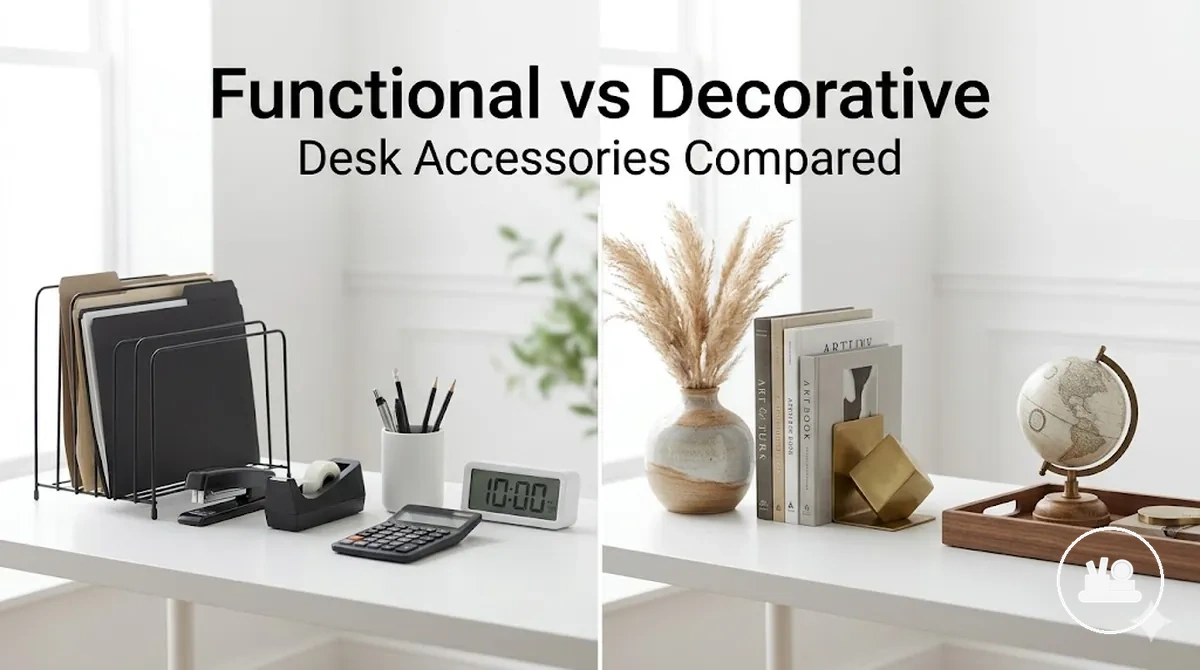
Functional vs decorative desk accessories is a workspace design comparison framework that examines how different types of desk accessories contribute to workspace performance and visual composition. It provides a structured way to understand how functional desk accessories and decorative desk accessories operate within the same environment without merging their roles. This comparison focuses on workspace design decisions rather than individual items, highlighting how each category influences productivity and visual identity in distinct but connected ways. Functional desk accessories are typically associated with organization, structure, and workflow support, while decorative desk accessories shape styling, atmosphere, and visual expression. Together, they form a balanced system that influences both the efficiency and appearance of a desk setup. This section establishes the macro foundation for understanding how these two categories coexist before moving into precise definitions in the next layer.
In real workspace scenarios, desk accessories are rarely selected in isolation, as functional desk accessories and decorative desk accessories often coexist in study, office, and creative environments. Their combination depends on how the workspace is used, including whether productivity demands, organizational needs, or visual styling priorities take precedence. Some setups emphasize structure-driven layouts where workflow efficiency is prioritized, while others integrate more decorative elements to reinforce identity and comfort in the workspace. These variations make the comparison relevant for understanding how different workspace configurations evolve based on user intent and environmental constraints.
The contrast between functional and decorative desk accessories is defined by their influence on workspace design outcomes. Functional elements support productivity through organization and structured access to tools, while decorative elements shape visual identity by influencing tone, balance, and styling. Neither category operates in isolation, as their interaction determines the overall coherence of a desk setup. This establishes the foundation for exploring how each category is defined and structured in more detail, leading into a clearer breakdown of their roles within workspace design systems.
Understanding functional and decorative desk accessories and their role in workspace setup
Functional desk accessories are utility-driven desk items, while decorative desk accessories are aesthetics-driven desk items used within workspace setup to shape both structure and visual character. These categories together define how desk accessories contribute to a complete desk decor accessories system without merging their distinct purposes. Functional desk accessories connect directly to organization and workflow support, while decorative desk accessories contribute to aesthetics and visual expression within the desk setup. In many workspace environments, both categories coexist to influence how a workspace design is perceived and experienced, especially in relation to productivity and visual identity. This distinction creates a clear foundation for understanding their roles before moving into deeper structural breakdowns.
The role of functional desk accessories in workspace composition is primarily related to supporting structured work behavior, while decorative desk accessories influence the visual and emotional tone of the environment. Functional elements typically interact with how tools are stored, accessed, and organized during daily tasks, while decorative elements influence how the workspace is styled and visually balanced. This separation helps clarify how different desk setup decisions contribute to either operational efficiency or visual styling outcomes. In practice, both categories may overlap in use but remain distinct in purpose within workspace design logic.
- Functional desk accessories → organization support
- Functional desk accessories → workflow support
- Functional desk accessories → storage efficiency
- Functional desk accessories → clutter reduction
- Decorative desk accessories → visual styling
- Decorative desk accessories → mood and personality expression
- Decorative desk accessories → color balance and visual hierarchy
Examples of EAV relationships in this context help clarify how each item behaves within a workspace setup. A pen holder contributes to organization and often results in reduced clutter on the desk surface. A desk tray supports storage structure by grouping small items into accessible zones, improving workflow clarity. A decorative object such as a figurine or plant contributes to visual styling and can influence the perceived personality of the workspace. Understanding functional and decorative desk accessories does not determine suitability on its own, as their effectiveness depends on how they align with specific workspace needs and usage patterns.
This chart compares the distinct roles of functional and decorative desk accessories in shaping workspace organization and visual style.
Key differences between functional and decorative desk accessories in real workspace use
Key differences between functional and decorative desk accessories in real workspace use are defined by contrasting outcomes in workspace efficiency and visual identity. The comparison focuses on how functional desk accessories and decorative desk accessories influence desk setup performance under real working conditions. Functional elements primarily affect organization, workflow stability, and task execution, while decorative elements shape aesthetics, style, and personalization within the workspace. Both operate within the same workspace environment but produce different types of value depending on usage context and design intent.
- Functional desk accessories → workspace efficiency → workflow optimization
- Decorative desk accessories → visual identity → personalization and styling impact
- Functional desk accessories → organization support → reduced clutter and structured access
- Decorative desk accessories → aesthetics enhancement → mood and atmosphere shaping
- Functional desk accessories → productivity support → task focus and operational clarity
- Decorative desk accessories → design influence → visual balance within desk setup
In real workspace setups, the contrast appears in how each category supports different priorities rather than competing roles. A productivity-first desk setup typically relies more on functional desk accessories to maintain efficiency and reduce workflow interruptions, while an aesthetics-driven setup may emphasize decorative desk accessories to strengthen visual identity and personalization. The balance between them depends on workspace type, task requirements, and the intended user experience. Neither category overrides the other, as both contribute differently to overall workspace design outcomes.
Functional desk accessories for organization, storage, and workflow efficiency
Functional desk accessories refer to workspace elements that support organization, storage, and workflow efficiency within a desk setup. These accessories structure how tools, documents, and daily-use items are arranged so that tasks can progress with clearer access and reduced interruption. In practical workspace use, they help maintain order by creating defined zones for storage and retrieval, which can support productivity depending on the workflow demands. Their role remains strictly utility-focused, emphasizing how a desk setup operates rather than how it looks.

Functional desk accessories operate through distinct categories that connect physical structure with workflow outcomes. Organization tools help segment items into structured positions, storage systems manage capacity and accessibility of materials, and workflow aids support task flow continuity during work activities. Each category contributes differently to maintaining a stable and efficient desk setup, depending on how frequently items are used and how quickly access is required.
- Organization tools → attribute: structure → outcome: clearer desk layout and reduced clutter
- Storage systems → attribute: capacity → outcome: grouped item management and improved access
- Desk trays → attribute: separation → outcome: better document control and task grouping
- Pen holders → attribute: accessibility → outcome: quicker tool retrieval during tasks
- Cable organizers → attribute: order management → outcome: reduced disruption in workflow
- Compartment boxes → attribute: modularity → outcome: flexible storage and structured arrangement
In EAV terms, functional desk accessories connect category, attribute, and outcome in a structured way where organization, storage, and workflow features determine how efficiently a desk setup performs. These effects remain conditional on usage patterns, workspace type, and task frequency, meaning the impact on productivity may vary. Overall, they form the structural backbone of a desk environment by supporting order and task-oriented flow.
Decorative desk accessories for aesthetic enhancement and visual workspace styling
Decorative desk accessories refer to workspace elements used to enhance aesthetics, visual styling, and identity expression within a desk setup. These items shape how a workspace feels visually by influencing color harmony, texture balance, and spatial composition. Their role is centered on visual and emotional interpretation rather than operational utility, contributing to how the desk environment is perceived. In workspace design, they help form a cohesive visual identity through curated decorative elements.
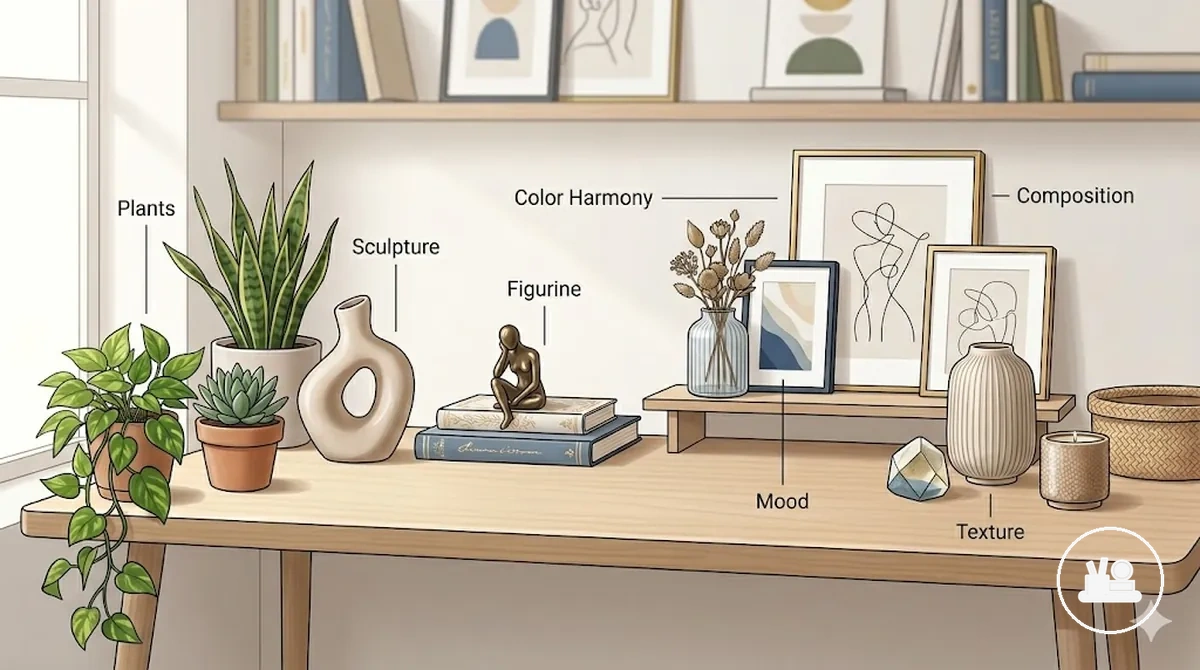
Decorative desk accessories influence workspace aesthetics through specific visual functions that shape atmosphere and composition. Elements such as plants, sculptures, and figurines contribute different visual attributes like organic texture, form contrast, and color variation. These attributes interact to create a more expressive and visually balanced desk setup, depending on how elements are combined within the space.
- Plants → visual attribute: organic texture → effect: softer and more natural visual tone
- Sculptures → visual attribute: form structure → effect: stronger spatial focal points
- Figurines → visual attribute: character expression → effect: personalized workspace identity
- Decor items → visual attribute: color variation → effect: enhanced color harmony and contrast
- Frames → visual attribute: spatial framing → effect: structured visual composition
- Art objects → visual attribute: aesthetic depth → effect: layered visual styling
In EAV terms, decorative desk accessories connect item type, visual attribute, and resulting aesthetic effect, where each element contributes to overall workspace styling in a distinct way. A plant may introduce organic texture, a sculpture may add structural contrast, and a figurine may enhance identity expression. These effects remain dependent on arrangement, combination, and surrounding visual context, shaping how cohesive the workspace design appears without influencing functional performance. :contentReference[oaicite:0]{index=0}
How to choose between functional and decorative desk accessories based on workspace needs
The choice between functional and decorative desk accessories depends on workspace needs, usage intensity, and the required balance within a desk setup. This decision framework evaluates how different workspace contexts prioritize structure or visual styling. Functional emphasis typically aligns with high task demand environments, while decorative emphasis aligns with visual expression needs. In many cases, both are balanced depending on constraints and user preference.
- Workspace type → evaluate whether study, office, or creative desk defines priority direction
- Usage frequency → assess how often items are accessed during daily workflow
- Task structure → determine need for organization and functional desk setup support
- Visual preference → evaluate importance of aesthetics in workspace design
- Storage demand → assess requirement for compartments and surface clarity
- Spatial constraint → consider desk size and layout limitations affecting balance
- Priority weight → assign functional vs decorative emphasis based on overall workspace needs
In a study desk environment, functional elements often take priority because workflow requires consistent organization and easy access to tools. In a professional office desk, a balanced approach is typically used where functional structure and decorative styling both contribute to a stable desk setup. In a creative workspace, decorative elements may receive higher weight to support visual inspiration, while functional elements maintain baseline organization. The final balance depends on how workspace needs distribute priority between functional and decorative requirements.
This chart shows how different workspace contexts (study, office, creative) determine the typical balance between functional and decorative desk accessories.
Balancing functional and decorative desk accessories for productivity and visual harmony
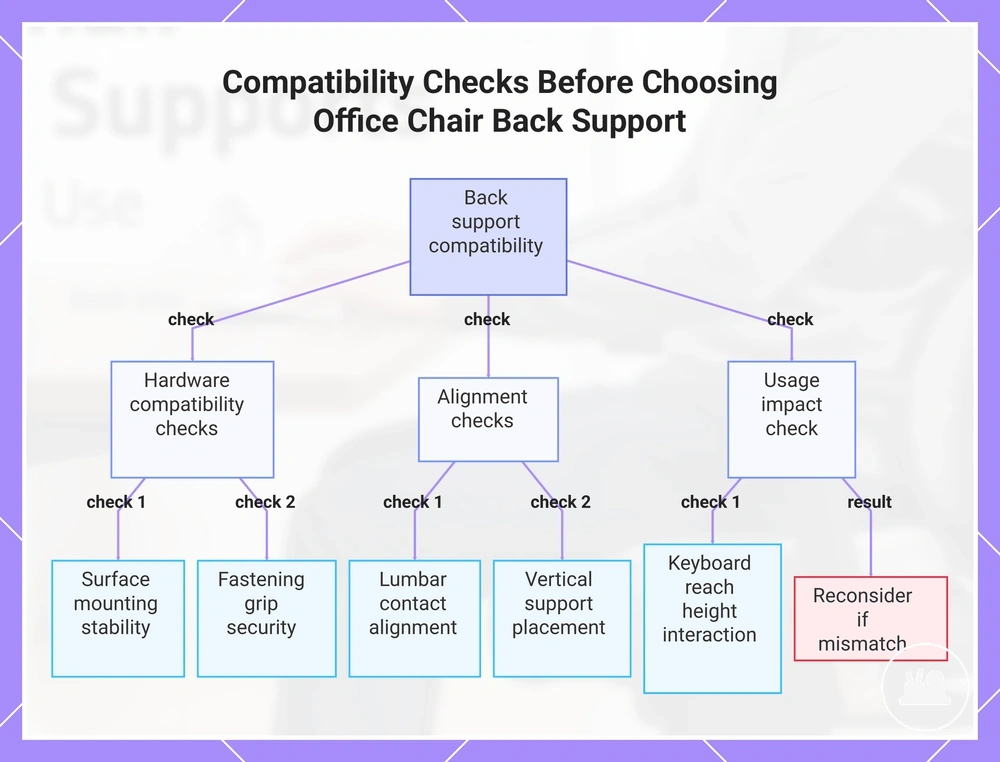
Balancing functional and decorative desk accessories refers to arranging both types of elements in a way that supports workspace harmony between productivity and visual clarity. This balance describes how a desk setup can maintain functional efficiency while still preserving decorative expression without one dominating the other. In many workspace needs, this balance helps ensure that neither usability nor aesthetics is compromised, but instead integrated into a unified system.
The balance model can be understood as a proportional relationship where functional elements support structure and productivity while decorative elements support visual styling and atmosphere. When both are combined, they create a workspace harmony that may lead to stable productivity patterns and improved visual clarity depending on the setup context. If functional elements dominate too heavily, the workspace may feel rigid or overly minimal, while excessive decorative emphasis can reduce focus and introduce visual distraction. The interaction between functional and decorative elements therefore works as a controlled ratio rather than a fixed rule, and it can shift based on workspace needs, task intensity, and design preference.
- Functional overload → clutter reduction focus becomes excessive and may lead to rigid structure and reduced visual warmth
- Decorative overload → visual styling dominates and can introduce distraction or reduce task focus consistency
- Minimal functional base → insufficient structure may reduce organization and workflow stability
- Minimal decorative presence → reduced visual identity may result in a less expressive workspace setup
In practical scenarios, a study desk often benefits from stronger functional presence with limited decorative elements to maintain focus and organization. A professional office desk typically uses a more balanced ratio where structure and visual clarity coexist to support long working hours. A creative workspace may allow more decorative influence to support visual inspiration while still maintaining enough functional structure to preserve workflow stability. The overall balance depends on how workspace needs distribute priority between functional efficiency and decorative expression. :contentReference[oaicite:0]{index=0}
This chart defines the balance between functional and decorative desk accessories, explains its proportional nature, and lists the effects of functional or decorative dominance.
Common mistakes when prioritizing function or aesthetics in desk accessory selection
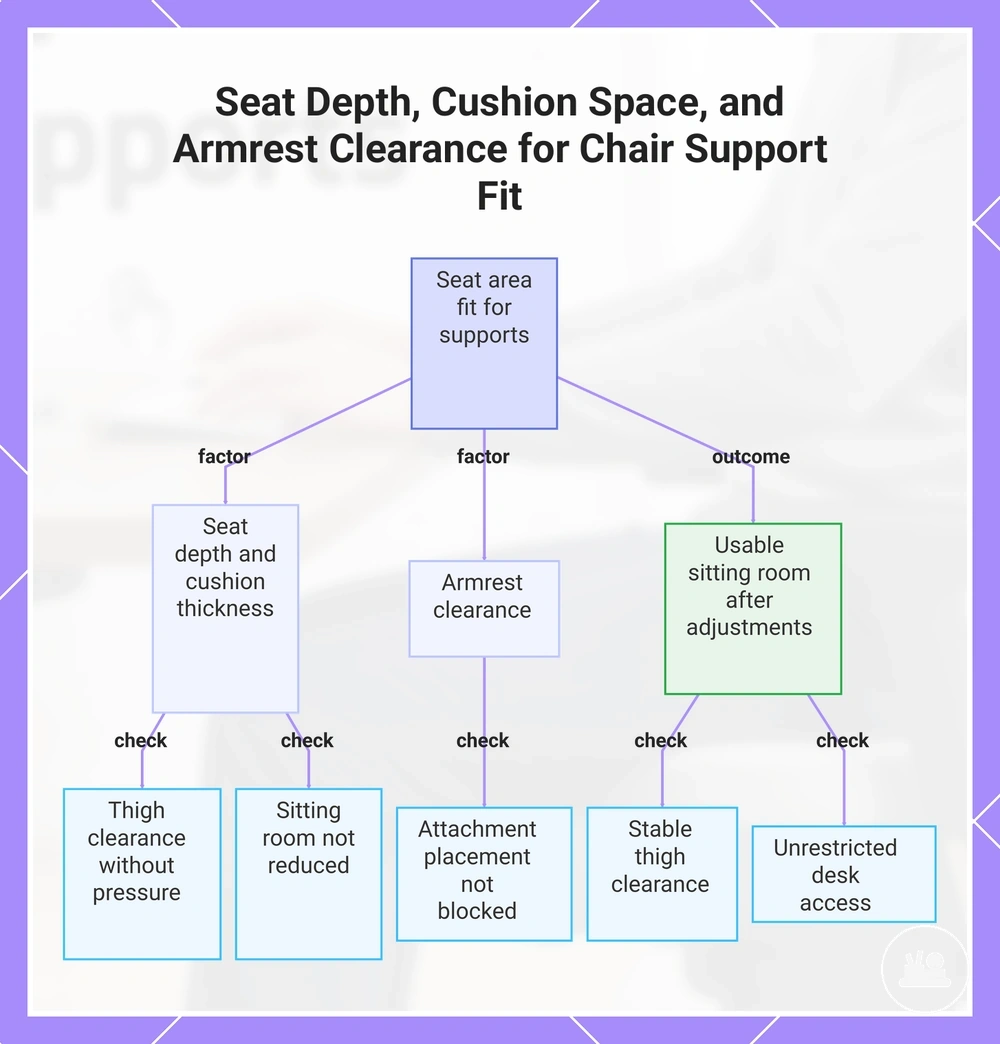
Imbalance between functional and decorative desk accessories leads to workspace inefficiency when usability and visual design are not aligned with actual workspace needs. These mistakes occur in workspace setups where either functional structure or decorative expression dominates without considering overall workspace behavior. As a result, both productivity and visual clarity in the workspace may be reduced due to clutter, poor usability, or layout inefficiency.
These workspace configuration mistakes follow clear cause-and-effect patterns where functional or decorative emphasis creates specific breakdowns in usability and structure. Each mistake reflects a different type of imbalance that affects how the workspace operates in daily use.
- Decorative overload → reduced usable space → increased clutter and limited functional workspace efficiency
- Functional neglect → weak organization structure → reduced usability and inconsistent workspace workflow
- Excess visual styling → distraction in workspace → lower focus and reduced task clarity
- Over-cluttering functional tools → restricted movement space → inefficient desk layout and poor accessibility
- Ignoring spatial constraints → mismatched arrangement → inefficient workspace configuration and layout imbalance
These mistakes highlight how functional and decorative desk accessories must remain contextually aligned within a workspace rather than treated independently. When imbalance occurs, it can lead to clutter, inefficiency, and reduced usability across the desk setup. Maintaining awareness of these error patterns helps clarify how workspace structure and visual design interact in real usage conditions.
This chart shows the main categories of imbalance between function and aesthetics and their specific effects on workspace usability and efficiency.
Best practices for arranging functional and decorative desk accessories without clutter
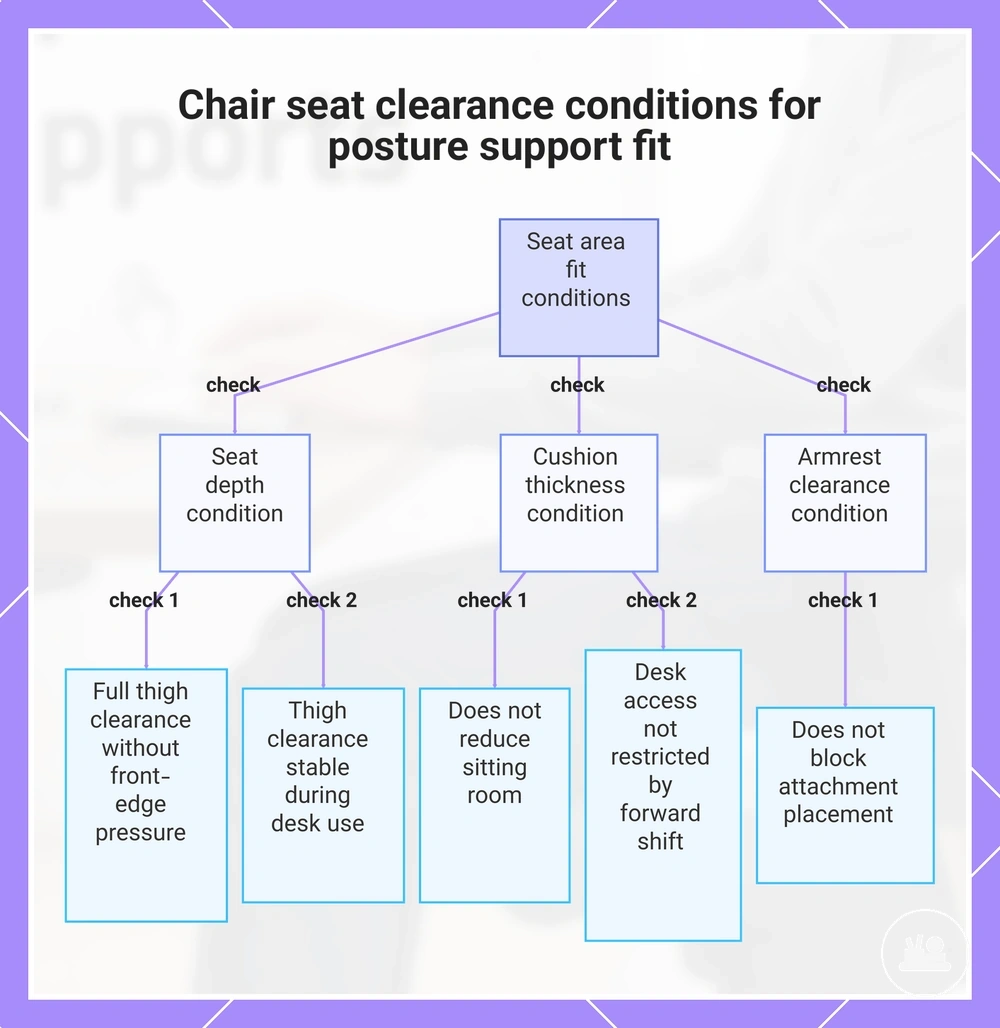
Arrangement of functional and decorative desk accessories refers to the spatial organization of items within a desk setup to maintain usability and visual clarity. This arrangement directly influences workspace structure by controlling how functional tools are accessed and how decorative elements contribute to visual order. When spacing, alignment, and zoning are applied consistently, the workspace may achieve improved clarity and reduced visual noise depending on desk size and usage patterns.
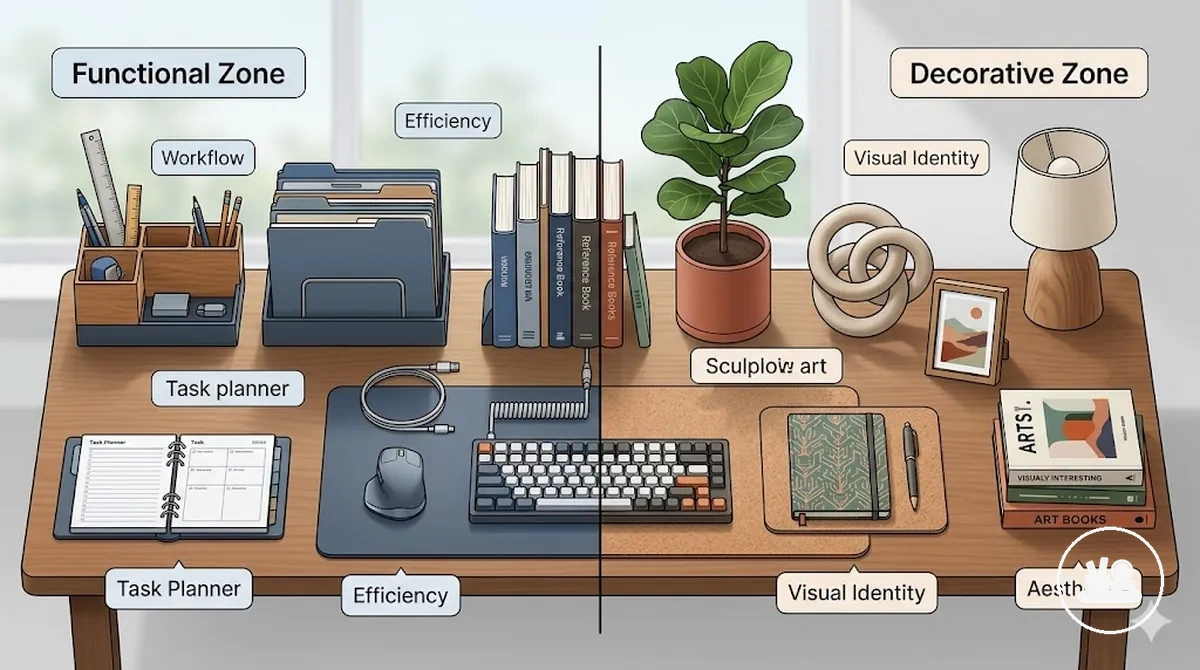
Zoning logic organizes the desk setup into distinct areas that separate functional and decorative placement to support structured use. This reduces overlap between utility-driven items and visual elements, helping maintain clarity in the workspace layout.
- Work zone → place functional desk accessories within primary reach to support task execution and maintain workflow structure
- Storage zone → position low-frequency items to reduce surface clutter and improve spatial organization
- Decorative zone → place decorative elements at peripheral areas to maintain visual balance without disrupting usability
- Spacing control → maintain consistent gaps between items to reduce clutter perception and improve alignment
- Alignment structure → organize items in linear or grouped layouts to improve visual clarity and desk setup order
- Functional grouping → cluster related tools to reduce scattered placement and improve accessibility
In smaller desk setups, tighter zoning may be required to preserve usable space, while larger desks allow more separation between functional and decorative areas. The effectiveness of arrangement depends on workspace constraints, usage frequency, and functional demand. Applying structured zoning can improve clarity and reduce clutter perception in the desk setup. clutter-free desk decor accessories
This chart shows the key principles for organizing functional and decorative desk items to maintain clarity and reduce visual noise.