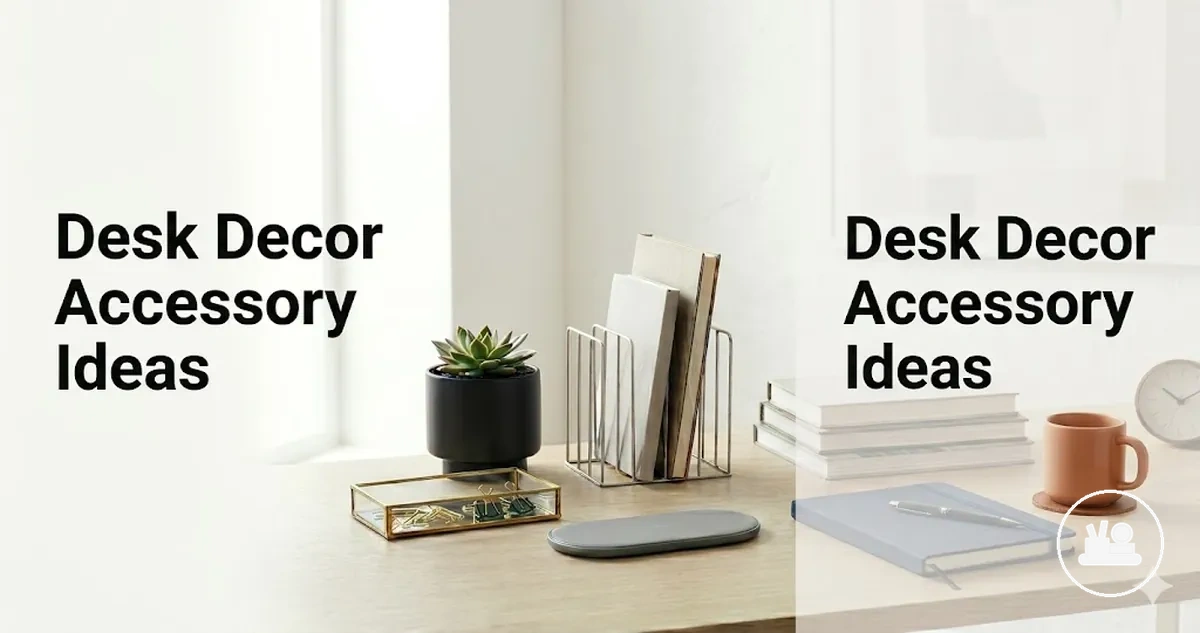
Desk Decor Accessory Ideas for Styled Workspaces
Desk decor accessory ideas are desk-level styling choices that use small objects, useful holders, and decorative details to shape how a workspace looks and feels. These ideas can add visual character, personal expression, and a more coordinated look when they fit the desk surface and the way the desk is used. The focus is on accessories placed on or near the desk, not broad room decor.
A styled workspace may feel more personal when the desk accessories share a color direction, material finish, or simple visual theme. desk decor accessories are desktop items that support the look of the desk while still belonging to desk use, such as a neat tray, a small holder, or one personal accent. The visual character works best when practical restraint keeps enough open space for writing, typing, reading, or daily tasks.
This page frames desk decor accessory ideas as inspiration rather than a product catalog or buying guide. The goal is to show how workspace accents, desktop accessories, and decorative desk items can contribute to a coordinated look without making the desk harder to use. The next section clarifies what kinds of accessories usually count as desk decor accessory ideas before moving into broader inspiration patterns.
What Desk Decor Accessory Ideas Usually Include
Desk decor accessory ideas are collections of accessories used on a desk or near a desk to add visual interest while remaining connected to desk use. The subject focuses on desk-level objects rather than broader decorating themes. The scope stays within the desk boundary.
What Desk Decor Accessory Ideas Usually Include can be understood through common examples found in desk-focused arrangements. Decorative trays may group small items into a defined area, while holders and organizers can help structure the desk visually. Small plants, vases, and figurines are often included because they contribute a decorative element while remaining desk-based. These examples show idea-level inclusion rather than a full type classification.
Common included ideas can be grouped into the following categories:
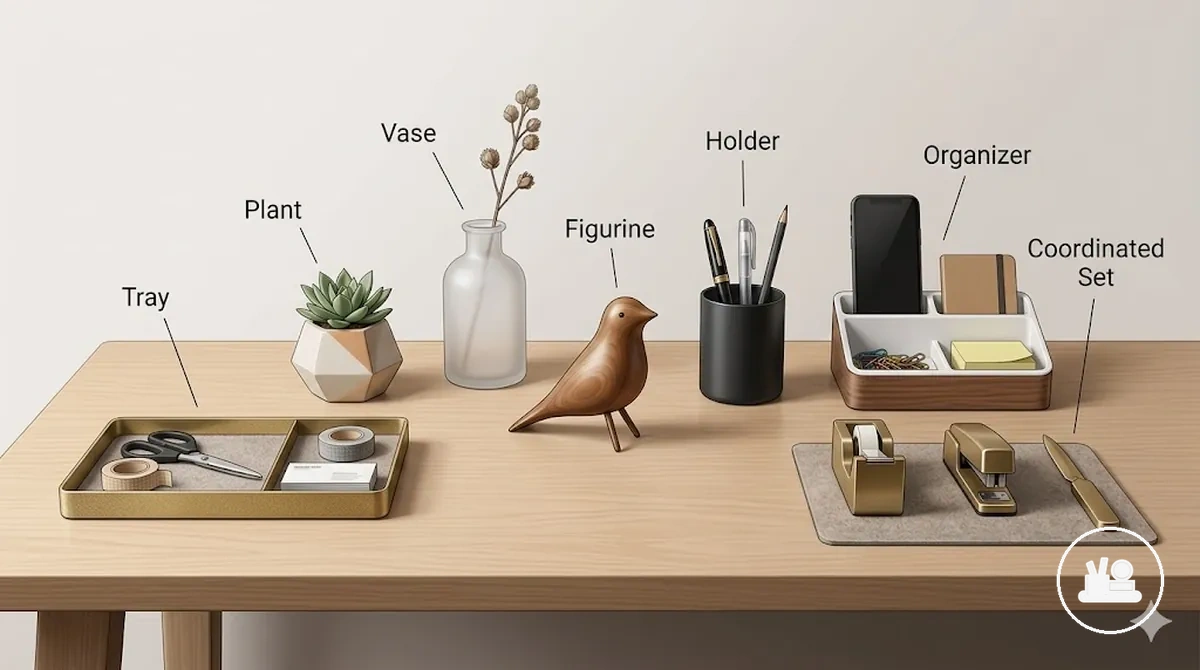
- Decorative trays that gather small desk items and create a clearer visual zone.
- Small plants that add a natural accent while remaining part of the desk surface.
- Vases that introduce a decorative focal point at desk level.
- Figurines that act as personal workspace accents or themed display pieces.
- Holders that keep frequently used items together while contributing to presentation.
- Organizers that combine storage purpose with a tidier desk appearance.
- Coordinated sets that connect multiple desktop decor items through a shared look.
These groups help explain what desk decor accessory ideas may include, but they are not intended as a complete classification system. Readers who need deeper category detail can explore desk decor accessory types, where type-level classification belongs.
Desk Decor Accessories That Add Personality
A desk with a few carefully chosen desk decor accessories can feel more distinctive than a desk filled with unrelated items. A small personal accent, a textured object, or a contrasting color element may help create a clearer visual identity when matched to the surrounding desk setup. Desk decor accessories often express character through details that remain visible during everyday use. Personality is usually reflected through visible objects and small accents placed on the desk.
Desk Decor Accessories That Add Personality can be demonstrated through texture, color, shape, and focal point rather than through quantity alone. A textured tray beside smoother desk surfaces may add contrast, while a colored vase or decorative object can draw attention to a specific area. Shape also influences visual effect, as rounded and geometric forms create different visual emphasis when used as desktop accents. Desk placement helps determine whether an item becomes a focal point or remains a supporting detail.
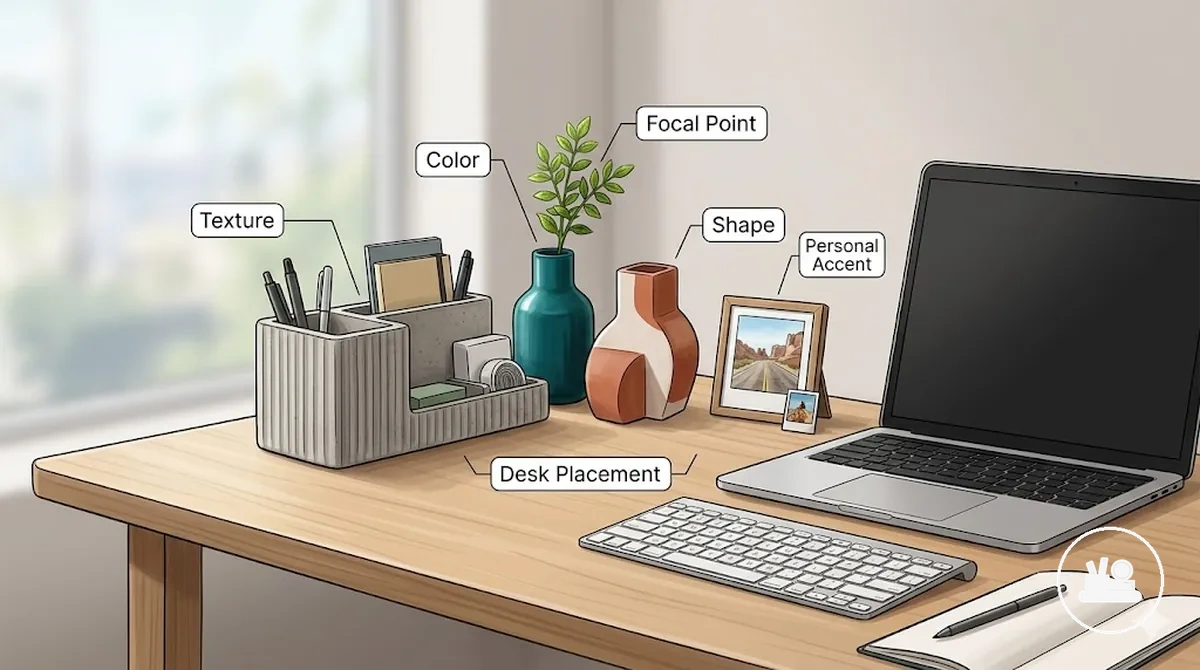
The following examples group common personality signals through visible attributes:
- A textured organizer can add surface variation and create a more layered desk appearance.
- A color-contrast accent object can establish a stronger focal point within a neutral setup.
- A uniquely shaped decorative object can highlight character through form and silhouette.
- A personal accent can reflect individual interests when its size suits the available desk area.
- A coordinated group of desktop accents can create a more unified visual effect through shared materials or colors.
For example, a small figurine placed near a monitor may become a focal point because of its shape, while a simple tray may stand out because of its texture or finish. In another setup, a single colored vase may provide contrast against a neutral desk surface without dominating the workspace. These examples keep the focus on desk-specific inspiration and on how visible attributes influence the overall look of the desk.
Small Plants, Vases, Trays, and Figurines
Small plants, vases, trays, and figurines are accent objects used on a desk to express personality through visible details and subtle variation. These items typically appear together in compact desk setups where each object contributes a different visual role without shifting focus away from the workspace. As local examples, they help show how personality-building desk accessories work through contrast in form, material, and placement.
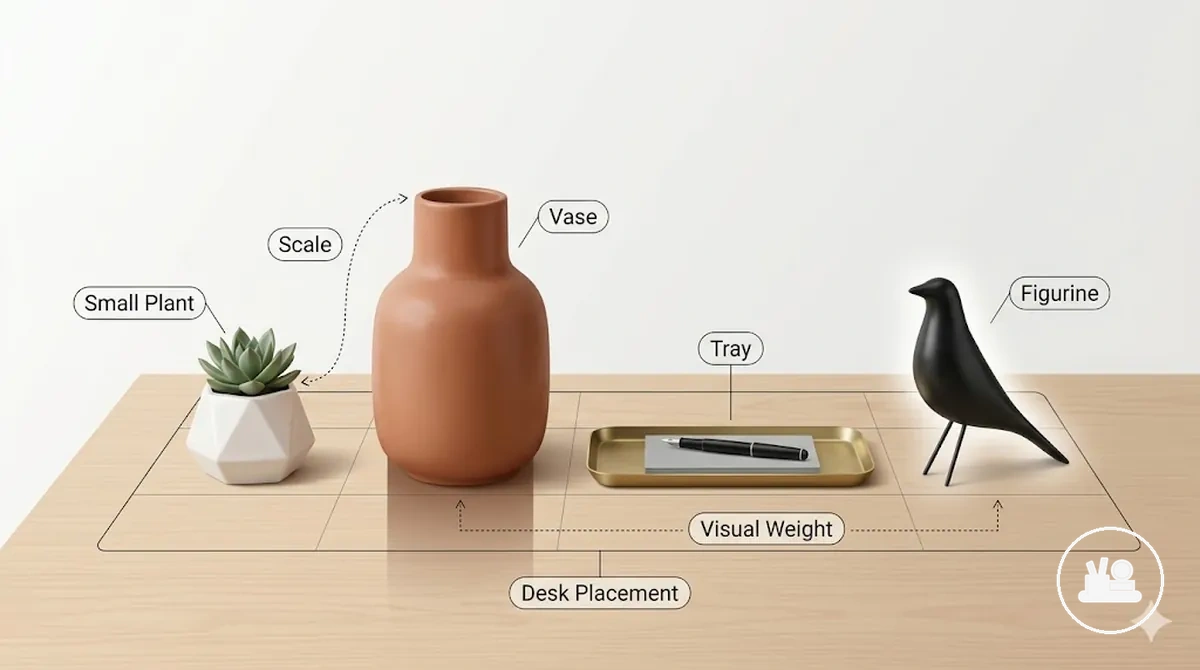
Each accent object influences scale, visual weight, and desk placement in different ways. Small plants often soften the desk visually because their organic shape reduces sharpness in structured layouts. Vases tend to add vertical emphasis, which increases visual weight depending on height and position. Trays define surface order by grouping items into contained zones, while figurines introduce focused detail that can act as a small visual anchor.
These effects can shift depending on how they are combined. A small plant next to a tray may create a more natural balance between structure and softness, while a figurine placed independently can feel more playful due to its isolated visual presence. The overall result depends on how each accent object interacts with desk placement and surrounding visual density.
Desk Accessory Ideas by Visual Style
Desk accessory ideas by visual style are ways of grouping desk accessory ideas according to visual style using color, material, shape, density, and resulting desk effect. This approach helps identify visual directions through workspace accents without turning the section into full style breakdowns. Each style direction remains at an inspiration level and is interpreted through visible cues rather than fixed design rules.
The structure of visual style depends on how color, material, shape, and density interact to produce a specific desk effect. Lower density with neutral color often creates a more open appearance, while mixed materials or stronger contrast can shift attention across visible objects in different ways depending on placement and balance.
| Style cue | Visible attributes | Desk effect |
|---|---|---|
| Aesthetic | soft color, mixed material | expressive visual tone |
| Cute | rounded shape, light color | playful surface feel |
| Cozy | warm color, soft material | denser, warm presence |
| Modern-adjacent | contrast, clean shape | structured clarity |
| Minimal-adjacent | low density, neutral color | open visual space |
These style cues remain at an inspiration level and are not intended as full selection systems. They help connect desk accessory ideas with visual direction through observable attributes while keeping deeper style-fit decisions separate from this overview layer.
For deeper exploration of structured contemporary setups, readers can continue with modern desk decor accessories, where modern-adjacent direction is expanded with more defined layout logic and structure cues.
For simpler, space-first arrangements that reduce visual density, readers can also explore minimal desk decor accessories, where minimal-adjacent direction is expressed through lower density and neutral visual balance.
Aesthetic Desk Accessories
Aesthetic desk accessories are desk decor accessory sets shaped by coordinated visual cues where color, material, finish, scale, and visual effect work together to form a consistent desk impression. In a typical workspace scenario, a few aligned desktop accents such as a tray, organizer, or soft decor object create a unified surface mood. This section frames aesthetic desk accessories as a local style direction where coordination matters more than individual object prominence.
Aesthetic desk accessories depend on how color, material, finish, scale, and visual effect interact across the desk surface. A soft or muted color palette can reduce visual tension, while a repeated finish like matte or light gloss may support continuity across different objects. Scale influences how balanced the desk feels, since smaller items tend to reduce dominance while slightly larger accents may guide visual focus. The overall aesthetic impression forms through how these attributes are distributed rather than through any single accessory.
Trays, organizers, small decor objects, and soft accents often support a coordinated look when they share compatible finish or repeated color cues, which can strengthen visual consistency across the desk. However, limited variation in shape or material may still support an aesthetic desk effect when the overall density remains controlled and the visual balance stays stable across the workspace.
This chart explains how aesthetic desk accessories are defined, what key coordination attributes they depend on, and how they produce a consistent desk impression.
Cute Desk Decor Accessories
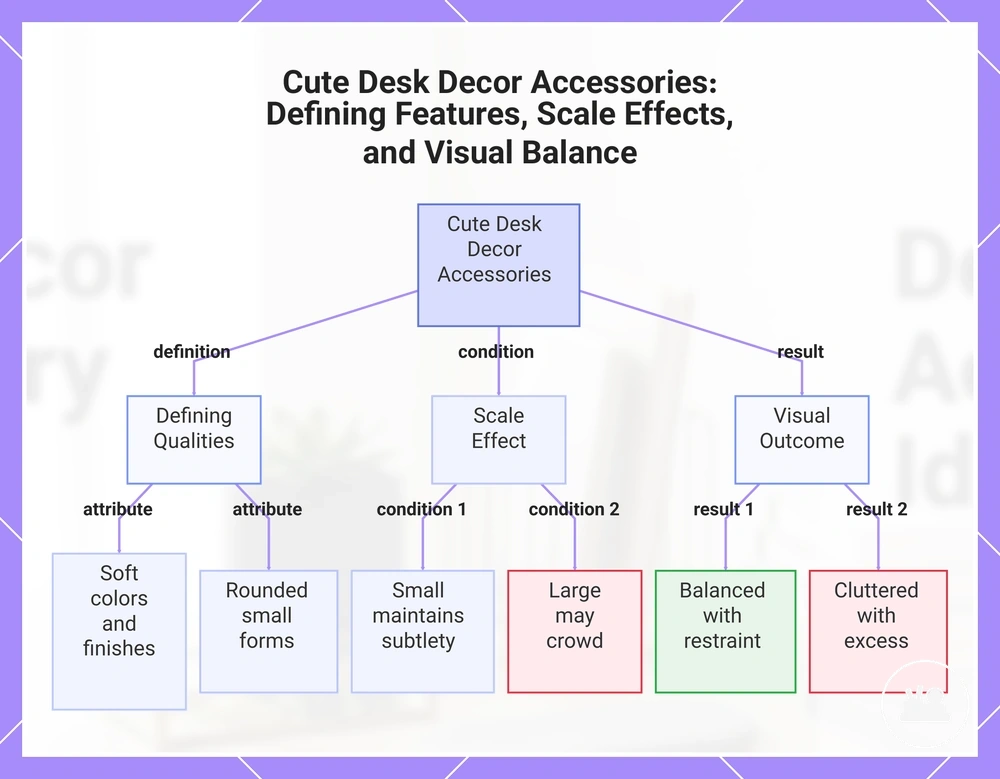
Cute desk decor accessories are desk decor accessory elements defined by soft form, small scale, and gentle color cues that shape a playful but controlled visual effect on a desk. In a typical workspace scenario, figurines, small holders, pastel items, and soft-shaped accents can add light character without overwhelming the surface. This section treats cute desk decor accessories as a local style direction where balance matters more than decorative intensity.
Cute desk decor accessories depend on how color, material, finish, scale, and visual effect interact within limited desk space. Soft or pastel colors usually reduce visual intensity, while rounded forms and smooth finishes can soften the overall desk decor appearance. Scale is important because smaller accessories tend to maintain subtlety, while larger objects may increase crowding depending on placement and density. The resulting visual effect stays balanced when these elements remain restrained and coordinated rather than excessive.
Figurines, small holders, pastel accessories, and soft shapes can support a cute desk decor direction when they add gentle variation without increasing visual crowding. However, when too many decorative items are combined without clear spacing or consistency, the same elements may shift from a balanced accessory setup into visual clutter depending on arrangement and density.
This chart defines cute desk decor accessories, explains how scale affects subtlety, and shows the visual outcome when elements are restrained or excessive.
Cozy Desk Decor Ideas
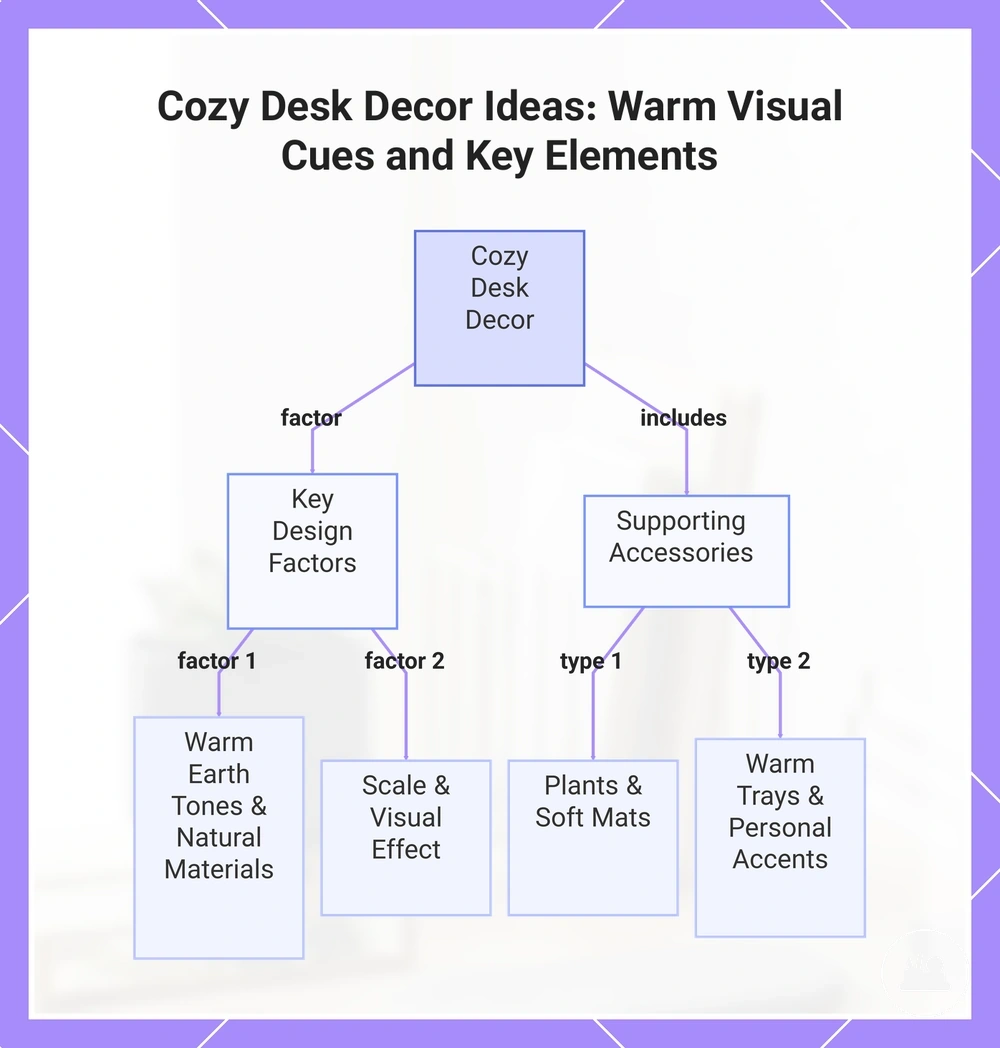
Cozy desk decor ideas are desk decor accessory arrangements defined by warm visual cues where color, material, finish, scale, and visual effect work together to create a softer and more comfort-oriented desk impression. In a study desk, home desk, or relaxed work corner, items like small plants, warm-toned trays, and soft mats can create a sense of visual warmth without changing the desk’s functional layout. This section treats cozy desk decor ideas as a local style direction focused on desk-level comfort signals rather than full room atmosphere.
Cozy desk decor ideas depend on how color, material, finish, scale, and visual effect interact within limited desk space. Warm or muted earth tones often support a softer desk decor appearance, while natural materials such as wood or fabric-textured accessories can add visible warmth. Scale influences balance because grouped smaller accessories tend to create controlled density, while overly crowded placement may reduce clarity. The overall visual effect is shaped by how these elements are arranged rather than any single accessory type.
Plants, vases, warm-toned trays, soft desk mats, and small personal accents can support cozy desk decor ideas when they introduce warmth through color and texture without overcrowding the workspace. In different desk scenarios such as study setups or home work corners, these accessories may feel more or less balanced depending on spacing, material consistency, and visual density.
This chart summarizes the key factors and accessory types that define cozy desk decor, based on color, material, scale, and arrangement.
Desk Decor Set Ideas for a Coordinated Look
Desk decor set ideas for a coordinated look describe how multiple desk decor accessories can be grouped so they share visual logic without requiring identical design. In a study desk or home workspace, items such as a tray, holder, plant, vase, mat, or small decor object can appear unrelated individually but still form a coordinated desk decor set ideas for a coordinated look when color, material, finish, scale, or visual effect are aligned through repetition, contrast, or grouping patterns. This section explains these sets as structured workspace accents rather than fixed product combinations.
Coordination in desk decor set ideas for a coordinated look depends on how desk decor, accessory, color, material, finish, scale, and visual effect interact across multiple objects. Repetition of a shared color or material can create continuity, while controlled contrast in finish or form can maintain visual interest without disrupting balance. Scale also contributes because mixing small and medium workspace accents may support structure, but uneven distribution can weaken visual alignment depending on placement.
Coordination patterns can be understood through the relationship between repetition, contrast, and grouping across different desk decor accessories. The table below summarizes how these principles translate into visible outcomes on a desk surface.
| Coordination method | How it works | Visual effect |
|---|---|---|
| Color repetition | Repeating a dominant color across desk decor accessories | Unified and consistent visual effect |
| Material contrast | Mixing materials like wood, metal, or fabric intentionally | Layered but structured appearance |
| Grouped placement | Arranging accessories in defined spatial clusters | Organized and readable desk layout |
In practice, coordination emerges when repetition and contrast are balanced, which supports visual balance with desk decor accessories across the desk surface. This balance helps desk decor set ideas for a coordinated look maintain structure while allowing individual accessories to retain their functional presence.
Decorative Desk Ideas That Stay Functional
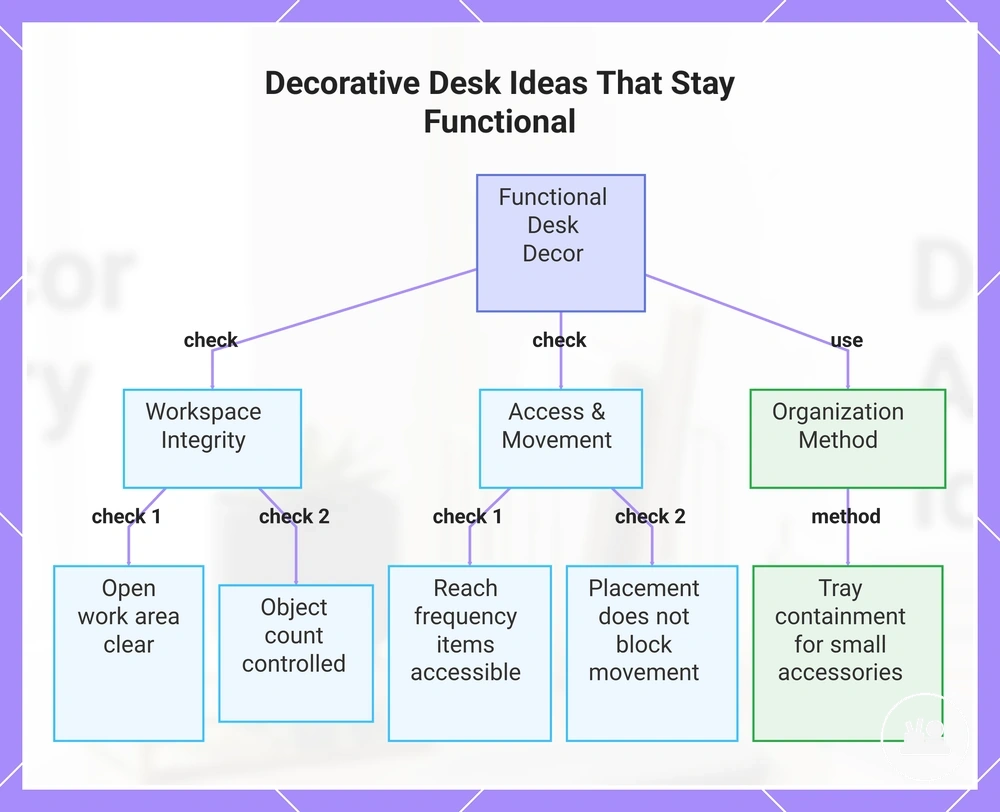
Decorative desk ideas stay functional when they preserve usable workspace, maintain access, and support daily use; usability is the main condition. These ideas only work when a functional desk keeps enough clear space for tasks while visual character is added through controlled placement. If the workspace becomes harder to use, function and decoration stop working together.
Placement affects how decorative desk ideas interact with the functional desk because high reach frequency items must remain accessible while decorative elements stay secondary. An open work area should remain free for writing, typing, or device use, and object count must stay balanced to avoid visual overload or blocked movement zones.
Tray containment helps control usable desk decor by grouping smaller accessories into structured zones instead of spreading them across the surface. This supports organization while still allowing decorative elements to remain part of the desk setup without interfering with daily use.
How to arrange desk decor accessories becomes important when placement decisions start affecting access, movement paths, and open work areas on the desk surface. Understanding this helps reduce clutter risk while keeping decorative structure aligned with usage needs.
Decorative desk ideas remain functional when decision signals are used to evaluate workspace behavior:
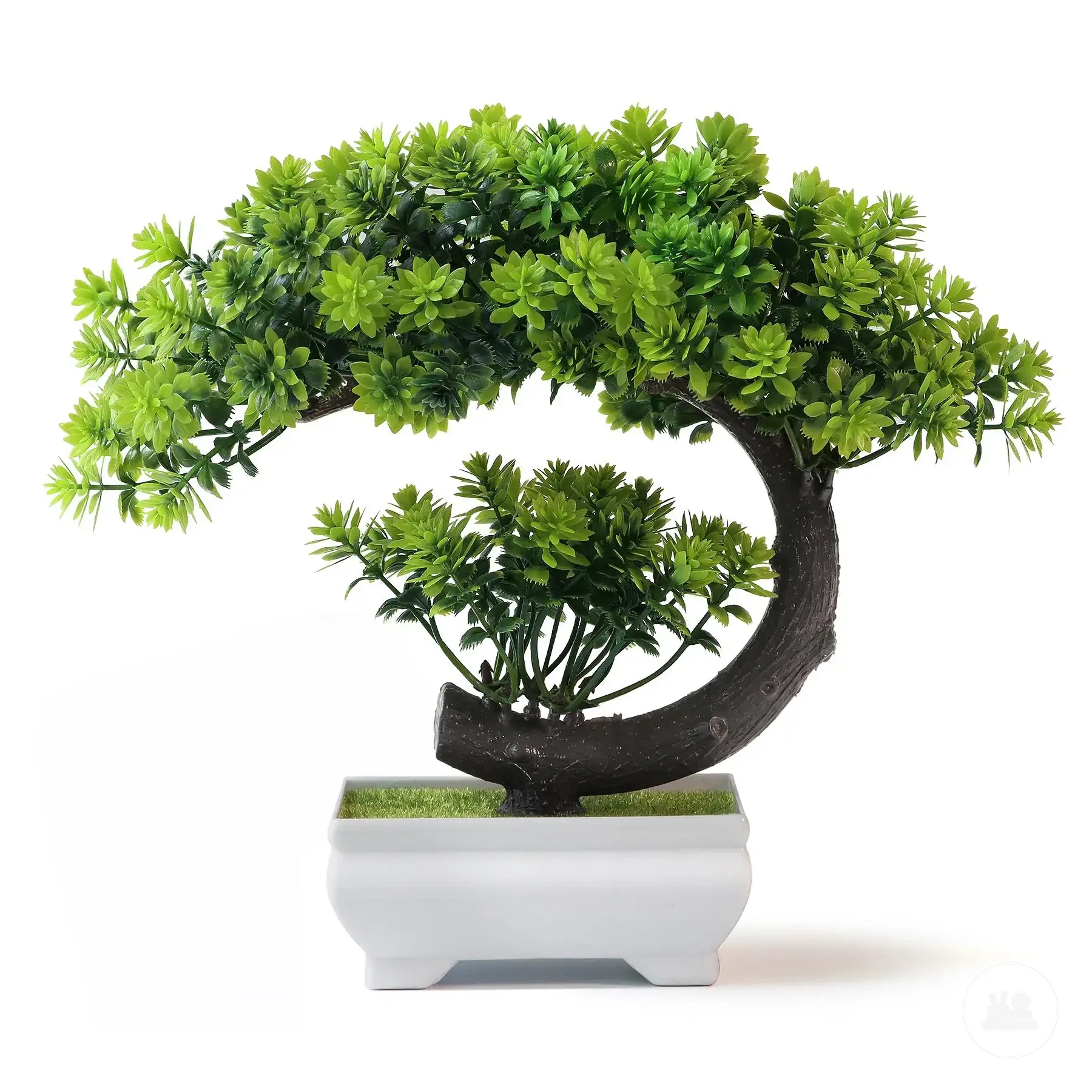
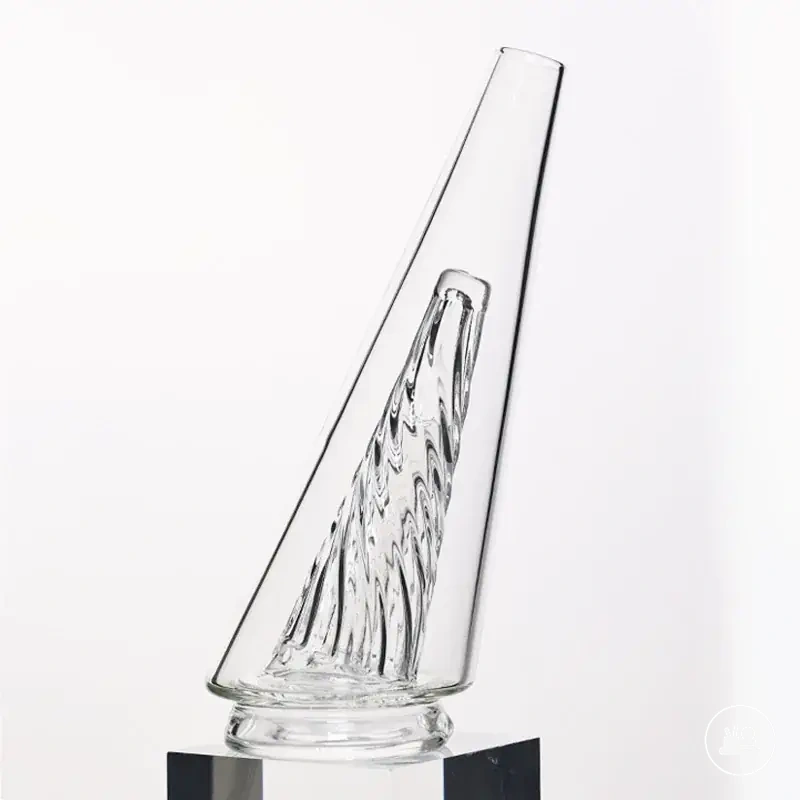
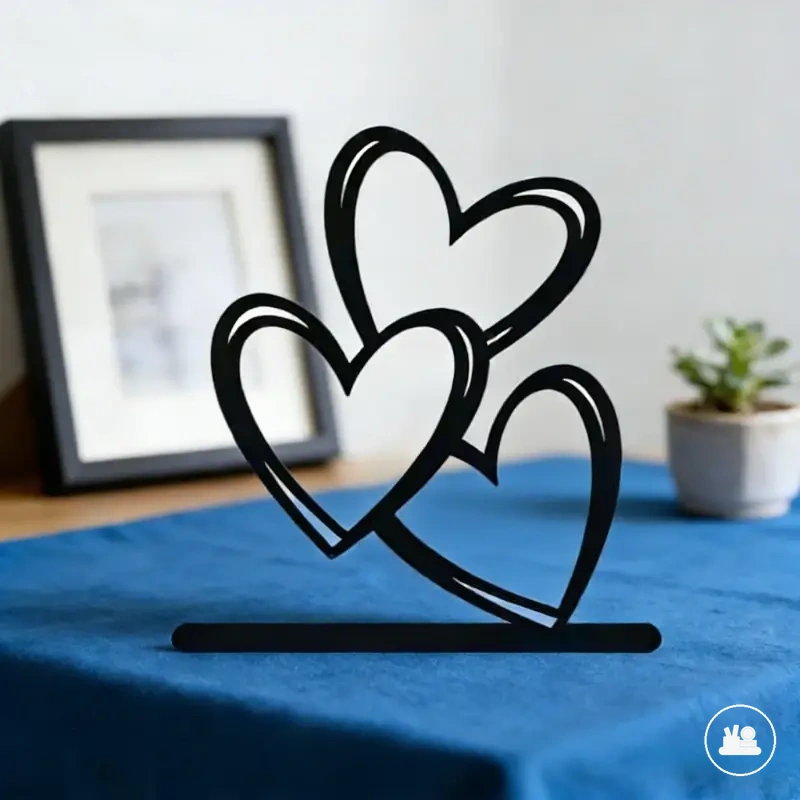
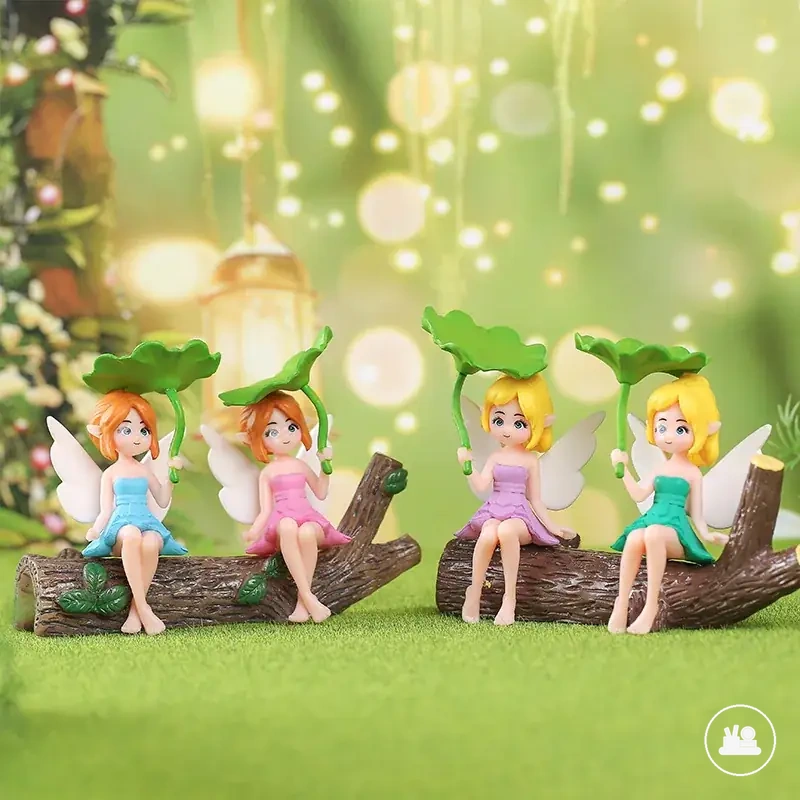
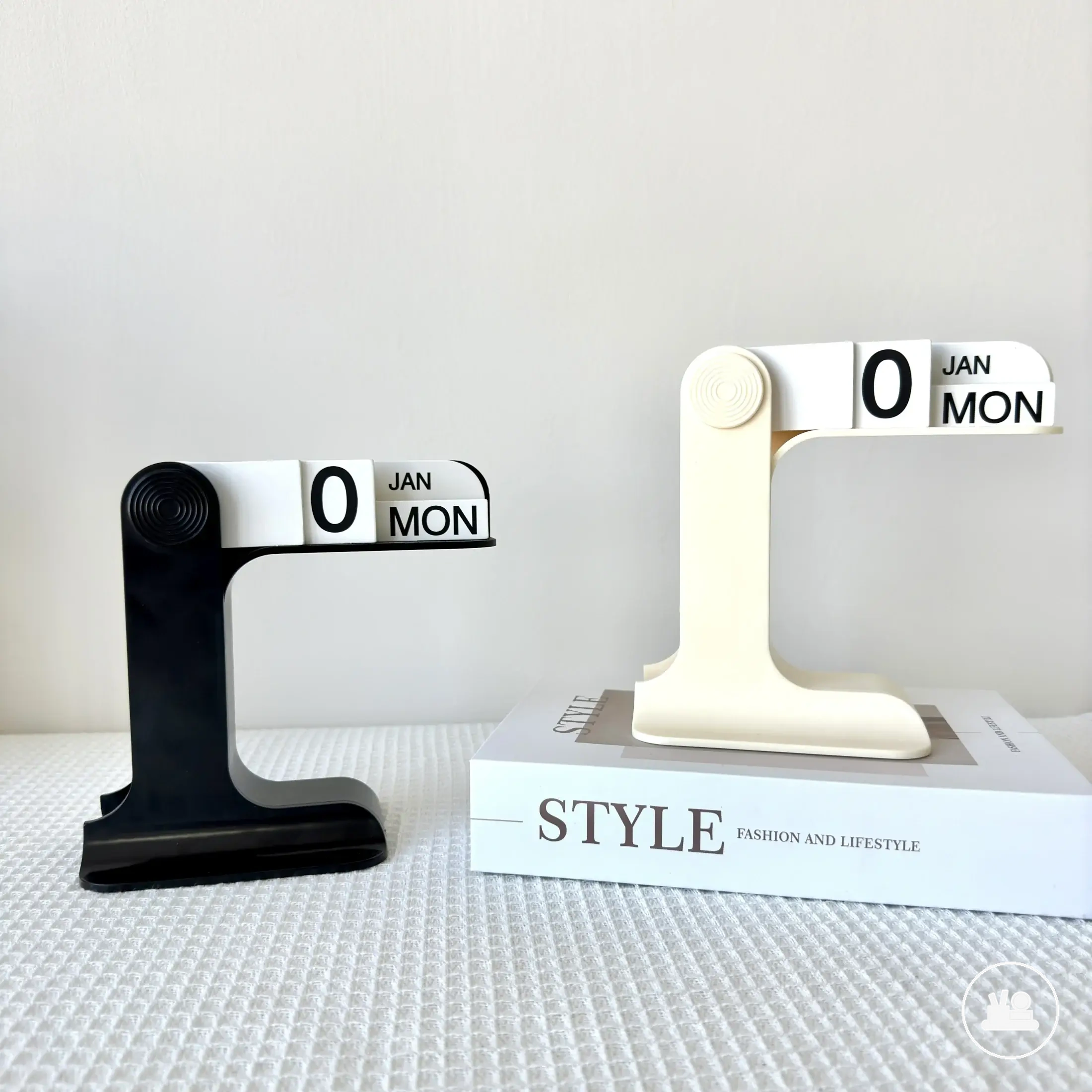
The products below are useful examples for comparing available options. Before buying, check that the compatibility criteria, key features, and product details match your needs.
- Open work area stays clear for daily use tasks
- Reach frequency items remain easy to access
- Object count stays controlled to avoid clutter risk
- Tray containment is used for smaller accessories
- Placement does not block functional desk movement zones
When these signals are satisfied, decorative desk ideas can support visual character while preserving daily use efficiency.
This chart shows the key conditions and decision signals that ensure decorative desk ideas remain functional without compromising workspace usability.
Simple Desk Decor Ideas for Small or Busy Workspaces
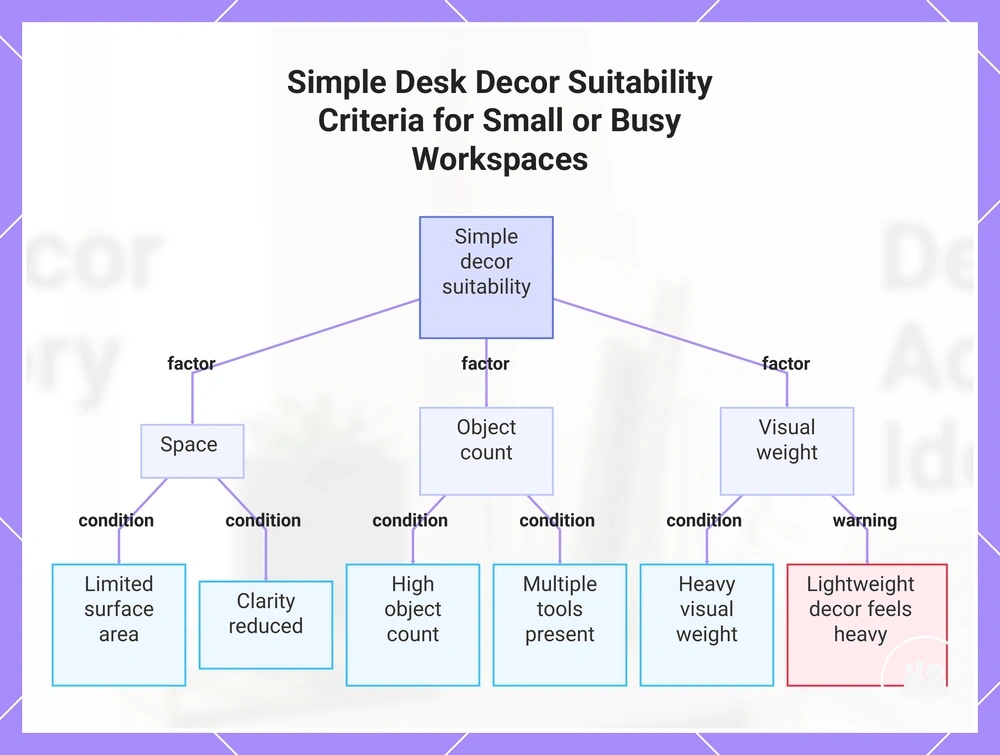
Simple desk decor ideas for small or busy workspaces depend on space, object count, and visual weight because these conditions determine whether a setup stays usable or becomes visually dense. On a small desk or in a busy workspace, simple desk decor works when it supports clarity and does not interfere with daily use, and this makes space control the main decision factor.
Desk size and available surface area directly influence how simple desk decor ideas for small or busy workspaces perform in practice. A small desk often requires fewer items so the surface remains open, while a busy workspace may already have competing visual elements that increase clutter risk. Visual weight also matters because even lightweight decor can feel heavy if too many pieces are combined, affecting how the workspace is perceived and used.
Simple desk decor ideas for small or busy workspaces can be evaluated through a clear criteria frame that connects space, object count, and visual weight to workspace effect. This helps identify when a light setup suits the environment and when restraint becomes necessary for clarity.
- If the small desk has limited surface area, choose minimal items that preserve open workspace
- If object count is already high, reduce additional decor to limit clutter risk
- If visual weight feels heavy, switch to lighter accessories to restore balance
- If the busy workspace has multiple tools present, prefer restrained decor to avoid overlap
- If clarity is reduced, prioritize open space over additional decorative elements
This criteria-based approach shows when simple desk decor ideas for small or busy workspaces are suitable based on condition rather than preference alone. In cases where a full small-desk arrangement strategy is required, a more structured layout approach may be needed instead of simple decor decisions.
This chart shows the three main factors—space, object count, and visual weight—that determine when simple desk decor is suitable for small or busy workspaces.
Common Questions About Desk Decor Accessory Ideas
What are desk decor accessory ideas?
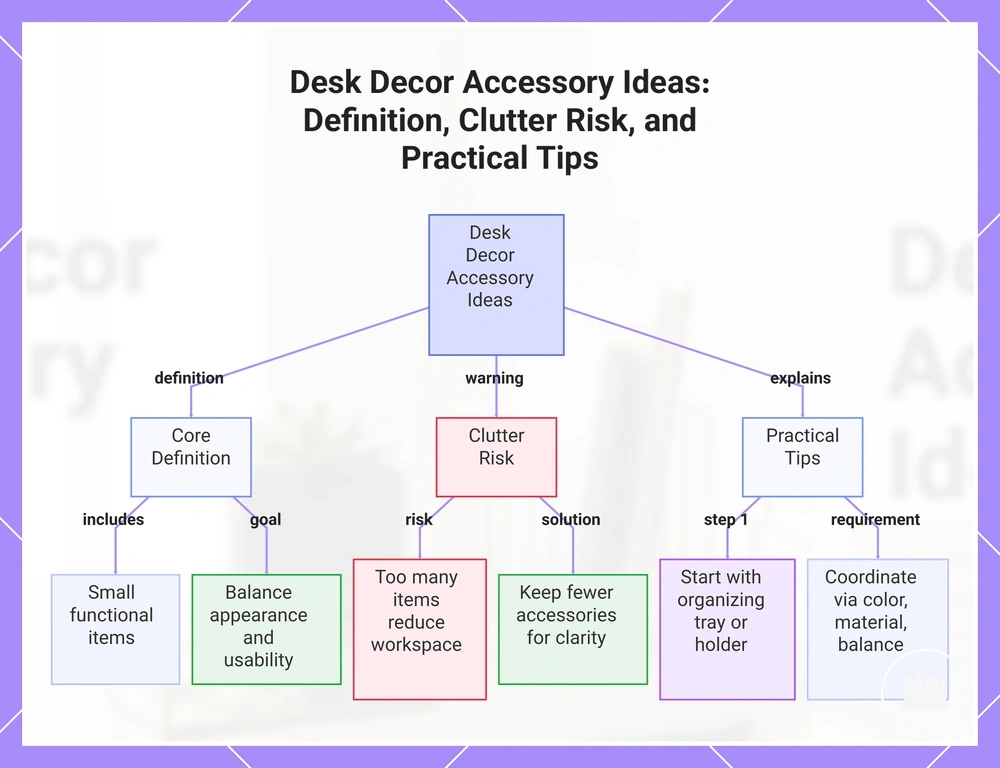
Desk decor accessory ideas are workspace concepts that use desk accessories to add visual character while keeping a usable desk. They focus on small, functional items placed on the desk without blocking daily tasks. The goal is to balance appearance with practical use in a controlled way.
Can desk decor accessory ideas make a desk cluttered?
Yes, desk decor accessory ideas can lead to clutter when object count increases beyond available space. Higher visual weight or too many items can reduce open workspace and make the desk feel crowded. Keeping fewer desk accessories helps maintain clarity and usable desk conditions.
What is the first accessory in desk decor accessory ideas?
The first accessory in desk decor accessory ideas is usually a simple organizing item like a tray or holder. This creates structure before adding other workspace decor elements. It helps establish a coordinated look without overloading the desk early.
Can you mix styles in desk decor accessory ideas?
Yes, mixing styles in desk decor accessory ideas is possible when coordination is maintained through color, material, or visual balance. Too many conflicting styles can reduce cohesion and increase visual clutter. A restrained mix usually keeps the workspace readable and balanced.
Are desk decor accessory ideas suitable for small desks?
Desk decor accessory ideas can suit a small desk when object count is kept low and space is preserved for daily use. Compact setups with minimal desk accessories reduce clutter risk and maintain usability. The key is ensuring the workspace remains open and functional.
This chart explains the core concept of desk decor accessory ideas, the risk of clutter, and key tips for a balanced workspace.