
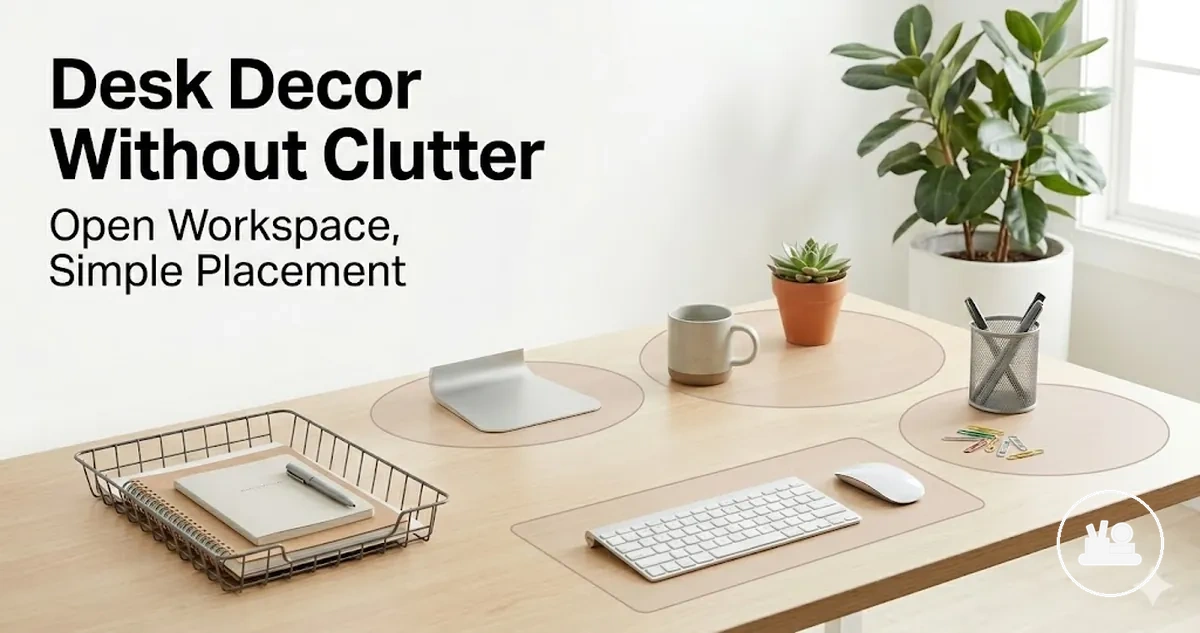
Using Desk Decor Accessories Without Clutter
Clutter control with desk decor accessories means keeping useful and decorative items in balance so the desk still has clear working space. A clutter-free setup does not require removing every accessory; it usually depends on surface density, workflow zones, and how much visual noise each item adds. Smaller desks may need compact or vertical choices, while larger desks can often handle more accessories if the main work area stays open. The goal is to support organization, comfort, and desk decor accessories for focus without letting decoration interrupt daily tasks.
- Reserve visible surface area for active work before placing decorative items.
- Prioritize accessories that organize, hold, separate, or simplify daily-use items.
- Group related accessories into zones instead of spreading them across the whole desk.
- Limit accessory density when the desk starts to feel visually heavy or harder to use.
- Adjust the setup by desk size, task type, and workflow instead of following one fixed rule.
What Clutter-Free Desk Decor Means in a Real Workspace
Clutter-free desk decor accessories are an arrangement approach that preserves usable workspace while reducing visual noise. The goal is not to remove every accessory but to organize desk decor accessories so that work surfaces remain accessible and easy to use. Clear spacing, purposeful grouping, and separation between decorative and functional items help create order without limiting practicality. The point at which a desk feels cluttered can vary based on workspace size, workflow needs, and personal preferences.
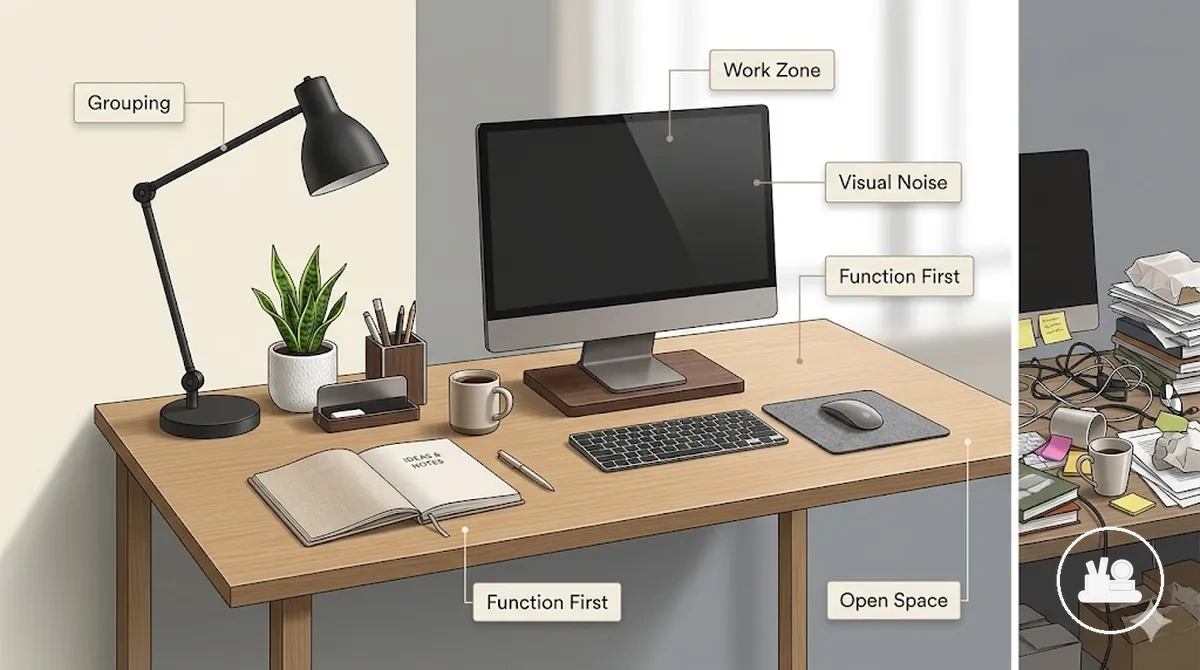
Desk surface visibility and accessory clustering can influence usability because they affect how easily work materials, tools, and decorative elements can be managed together. When accessories are grouped with a clear purpose and enough space remains visible, the workspace may feel more organized and easier to navigate. This approach can overlap with minimal desk decor accessories, but clutter-free desk decor focuses on maintaining function and visual clarity rather than following a specific style.
Contrast: A clutter-free workspace typically keeps decorative items organized around usable work areas, while an overloaded setup may reduce visible surface space and make desk organization harder to maintain.
Core Rules for Keeping Desk Decor Accessories Minimal and Organized
Desk decor accessories depend on clear selection criteria that prioritize usefulness, workspace fit, and visual simplicity. A practical approach is to keep accessories that support daily activities or provide a clear organizational purpose. The appropriate number of desk decor accessories varies by workspace size and workflow, but higher accessory density can increase visual load and make a desk feel harder to manage.
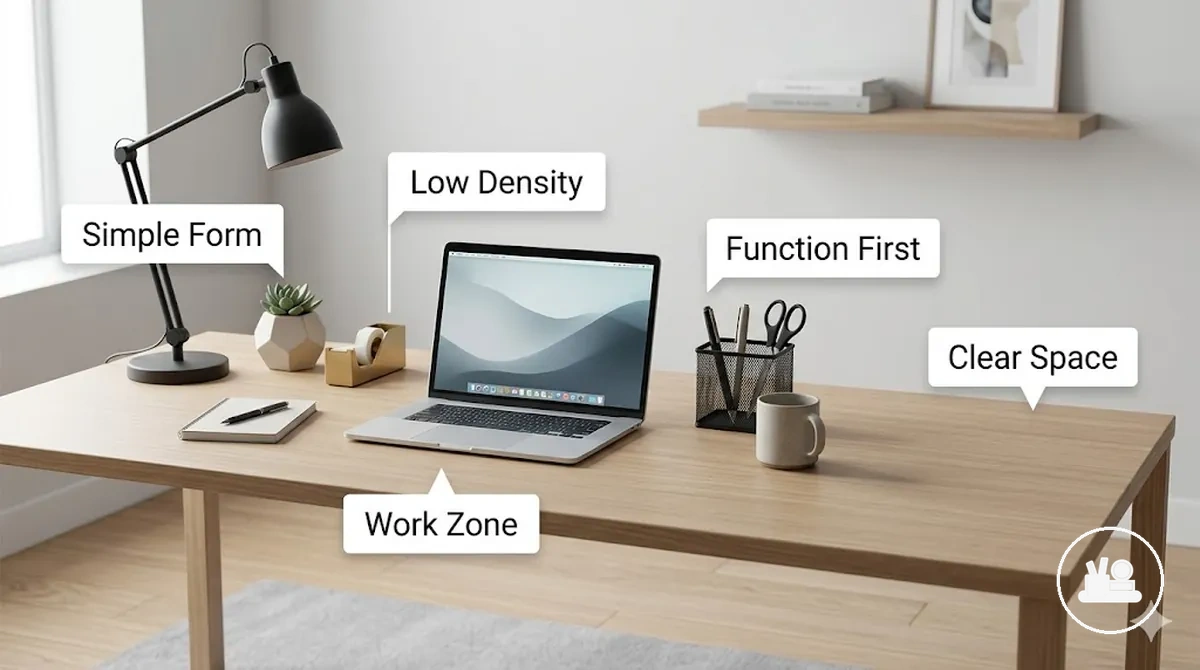
Prioritizing functional desk accessories can help maintain clarity when available space is limited. Clear workspace zoning separates work materials, storage items, and decorative elements so each category has a defined location. This structure can improve usability by reducing unnecessary visual competition between items.
Material and form choices also influence perceived visual density. Accessories with simple shapes, compact footprints, or lighter visual weight may support a more organized appearance, while larger or highly detailed pieces can make a workspace appear more crowded when grouped closely together.
- Select accessories based on function, organization, or clear purpose.
- Adjust accessory count according to available workspace and workflow needs.
- Maintain separate zones for work, storage, and decorative items.
- Prefer accessory forms that support visual clarity over visual crowding.
- Review placement when desk usability begins to feel restricted.
Choosing Space-Saving and Compact Desk Decor Accessories for Different Desk Sizes
Desk decor accessories depend on available workspace because desk size influences suitable accessory scale, footprint, and density. Smaller desks often need compact designs, reduced surface use, and accessories that serve more than one purpose. Larger desks can allow more accessories, but placement and scale should still preserve visible workspace and daily usability.
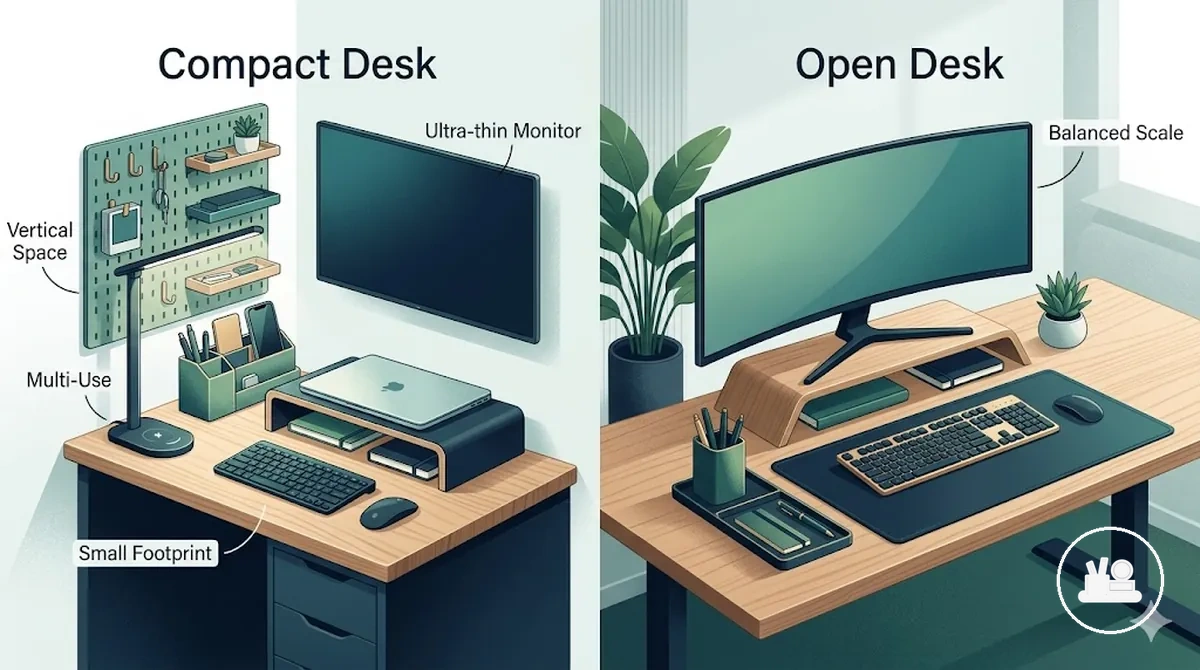
For compact workspaces, vertical efficiency can become an important selection factor. Accessories that use height rather than width may help preserve working space while maintaining organization. When surface area is limited, small desk decor accessories can be easier to integrate because they reduce surface consumption and support clearer workspace layouts.
Open workspaces usually provide more flexibility, but desk decor accessories should still match the scale of the desk. Oversized accessories can make even larger desks feel visually heavier, while appropriately scaled items may support balance and space efficiency. The most suitable choice depends on workspace layout, workflow requirements, and the amount of visible surface area needed for daily tasks.
| Workspace Type | Selection Focus |
|---|---|
| Compact Desk | Small footprint, vertical storage, multi-functional accessories, efficient use of space |
| Open Desk | Balanced scale, controlled accessory spread, clear workspace visibility, flexible placement |
Vertical Storage and Drawer-Based Organization for Clutter-Free Desk Setups
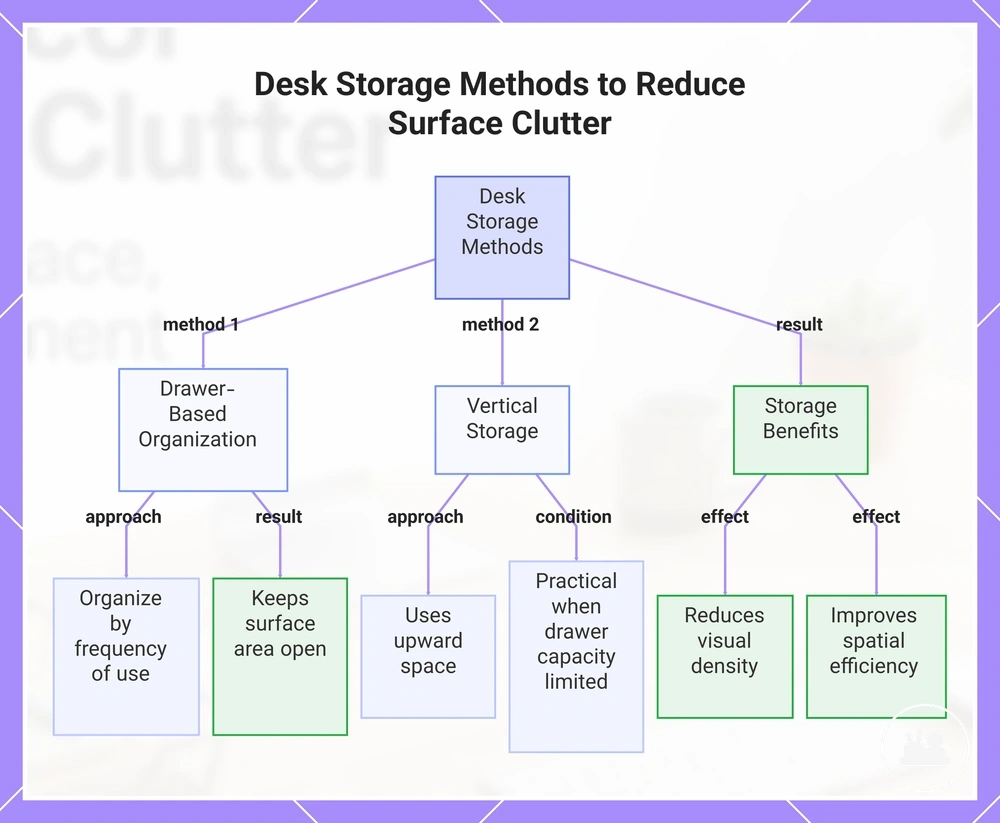
Desk decor accessories depend on storage availability because surface clutter often decreases when accessories can be relocated away from active work areas. Vertical storage and drawer-based organization can improve surface availability by moving desk decor accessories into dedicated storage spaces, which may reduce visual density and create a clearer workspace layout.
Storage method compatibility varies by workspace constraints. When drawers are available, desk decor accessories can be organized according to frequency of use while keeping more surface area open. When drawer capacity is limited, vertical storage solutions may become more practical because they use upward space rather than additional desktop area. This shift from surface storage to dedicated storage zones can improve accessibility and spatial efficiency while helping maintain a less crowded desk environment.
This chart shows two main storage methods—drawer-based and vertical—and their benefits for creating a clutter-free desk workspace.
How to Arrange Desk Decor Accessories to Maintain a Clean and Functional Workspace
-
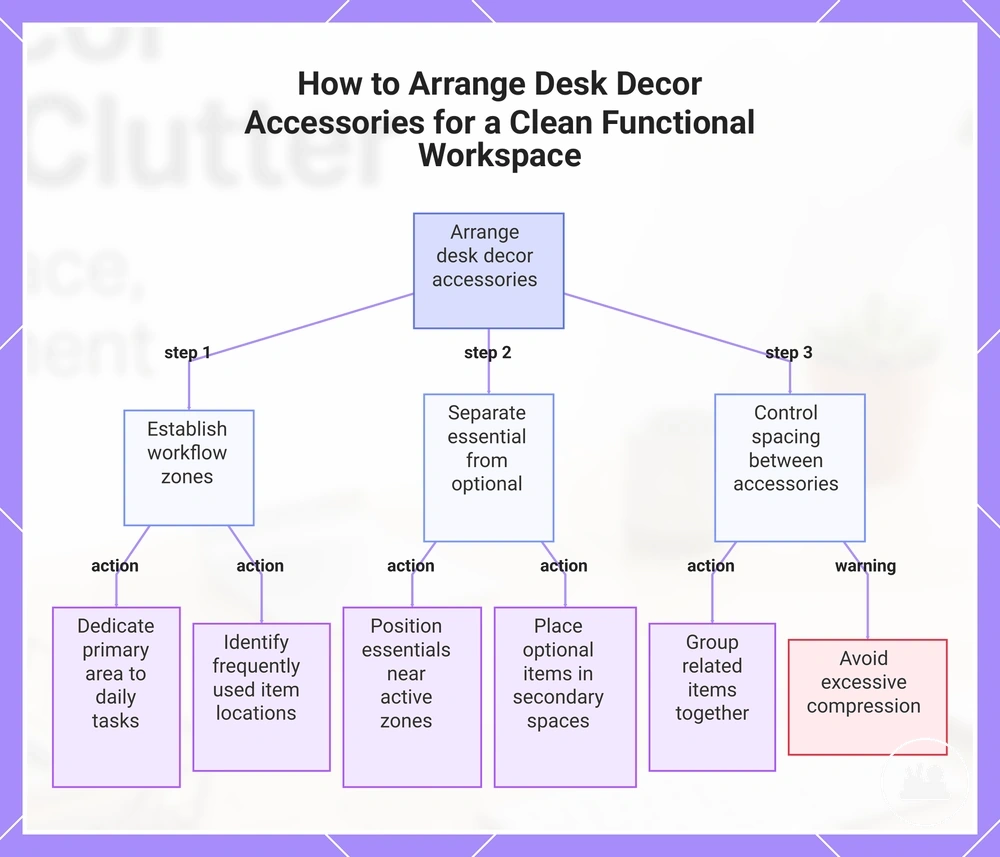
Arrange desk decor accessories by establishing workflow zones first. Keep the primary work area dedicated to daily tasks and identify where frequently used items need to remain accessible. This approach helps maintain function before adding decorative elements.
-
Separate essential desk decor accessories from optional decorative items. Accessories that support regular use or organization should stay closer to active work zones, while optional items can occupy secondary spaces. Poor separation may contribute to clutter buildup over time.
-
Control spacing between desk decor accessories to create clear boundaries between zones. Group related items together and maintain open areas where possible. Excessively compressed arrangements can reduce usability and increase visual crowding.
-
Review placement based on actual workflow and adjust when certain areas become congested. Effective arranging desk decor accessories often involves keeping work zones clear while allowing decorative items to complement the workspace. This balance may support a cleaner and more functional layout.
This chart shows the three main steps to arrange desk decor accessories while maintaining a clean and functional workspace.
How Many Desk Decor Accessories You Actually Need for a Minimal Desk Setup
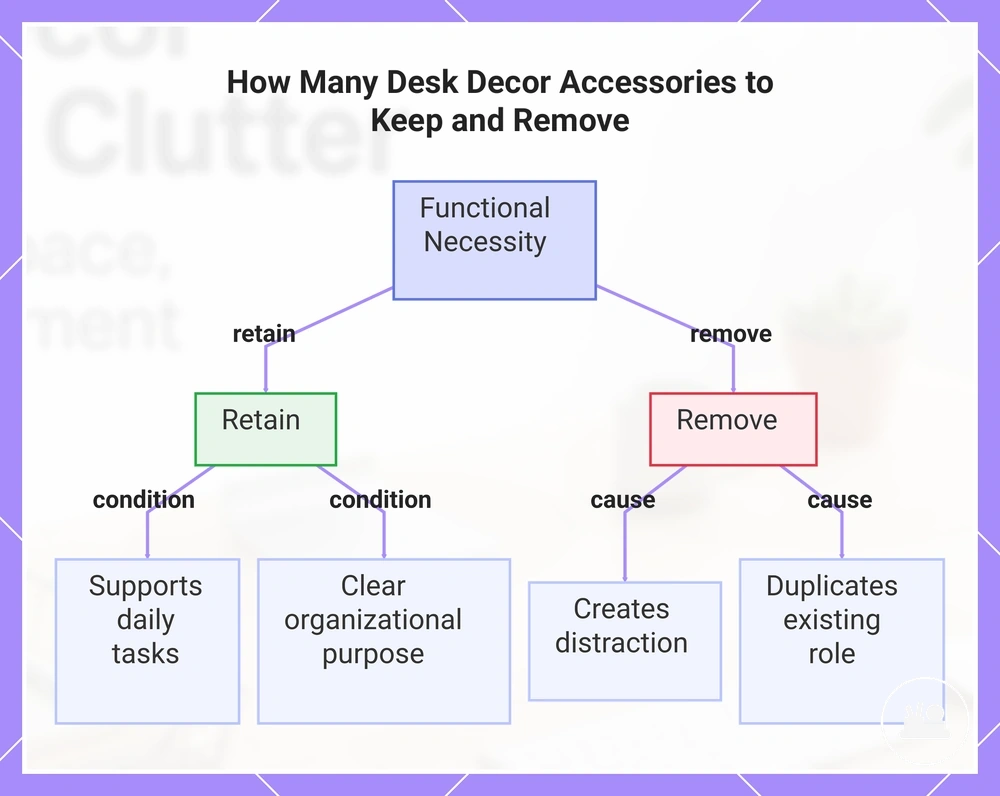
Desk decor accessories depend on functional necessity rather than a specific quantity because workspace needs, task requirements, and organizational preferences vary. A minimal desk setup usually benefits from keeping desk decor accessories that support organization, workspace function, or regular use while reassessing items that provide limited practical value. When accessory quantity exceeds actual needs, visual clarity may decrease and cognitive load can become harder to manage.
Evaluating desk decor accessories through regular reduction can help maintain simplicity over time. Accessories used frequently or those that support workflow may remain relevant, while items that are rarely used or duplicate an existing function may be less necessary. The appropriate quantity depends on how effectively each accessory contributes to a cleaner and more usable workspace.
- Retain: Frequently used accessories that support daily tasks.
- Retain: Organizational items with a clear and consistent purpose.
- Remove: Accessories that create distraction without supporting workspace function.
- Remove: Items that duplicate another accessory's role without adding meaningful utility.
This chart shows the two key actions—retain or remove—based on functional necessity to maintain a minimal workspace.
Common Clutter Mistakes When Using Desk Decor Accessories and How to Avoid Them
When desk clutter develops, overlapping functionality among desk decor accessories is often a contributing factor. Multiple accessories that serve similar purposes can occupy workspace without adding meaningful utility, which may reduce visual clarity and make organization more difficult. Within the broader category of desk decor accessories, reducing duplication can help create a clearer and more manageable layout.
Excessive accessory count and scaling mismatches can increase visual noise. Large accessories in limited workspaces or clusters of small accessories placed too closely together may make a desk feel crowded even when individual items appear useful. Simplifying the arrangement and matching accessory scale to available space can help improve clarity.
Poor zoning may cause desk decor accessories to overlap with active work areas. When decorative, organizational, and task-related items compete for the same space, clutter can accumulate gradually and reduce workspace usability. A corrective approach is to simplify placement, reduce redundancy, and keep accessory locations aligned with their intended function.
| Mistake | Likely Cause | Corrective Direction |
|---|---|---|
| Redundant accessories | Overlapping functionality | Reduce duplication and retain the most relevant items |
| Scaling mismatch | Accessory size does not fit the workspace | Align accessory scale with available desk space |
| Visual overload | Excessive accessory count | Simplify the arrangement and remove low-value items |
| Zoning failure | Work and accessory areas overlap | Separate accessory placement from active task zones |
Balancing Minimal Desk Decor with Functionality, Comfort, and Focus
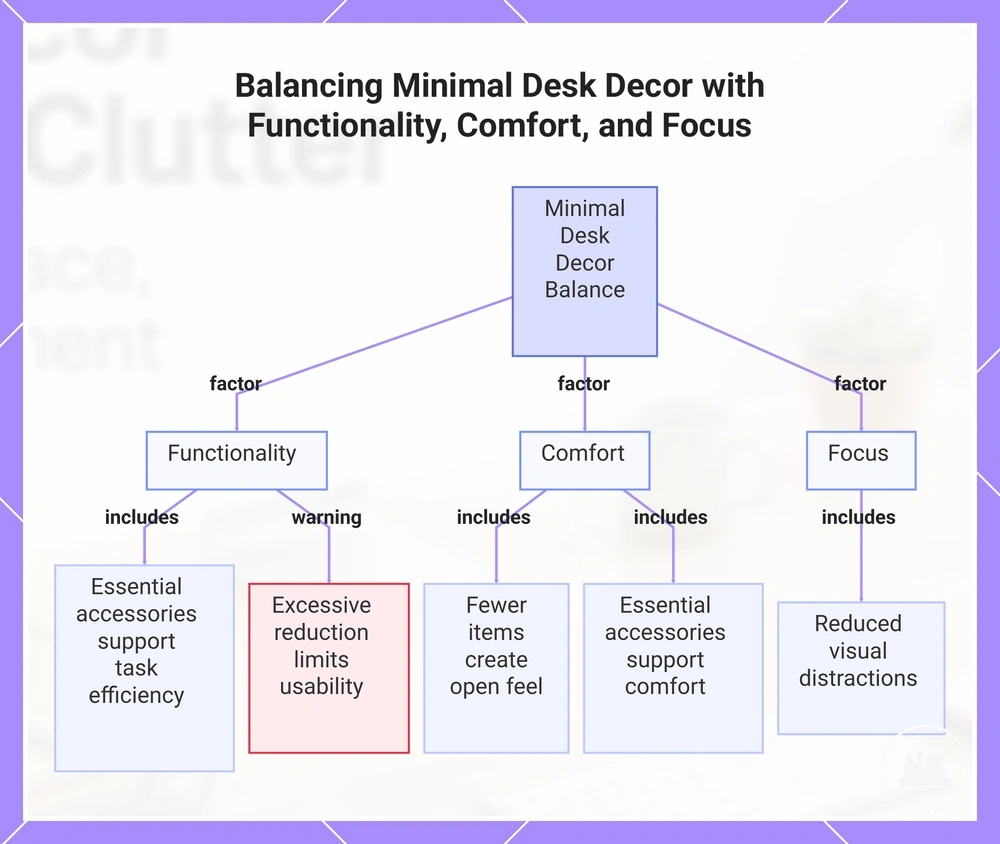
Balancing desk decor accessories means maintaining simplicity while preserving the functionality, comfort, and usability needed for daily work. A minimal setup can help reduce visual distractions, but the most suitable arrangement usually depends on workflow requirements and the items needed to support regular tasks. Removing accessories solely to create a cleaner appearance may not always improve the overall workspace experience.
Desk decor accessories often involve tradeoffs between visual simplicity and practical support. Fewer items can make a workspace feel more open and may contribute to a clearer environment, while essential accessories can support accessibility, comfort, and task efficiency. This distinction can complement minimal desk decor accessories when usability remains a priority rather than appearance alone.
Focus, comfort, and organization are often interconnected. Reduced clutter may support concentration in certain situations, while excessive reduction can limit usability if important items are no longer easily accessible. The most appropriate balance depends on workflow needs, workspace constraints, and how desk decor accessories contribute to daily use. For users prioritizing concentration, desk decor accessories for focus can be evaluated alongside comfort and functionality rather than as separate goals.
This chart illustrates the key factors to consider when balancing minimal desk decor with functionality, comfort, and focus, highlighting the tradeoffs between visual simplicity and practical support.
Common Clutter Triggers and Prevention Patterns in Desk Setups
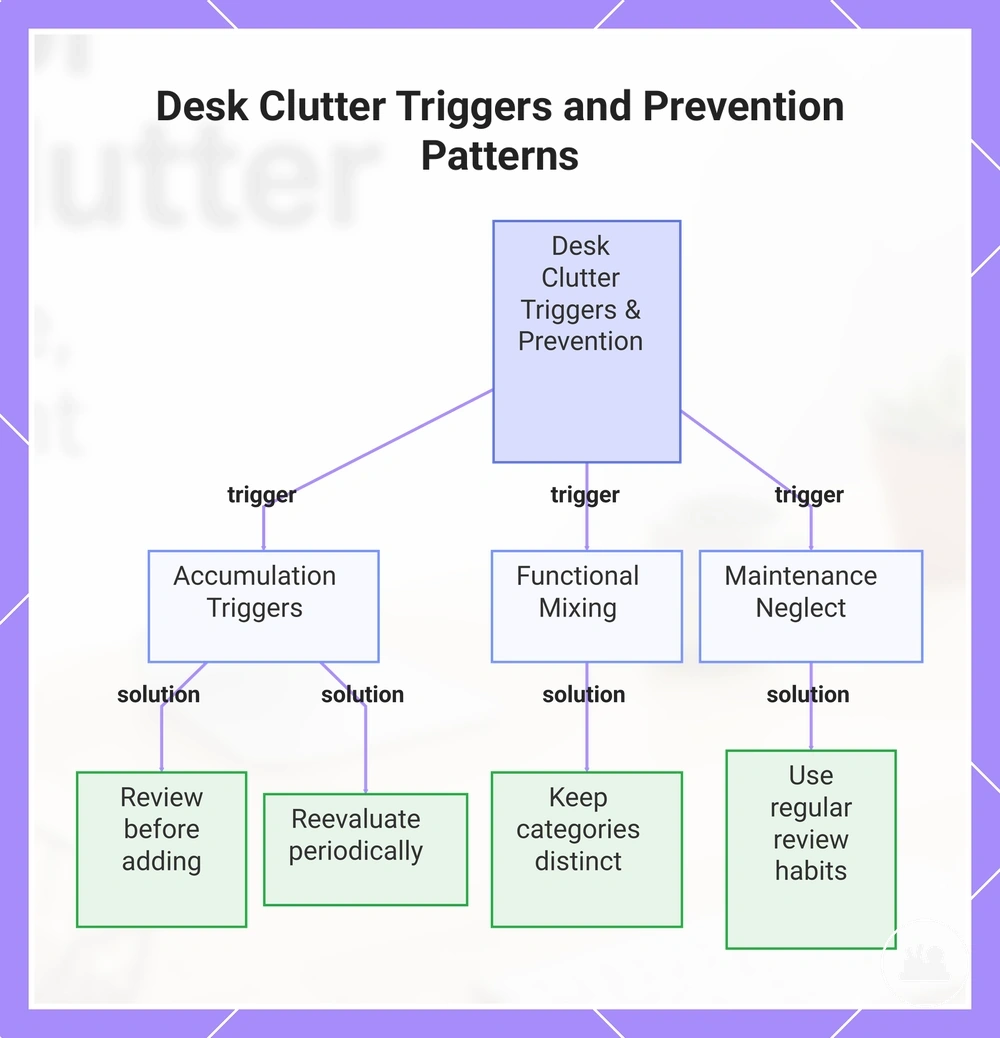
When desk clutter gradually increases, the cause is often an accumulation pattern rather than a single mistake. Desk decor accessories can build up over time when new items are added without reassessing existing ones, which may reduce workspace clarity and make the setup feel more crowded. Ignoring boundaries between decorative, organizational, and task-related items can further increase visual complexity.
Habit drift and maintenance neglect are common clutter triggers. Desk decor accessories that once supported a workflow may become less relevant as work habits change, yet they often remain in place. Functional mixing can create a similar pattern when accessories with different purposes occupy the same area, making it harder to maintain a clear and organized workspace.
Prevention usually depends on consistent maintenance rather than occasional large-scale reorganization. Periodically reviewing desk decor accessories for current usefulness, maintaining functional separation, and limiting unnecessary additions can help preserve clarity over time. The goal is not constant reduction but preventing accumulation from exceeding workspace needs.
- Trigger: Adding accessories without reassessment. Prevention: Review relevance before keeping additional items.
- Trigger: Ignoring functional boundaries. Prevention: Keep decorative, organizational, and task-related items distinct.
- Trigger: Retaining accessories that no longer support current workflows. Prevention: Reevaluate usefulness periodically.
- Trigger: Maintenance neglect. Prevention: Use regular review habits to maintain workspace clarity.
This chart shows the main clutter triggers in desk setups and their corresponding prevention strategies.
Maintenance Habits to Sustain a Clutter-Free Desk Decor Setup
Maintaining a clutter-free desk decor setup depends on consistent review habits rather than a one-time organization effort. Desk decor accessories can accumulate gradually as workspace needs change, so periodic evaluation helps identify items that are no longer useful, rarely used, or no longer aligned with current workflows. Regular maintenance may help preserve workspace clarity over time.
A sustainable maintenance cycle often includes reviewing accessories, removing unused items, and restoring intended workspace zones. Evaluating whether desk decor accessories still support daily use can help prevent gradual clutter buildup, while periodic workspace resets may keep organization aligned with changing needs. Long-term clarity usually depends on habit consistency rather than occasional large decluttering sessions.
- Daily: Return misplaced accessories to their intended locations and clear unnecessary surface items.
- Weekly: Review recently added accessories and remove items that contribute little current value.
- Monthly: Reevaluate desk decor accessories for ongoing usefulness and reset workspace zones if organization has gradually drifted.
Small Desk Optimization Strategies for Clutter-Free Setups
Small desk optimization depends on using limited space efficiently because clutter risk often increases when available surface area is constrained. Desk decor accessories can be easier to manage when workspace priorities are established first, allowing essential work activities to retain adequate space while decorative items remain controlled. This approach may help maintain usability within a compact layout.
Vertical efficiency can reduce pressure on the primary work surface. Desk decor accessories that use upward space rather than additional desktop width may preserve more room for daily tasks. In constrained workspaces, vertical organization methods can help distribute items while limiting surface crowding.
Surface prioritization focuses on keeping active work areas accessible while limiting accessories that consume disproportionate space. Compact desk decor accessories may fit more comfortably within smaller layouts because they reduce crowding and support clearer separation between work functions and supporting items. The most suitable optimization strategy depends on desk dimensions, workflow requirements, and available storage capacity.
- Do: Use vertical space when surface area is limited.
- Do: Prioritize open workspace for active tasks.
- Do: Keep desk decor accessories proportional to available space.
- Avoid: Filling all visible surface areas with accessories.
- Avoid: Using oversized accessories that restrict workspace usability.
- Avoid: Allowing decorative items to compete with active work zones.
Workspace Psychology Behind Clutter-Free Desk Decor Choices
Workspace psychology behind clutter-free desk decor choices relates to how visual organization may influence attention, perceived clarity, and mental comfort within a work environment. Desk decor accessories can affect how a workspace is interpreted because visible order often creates a more structured visual environment. In many cases, a less crowded setup may feel easier to process, while a visually dense workspace can require more attention to navigate.
Perceived clarity and cognitive load are often linked to how objects are arranged and presented. Desk decor accessories organized with clear visual order may support a stronger sense of organization and attention control, which can influence how a workspace feels during daily tasks. These effects depend on individual preferences, work habits, and environmental conditions, so clutter-free arrangements should be viewed as a potential influence on perception rather than a direct cause of improved focus or reduced stress.
- Visual Order: May support a clearer interpretation of the workspace.
- Perceived Clarity: Can increase when unnecessary visual distractions are reduced.
- Attention Control: May benefit from fewer competing visual elements.
- Stress Perception: Can vary according to how organized or crowded the workspace appears.
Common Myths About Minimal Desk Decor and Clutter Control
Common myths about minimal desk decor often suggest that clutter control requires removing all decorative items or creating an almost empty workspace. Desk decor accessories can remain part of a clutter-free setup when they serve a purpose, fit the available space, and support an organized environment. Clutter control is usually associated with intentional organization rather than eliminating all visual elements.
Another misconception is that minimal desk decor requires sacrificing functionality. Desk decor accessories can still support organization, visual structure, or workspace comfort while aligning with clutter-control goals. Minimalism is often interpreted differently across workspaces, so effective clutter control typically depends on balancing usefulness and visual simplicity rather than following a rigid design rule.
| Myth | Balanced Interpretation |
|---|---|
| Minimal desks require removing all decor | Desk decor accessories can remain when they contribute to an organized and purposeful setup |
| Clutter control means empty surfaces | Clutter control usually focuses on limiting unnecessary items rather than removing everything |
| Minimal setups reduce functionality | Functionality can remain important when accessories support workspace needs |
| There is only one correct minimal style | Minimal desk decor can vary according to workspace requirements and personal preferences |
Desk Decor Accessories Workflow Integration Without Clutter
Integrating desk decor accessories into a workflow starts with placing items according to task frequency and accessibility rather than decorative preference alone. Accessories that support daily activities may be positioned near primary work areas, while less frequently used items can remain in secondary locations. This placement logic can help desk decor accessories support workflow needs without creating unnecessary surface congestion.
Workflow integration often depends on accessibility zoning based on usage patterns. Frequently accessed desk decor accessories may remain within comfortable reach, while occasional-use accessories can be placed farther from active work zones. Aligning placement with task frequency can help maintain a clearer connection between workspace activities and accessory locations.
A practical workflow sequence begins with identifying core tasks, assigning accessible positions to supporting accessories, and periodically reviewing whether placement still reflects current usage. Desk decor accessories can be repositioned as workflows change, allowing the workspace to remain aligned with actual work habits. The objective is to integrate accessories into daily routines while preserving workspace clarity.
Final Synthesis of Clutter-Free Desk Decor Principles
Final synthesis of clutter-free desk decor principles focuses on using desk decor accessories with clear purpose, maintaining distinct workspace zones, and making placement decisions based on actual usage patterns. Clutter control is generally supported by selective use and organized placement rather than strict rules about how many accessories should be present.
Desk decor accessories often contribute most effectively when decisions are guided by workspace needs, accessibility, and visual clarity. The appropriate approach depends on available space, workflow requirements, and personal preferences, making conditional decision-making more practical than rigid standards.
- Use desk decor accessories that serve a defined purpose within the workspace.
- Maintain separation between active work areas and supporting accessories.
- Place accessories according to task frequency and accessibility needs.
- Review accessory relevance when workspace requirements change.
- Support clarity and usability through selective, context-based placement decisions.