
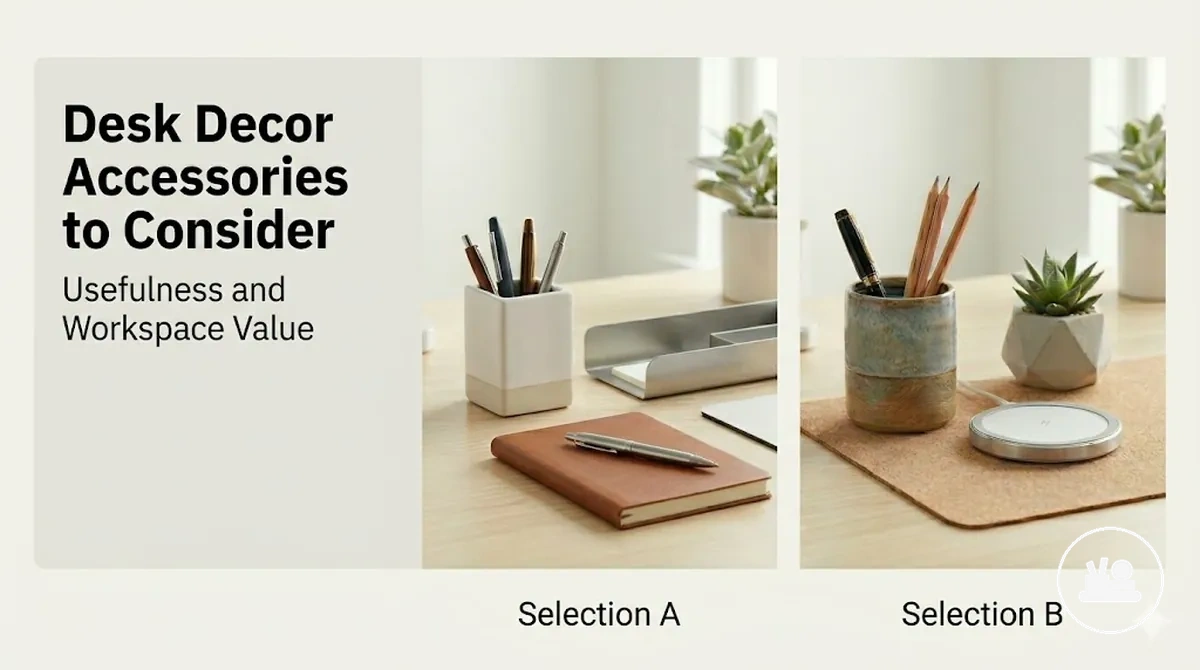
Best Desk Decor Accessories Worth Buying: Cost-Value Desk Decor Selection Framework
desk decor accessories are functional and decorative workspace elements that help shape how a desk looks, works, and supports daily use. A cost-value view evaluates desk decor accessories through durability, utility, workspace fit, and space efficiency rather than aesthetics alone. Purchase decisions often depend on how an accessory contributes to organization, surface management, visual order, or everyday convenience within a home office or professional desk environment. Functional decor can support storage, cable management, lighting, or workspace structure while also contributing to aesthetic balance. Decorative accessories may improve the visual character of a workspace, but their value depends on whether they complement the desk without reducing usable work area. Hybrid accessories can offer stronger cost-value potential when they combine a practical function with a design that suits the surrounding workspace. Durability and long-term usability remain important because an accessory that fits daily needs may provide greater value over time than an option chosen primarily for appearance. This decision framework evaluates desk decor accessories through usefulness, longevity, aesthetic balance, and workspace fit to guide structured cost-value assessment.
Cost-Value Overview of Desk Decor Accessories Worth Buying
desk decor accessories are worth buying from a cost-value perspective when usefulness, durability, and workspace impact are balanced in a way that supports everyday desk use. Cost-value extends beyond price because value can come from functional contribution, efficient use of space, and long-term usability. Durability influences how well an accessory continues to serve its intended purpose, while usefulness reflects its practical role within a workspace. Workspace impact also affects value because accessories that align with available space and work habits may support a more organized environment. Visual harmony contributes to cost-value when decorative elements complement the workspace without reducing practical usability.
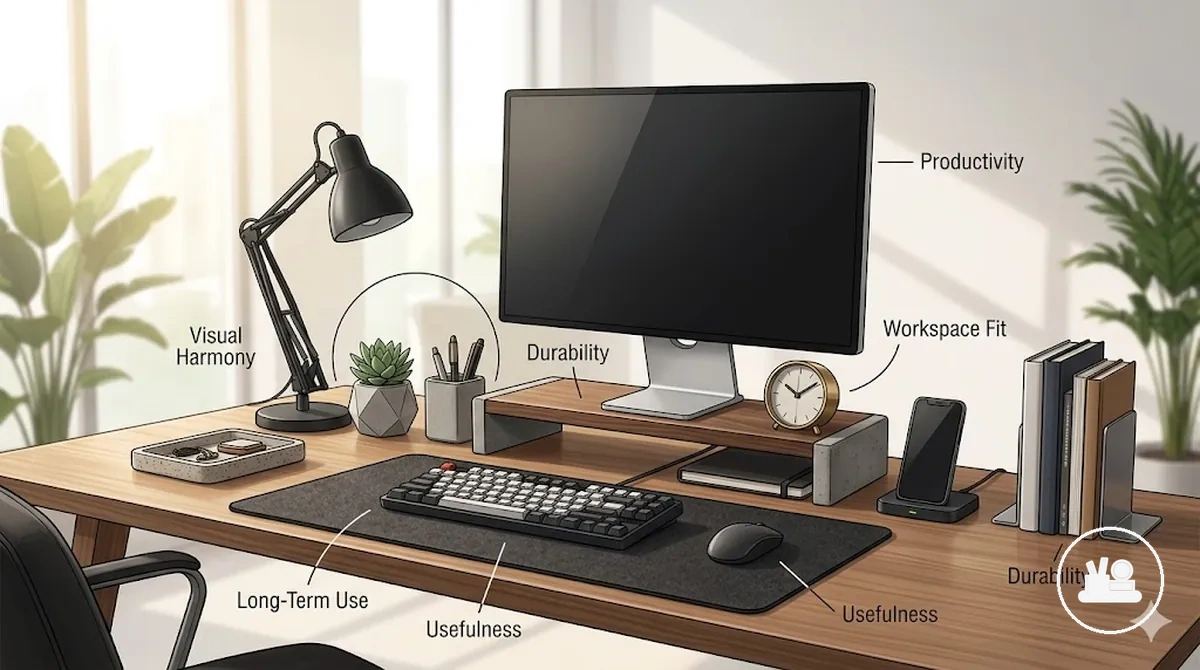
Desk decor accessories can support productivity and aesthetic enhancement differently depending on the workspace context. In a home office, value may be associated with a balance between organization, comfort, and personal style. In a professional desk environment, usefulness, durability, and efficient space usage may carry greater importance because work requirements often influence accessory selection. Long-term use becomes a stronger value factor when an accessory continues to meet workspace needs over time. Evaluating cost-value through functional contribution, visual harmony, workspace impact, and long-term use provides a clearer basis for identifying desk decor accessories that are worth considering.
Cost-Value Criteria for Evaluating Desk Decor Accessories Before Purchase
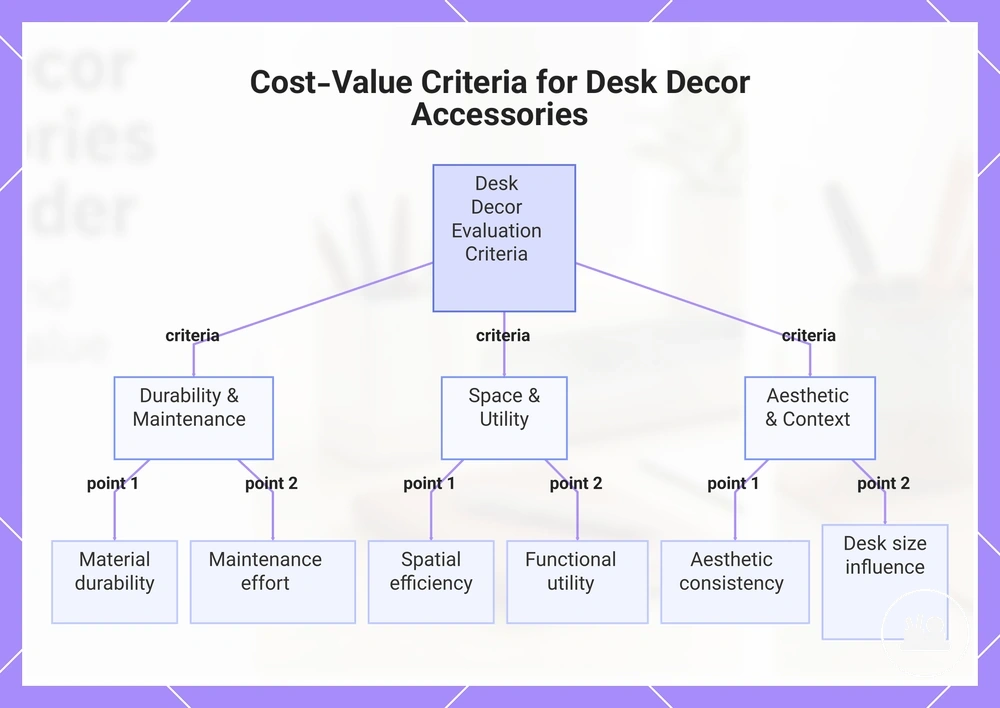
Cost-value evaluation for desk decor accessories depends on multiple criteria beyond price, including how well an accessory supports daily use, fits available desk space, and remains practical over time. Assessing desk decor accessories through a structured set of attributes helps identify whether an item aligns with workspace needs rather than relying on appearance alone. Using desk decor buying criteria creates a clearer evaluation framework by focusing on measurable characteristics that influence long-term usability and maintenance requirements. This assessment approach prioritizes function, fit, and sustainability within the workspace.
- Material durability: Material durability affects how well an accessory may tolerate regular use and maintain its condition over time.
- Spatial efficiency: Spatial efficiency evaluates the relationship between occupied desk space and the practical value the accessory provides.
- Functional utility: Functional utility assesses how effectively an accessory supports workspace activities or organization.
- Aesthetic consistency: Aesthetic consistency considers whether an accessory complements the overall workspace without disrupting visual balance.
- Maintenance effort: Maintenance effort reflects the level of ongoing care that may be needed to preserve usability and appearance.
Accessory type can influence maintenance effort, usability, and longevity through different attribute combinations. An accessory with stronger material durability may require less frequent upkeep, while an accessory with higher functional utility may justify the desk space it occupies. In compact desk environments, spatial efficiency often becomes a primary consideration because available surface area is more limited. In full desk setups, aesthetic consistency and functional utility may receive greater emphasis when sufficient workspace remains available. Evaluating these criteria together provides a more balanced method for assessing desk decor accessories before purchase.
This chart groups the key evaluation criteria for desk decor accessories into three categories: durability and maintenance, space and utility, and aesthetic and contextual factors.
Functional vs Decorative Value Trade-offs in Desk Decor Accessories
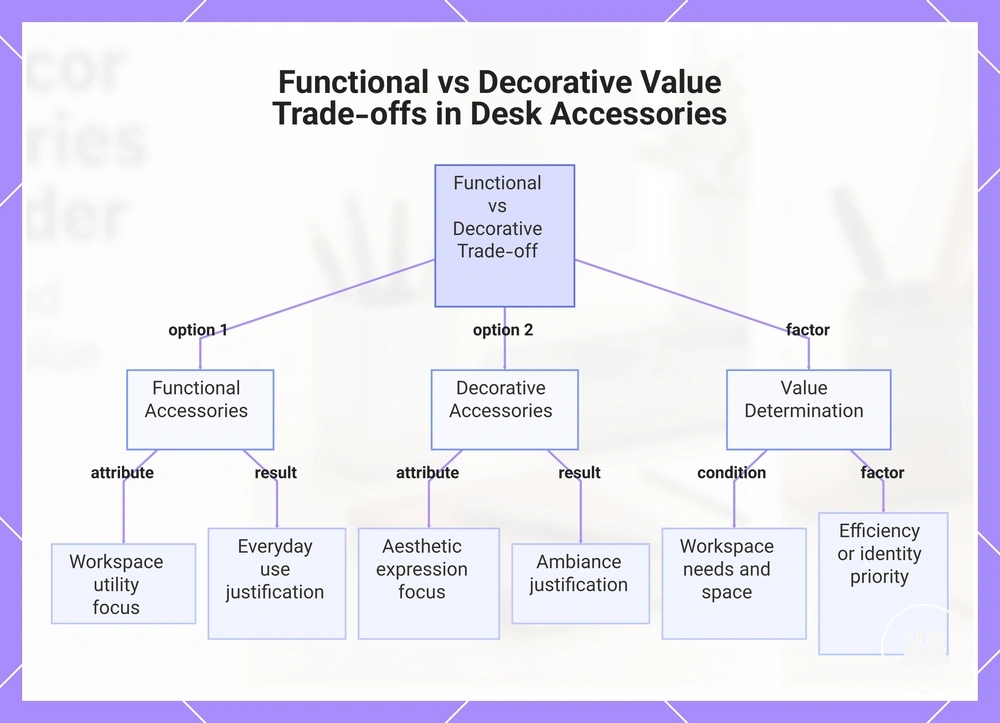
Desk decor accessories differ in value according to the balance between workspace utility and visual contribution. functional and decorative desk accessories address different workspace priorities, with functional accessories typically supporting desk organization, accessibility, and everyday usability, while decorative accessories focus on aesthetic expression and atmosphere. Neither category provides greater value in every situation because the most relevant choice depends on workspace needs, available space, and personal preferences. The primary trade-off involves practical function versus visual enhancement within the same desk environment.
Contrast: Functional accessories generally emphasize workspace utility by helping organize items, manage clutter, or support routine tasks. Decorative accessories primarily emphasize visual contribution through aesthetic expression, style, and personalization. Functional accessories may justify their desk space through everyday use, while decorative accessories may justify occupied space through ambiance and visual appeal. Hybrid accessories create overlap between these categories by combining desk organization benefits with decorative qualities. The balance between functional and decorative value often depends on whether the workspace prioritizes operational efficiency, visual identity, or a combination of both.
This chart compares functional and decorative desk accessories, highlighting their primary emphases, justifications, and the key factors that determine the best choice for a workspace.
Key Types and Use-Based Categories of Desk Decor Accessories
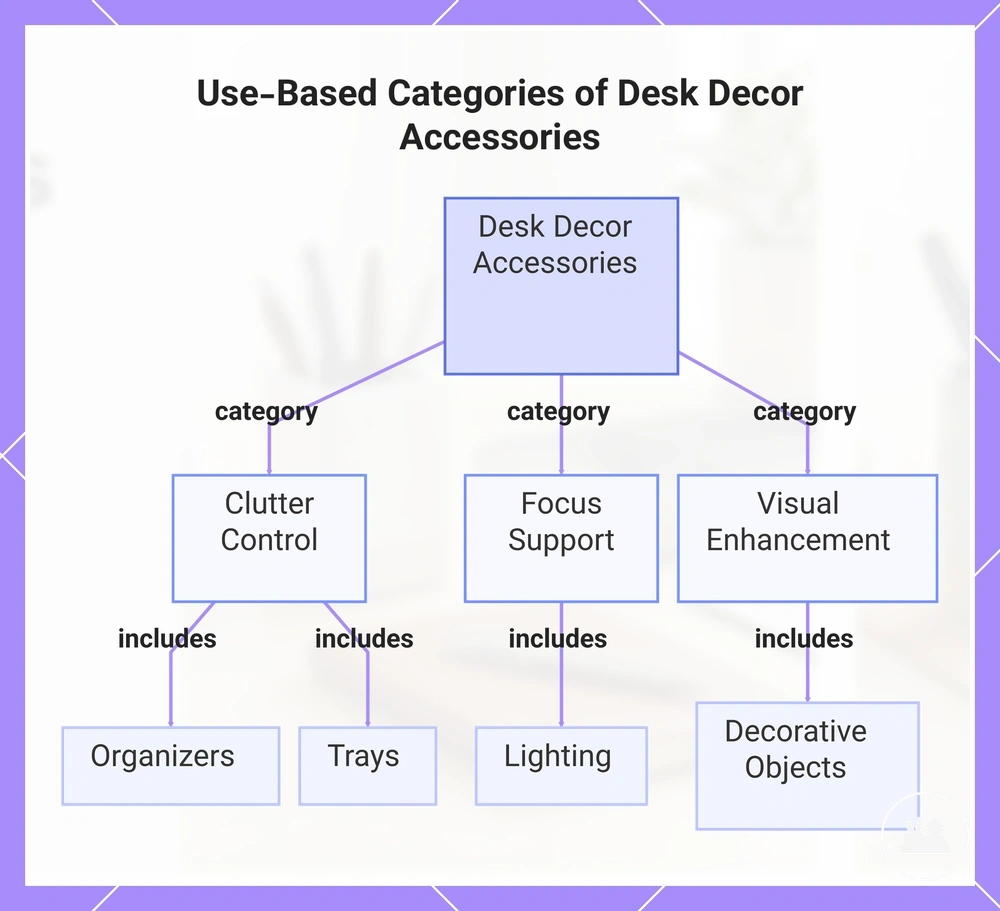
Desk decor accessories are classified most effectively by function because their role within a workspace often determines their practical value and contribution. This approach groups desk decor accessory types according to how they support clutter control, focus support, or visual enhancement rather than how they look. Classifying desk decor accessories by use creates a clearer understanding of how each category contributes to workspace organization and desk functionality.
- Organizers: Primarily support clutter control by arranging frequently used items and helping maintain an orderly workspace.
- Trays: Contribute to clutter control by containing small objects and creating designated storage zones on the desk surface.
- Lighting: Often supports focus support by improving visibility and helping define the working environment.
- Decorative objects: Primarily provide visual enhancement through aesthetic expression, personalization, and workspace character.
These categories may overlap when a desk decor accessory serves more than one function. Organizers and trays can contribute visual enhancement alongside their organizational role, while lighting may support both focus support and aesthetic atmosphere. Decorative objects mainly emphasize visual enhancement, but their contribution can vary depending on placement and available desk space. This use-based classification keeps the taxonomy focused on function and workspace contribution rather than specific products, styles, or appearance-based groupings.
This chart shows how desk decor accessories are classified by their primary function: clutter control, focus support, and visual enhancement, with examples for each category.
Workspace Compatibility for Desk Decor Accessories (Home Office, Work Desk, and Space Constraints)
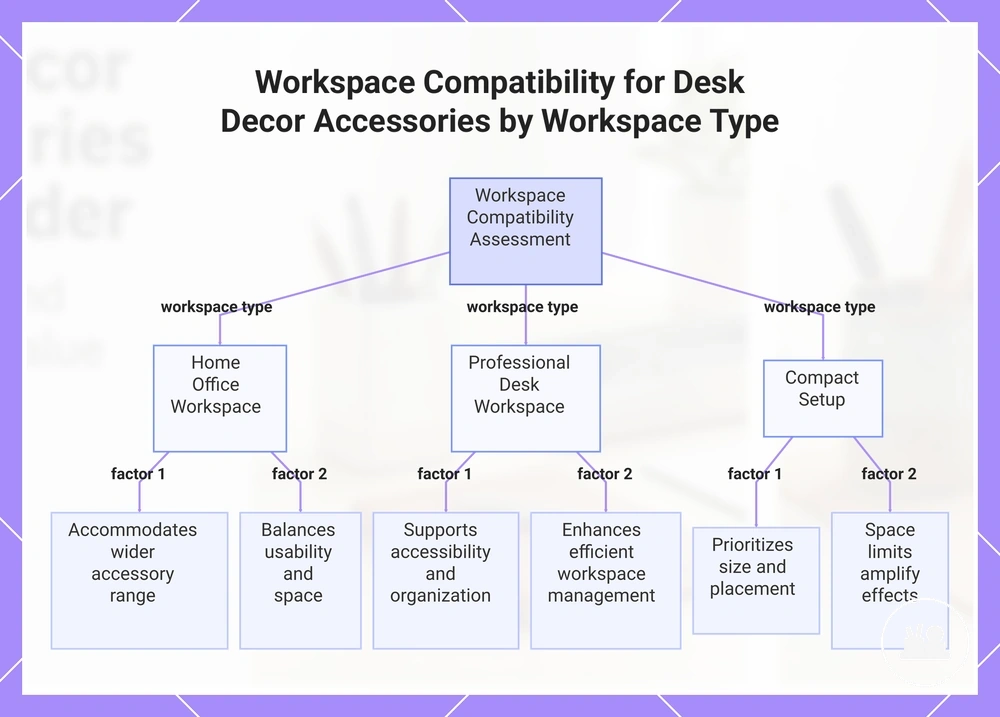
Workspace compatibility for desk decor accessories depends on how well the accessories suit the available environment, support daily activities, and fit within existing space constraints. Assessing compatibility helps determine whether desk decor accessories improve usability while preserving sufficient working area. Suitability can vary between a home office, a professional desk, and a compact setup because each workspace has different organizational and functional requirements.
- Home office: Often accommodates a wider range of desk decor accessories while still requiring a balance between usability and available space.
- Professional desk: Typically benefits from accessories that support accessibility, organization, and efficient workspace management.
- Compact setup: Places greater emphasis on space constraints, making size and placement important factors in workspace compatibility.
Workspace compatibility directly affects usability because accessories that fit the available area and workflow are often easier to integrate into daily use. Accessories that occupy excessive desk space may reduce working surfaces, limit accessibility, or make organization more difficult. In compact setups, these effects can become more noticeable because available space is already limited.
Focus may also be influenced by how desk decor accessories are arranged within a workspace. Decorative elements can contribute to a comfortable environment when they remain proportionate to the desk area, while excessive decor may create visual distraction or reduce practical usability in certain situations. The most suitable arrangement depends on balancing focus needs, usability requirements, and space constraints within the specific workspace.
This chart shows how workspace compatibility for desk decor accessories varies across three common workspace types and the key factors that determine suitability.
Budget Tiers and Cost-Value Outcomes for Desk Decor Accessories
Evaluating desk decor accessories across different budget and value levels depends on how budget tiers influence material quality, durability, usability, and design consistency. Higher spending does not automatically lead to a better value outcome because long-term suitability depends on workspace needs, usage patterns, and accessory function. A budget-based framework helps assess which characteristics may be available at different investment levels while keeping value expectations aligned with actual use.
| Budget Tier | Material Quality | Durability | Usability | Design Consistency | Value Outcome |
|---|---|---|---|---|---|
| Low | Often uses simpler materials and finishes | May vary based on construction and use | Can support basic workspace functions | Usually emphasizes practicality | May provide suitable value for straightforward needs |
| Mid | Often balances material selection and finish quality | May offer more consistent long-term use | Typically supports organization and daily usability | Often provides stronger visual cohesion | Can deliver balanced cost-value outcomes |
| High | May emphasize refined materials and workmanship | Can offer stronger durability when supported by build quality | May include enhanced usability features | Often prioritizes design consistency | Value depends on long-term use and workspace priorities |
Material quality, durability, usability, and design consistency may become more consistent as budget levels increase, but outcomes depend on the accessory and intended application. A higher-cost option may not provide a stronger value outcome when its attributes exceed workspace requirements. Likewise, a lower-cost option can remain appropriate when it adequately supports daily organization and usability needs.
Higher investment may improve long-term value when desk decor accessories are used frequently, expected to remain part of the workspace for extended periods, or selected to maintain design consistency across a desk setup. When requirements are simple or usage is limited, lower or mid-level budget tiers may provide a comparable value outcome without requiring additional spending.
Space Optimization: Small Desks, Clutter Control, and Focus-Oriented Desk Setup
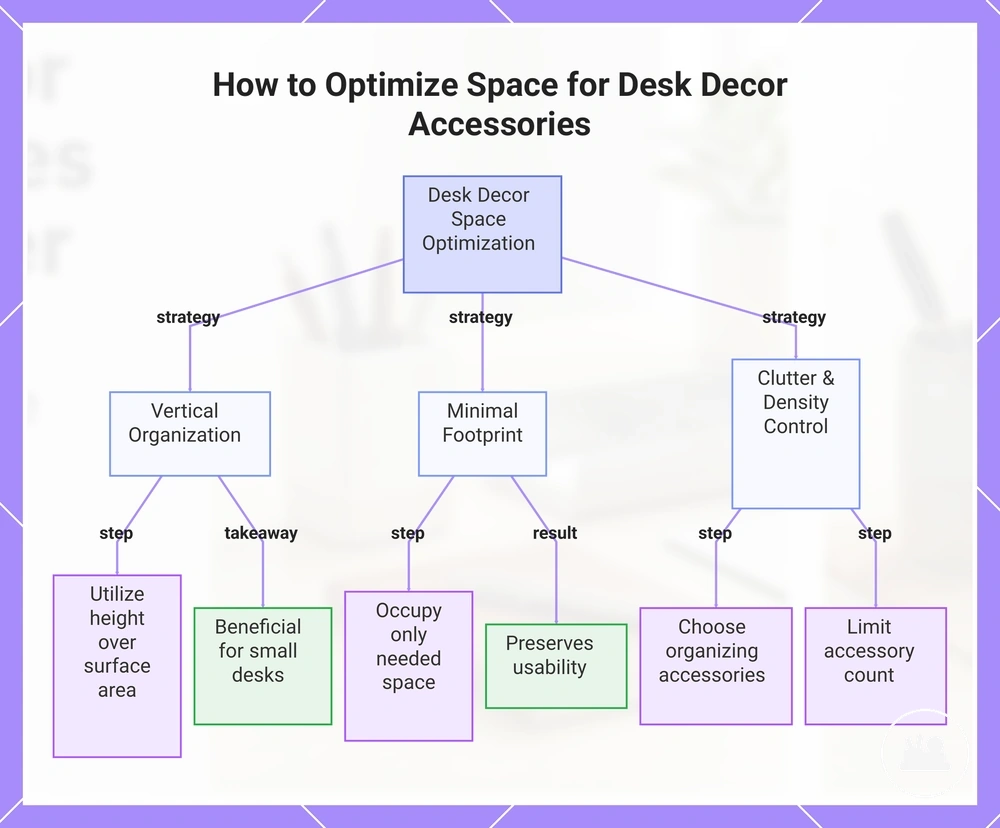
Space optimization for desk decor accessories depends on selecting items that support usability while minimizing occupied desk area. A focus-oriented setup prioritizes vertical organization, minimal footprint, and clutter reduction so that desk decor accessories contribute to workspace function without creating unnecessary desk density. When evaluating a desk decor accessory comparison, spatial efficiency is an important criterion because available surface area influences accessibility, organization, and day-to-day usability.
- Use vertical organization: Prefer accessories that utilize height instead of expanding across the desk surface.
- Maintain a minimal footprint: Select accessories that occupy only the space needed for their intended purpose.
- Prioritize clutter reduction: Choose accessories that help organize or consolidate items rather than increasing visual or physical congestion.
- Control desk density: Avoid placing too many accessories within a limited area, especially on small desks.
- Support focus: Keep frequently used work zones accessible and visually manageable.
Desk decor accessories optimize space most effectively when each item serves a clear function within the workspace. High desk density may reduce accessibility and make organization more difficult, while clutter reduction and minimal footprint strategies can help preserve usability. Vertical organization can be particularly useful on small desks because it uses available height rather than additional surface area. The most suitable arrangement depends on balancing focus, usability, and efficient space utilization instead of maximizing decorative coverage.
This chart shows the three key strategies for optimizing desk space with decor accessories: vertical organization, minimal footprint, and clutter reduction.
Decision Checklist for Choosing Desk Decor Accessories Worth Buying
Deciding whether desk decor accessories are worth buying depends on validating function, compatibility, and long-term usefulness before prioritizing appearance. A purchase checklist helps assess whether an accessory supports workspace needs, fits the available environment, and justifies the space it occupies. For final decision validation, the checklist can be used alongside broader desk decor buying criteria to evaluate suitability without relying on assumptions about value or quality.
- Durability check: Assess whether the materials and construction appear suitable for the expected level of use.
- Necessity: Determine whether the accessory serves a clear purpose within the workspace rather than duplicating an existing function.
- Aesthetic alignment: Confirm that the accessory visually fits the overall desk setup without creating unnecessary visual conflict.
- Spatial compatibility: Verify that the accessory fits the available desk area without reducing essential working space.
- Decision signals: Favor accessories that balance function, usability, and workspace integration while avoiding additions that contribute limited practical benefit.
Desk decor accessories are often easier to evaluate when each purchase checklist item is considered together. An accessory may align with the workspace visually but provide limited necessity, or it may offer useful functionality while creating spatial constraints. The most suitable decision usually depends on how durability, necessity, aesthetic alignment, spatial compatibility, and overall usability work together within the intended workspace.