Desk decor accessories for compatible work desks and home offices
Desk decor accessories for compatible work desks and home offices depend on how well they align with surface space, storage needs, professional desk requirements, and daily task flow. Compatibility is determined by whether each accessory supports function, comfort, and visual restraint without overtaking the work desk or home workspace. In this context, fit becomes the primary decision filter rather than decoration alone.
A work desk often prioritizes professional visibility, structured storage, and clear surface space for focused tasks, while a home office may allow more flexible use, mixed personal items, and adaptable layouts. The same desk decor accessories can therefore feel appropriate in one setting and distracting in another depending on how much visual restraint and organization the environment requires. Useful accessories support work activity, while purely decorative items may only fit when they do not interfere with workspace function.
The main challenge is balancing storage, organizer use, focus support, and comfort without creating mismatch risk between the accessory and the workspace type. Selecting the right setup requires evaluating how each item interacts with surface space, access frequency, and overall desk usage patterns. The following criteria-based sections will break down how to identify which desk decor accessories fit different work desk and home office scenarios more effectively.
What belongs in a work desk or home office accessory setup
Work desk or home office accessory setup refers to the collection of desk decor accessories that fit a work surface based on function, surface space, storage need, and task support rather than visual styling alone. Each item belongs in the setup only when it contributes to organization, usability, or controlled visual restraint without overwhelming the work desk layout. This separates workspace-fit accessories from general decorative objects that do not support daily work context.
The composition of a work desk setup or home office setup depends on how the space is used for focused tasks, flexible work sessions, or mixed personal and professional activity. The concept of desk decor accessories applies only when items align with the desk’s functional role and available surface space. In practice, this means selection is guided by how each element supports structure, access, and comfort within the workspace rather than appearance alone.
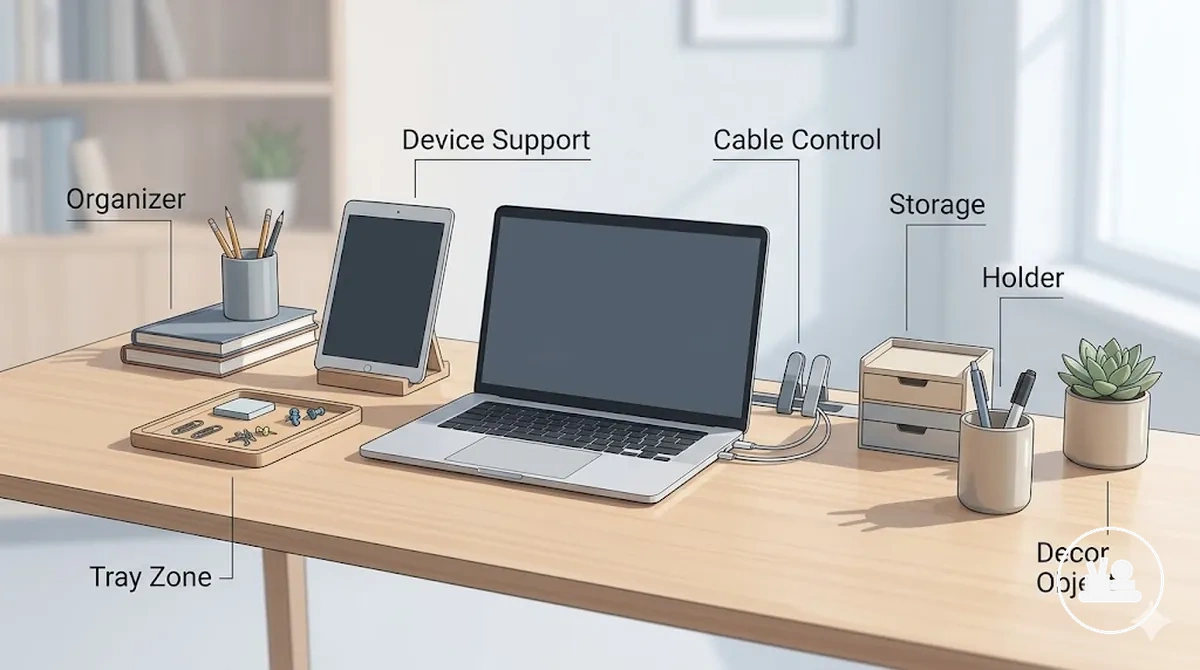
Work desk and home office accessory setups combine functional support items, storage elements, and limited visual pieces. The image below shows how these categories can be organized within a workspace while keeping surface space usable and maintaining controlled visual load.
Accessory categories in a setup:
- Organizer: Supports structured placement of small items and fits when frequent access is needed without cluttering surface space.
- Tray: Groups daily-use objects in a controlled zone and fits when reducing scattered desk items is required.
- Holder: Keeps devices or tools in a fixed position and fits when stability and quick access are needed during work tasks.
- Device support: Improves positioning or elevation of devices and fits when alignment or ergonomic viewing is required on a limited work desk.
- Cable control: Manages visible wiring and fits when maintaining visual restraint and reducing workspace interference is important.
- Storage items: Provide compact storage for essentials and fit when desk surface space must remain partially clear for active work.
- Decorative object: Adds visual presence only when it remains restrained and does not interfere with work context or surface clarity.
Compatibility criteria for professional and home workspaces
Compatibility criteria for desk accessories in professional and home workspaces depend on how well each item aligns with task load, surface area, visibility, storage demand, and personal comfort. A desk accessory is only considered compatible when it supports structured use without increasing mismatch risk in the working environment. This makes workspace fit a criteria-based decision rather than a visual or preference-driven choice.
Professional workspaces, shared desks, and home workspaces often place different demands on the same desk accessory depending on usage intensity and visibility expectations. A compact organizer or device support may suit a home workspace but feel intrusive in a shared or high-visibility professional setup if it reduces surface area efficiency. The comparison below shows how compatibility criteria shift across environments where task load and storage demand vary.
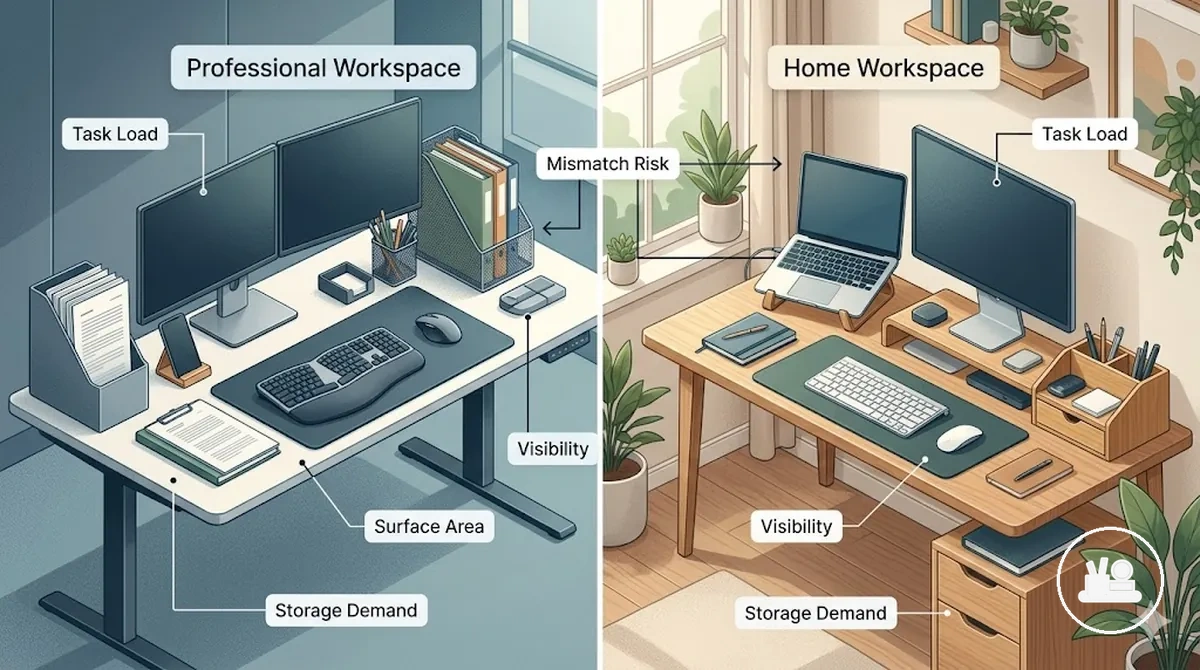
This comparison highlights how surface area, visibility control, and storage demand influence whether a desk accessory fits or creates mismatch risk across different workspace contexts.
The strongest compatibility criteria usually come from balancing task load with surface area availability, since heavy task use reduces tolerance for unnecessary objects on the desk. Visibility also plays a key role because professional workspaces often require visual restraint, while home workspaces may allow more personal flexibility. When these factors are misaligned, mismatch risk increases, especially when storage demand exceeds available space or interrupts workflow continuity.
In practice, evaluating desk decor accessory selection depends on how each item performs across professional workspace expectations, shared workspace limitations, and home workspace flexibility. The final decision remains tied to whether the accessory maintains functional balance across surface area, visibility, and task load without creating unnecessary disruption.
| Accessory type | Compatibility criterion | Good-fit condition | Mismatch risk |
|---|---|---|---|
| Organizer | Surface area efficiency | Fits when compact and supports frequent access | Clutters limited work desk space |
| Tray | Storage demand control | Fits when grouping items reduces spread | Reduces usable surface area if oversized |
| Holder | Task load alignment | Fits when it stabilizes tools used during work | Interrupts workflow if poorly positioned |
| Cable control | Visibility restraint | Fits when it reduces visual clutter | Creates restriction if over-installed |
| Device support | Ergonomic surface use | Fits when it improves viewing or access angle | Consumes space on small desks |
| Decorative object | Personal comfort balance | Fits when visually restrained and minimal | Distracts in high-focus professional setups |
Work tasks and daily desk use
Work tasks and daily desk use determine which desk accessories deserve space because writing, reading, laptop work, calls, document handling, charging, and quick-access storage each depend on a specific accessory function. Daily work tasks directly shape accessory function priority, so desk space allocation depends on recurring use rather than general setup preferences.
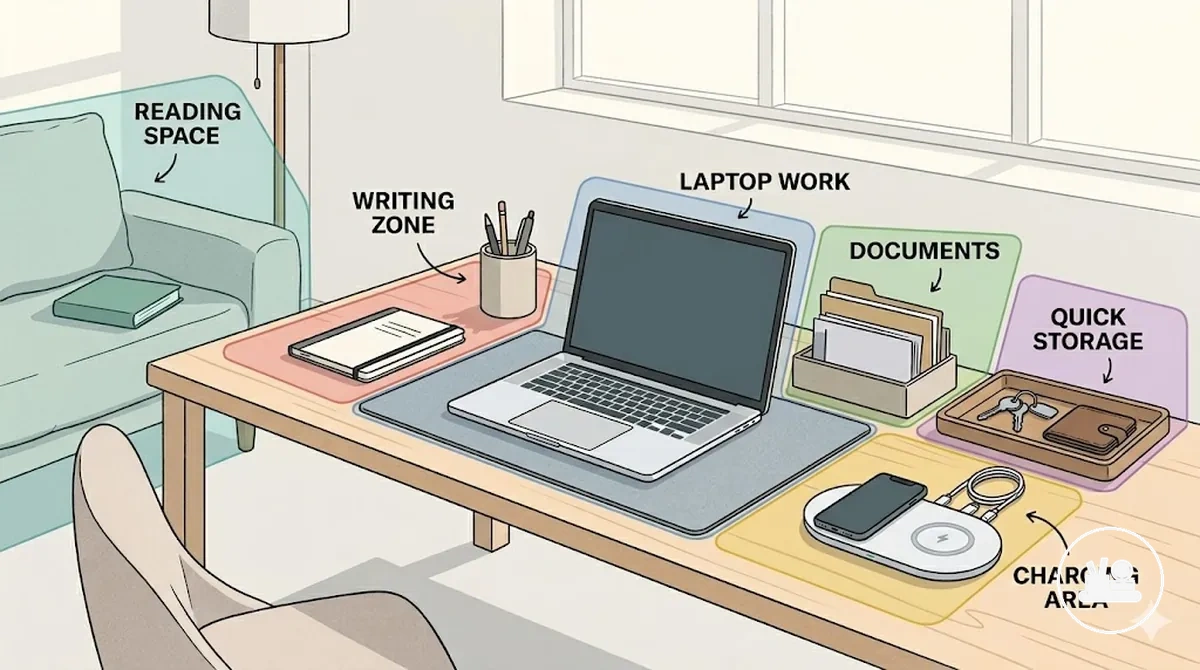
Writing tasks typically prioritize pens, notebooks, and quick-access storage placed within reach, while reading needs clear desk space for stable placement of documents. Laptop work depends on device support and cable control to maintain usable surface area and reduce clutter risk. Calls require visual restraint in the background, while document handling increases the need for structured storage like trays to avoid desk space congestion.
Task-to-accessory mini-checklist:
- Writing → quick-access storage → useful when pens and notebooks remain within immediate reach zone
- Reading → open desk space → useful when surface remains clear for documents and stable viewing
- Laptop work → device support + cable control → useful when screen stability and surface clarity are maintained
- Calls → visual restraint → useful when desk background remains clean and distraction-free
- Document handling → storage/tray → useful when paper flow is separated from active desk space
- Charging → organized access zone → useful when devices stay arranged without blocking work area
Professional visibility and shared-space limits
Professional visibility and shared-space limits determine how much desk decor is acceptable because what appears in a camera background, client-facing view, or shared desk environment directly affects tolerance for personal items and visual density. In a work context where the desk is regularly visible to others, color restraint, novelty risk, and removable accessories tend to matter more for maintaining a neutral appearance. These visibility conditions make professional visibility the main filter for selecting what stays on the desk.
In private use, such as a home office, there is usually more flexibility for personal items and visual variation, while shared desks or camera-facing setups tend to reduce that flexibility based on exposure level rather than a fixed style rule. The same accessory can feel suitable or distracting depending on how visible the work context is to clients, colleagues, or household members.
Visibility contrast by context:
- Private home office → higher tolerance for personal items and flexible visual setup
- Shared desk → lower tolerance for clutter due to shared-space limits
- Camera background → stronger need for visual restraint and neutral appearance
- Professional visibility → preference for removable accessories and reduced novelty risk
In practice, acceptable desk decor choices depend on how often the workspace appears in a visible setting and how easily items can be adjusted or removed. Accessories that remain neutral in appearance and support easy repositioning tend to adapt better across changing visibility conditions in shared or camera-facing environments. :contentReference[oaicite:0]{index=0}
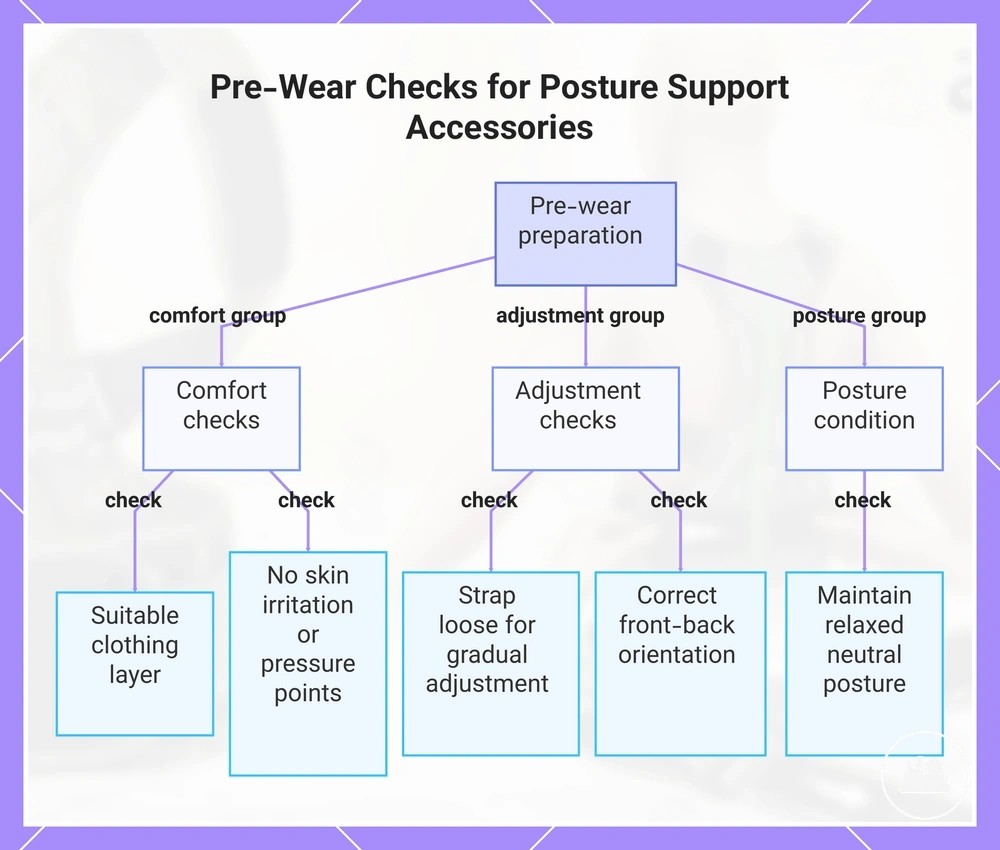
This chart shows how professional visibility and shared-space limits influence the acceptability of desk decor, including context-specific flexibility and design guidelines.
Home office comfort and flexible use
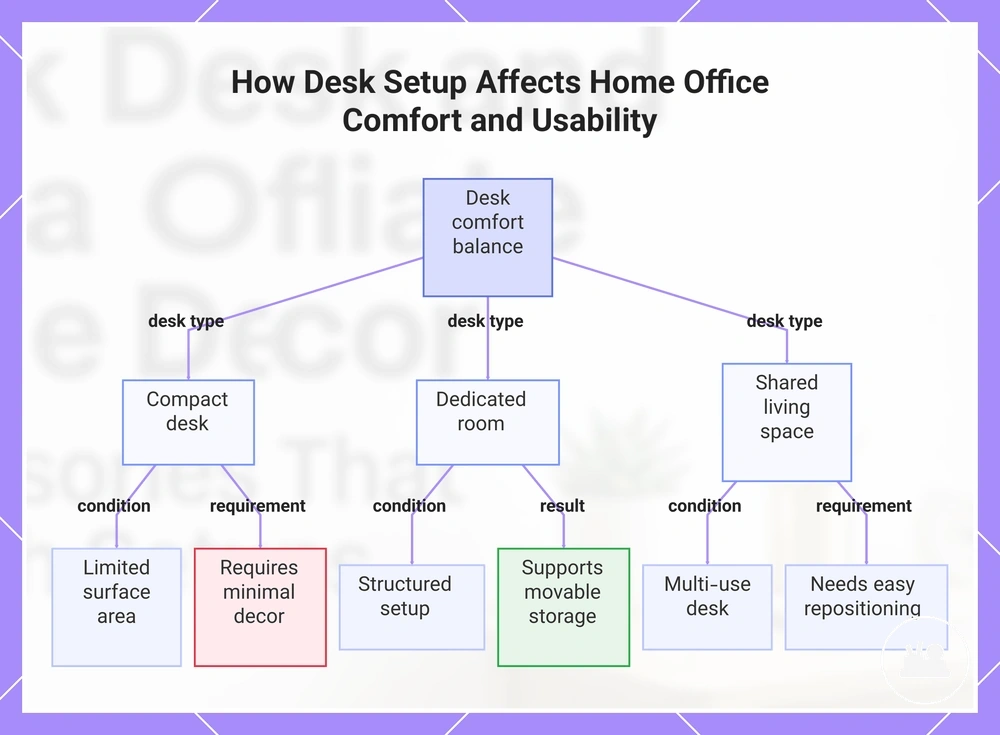
Home office comfort and flexible use depend on how movable storage, personal decor, and soft visual elements align with work-surface function and usability. In multi-use desk setups, home office comfort is compatible when it supports work use without reducing usable surface function or interfering with everyday task handling. This balance determines whether comfort elements enhance or compete with usability in flexible desk environments.
In compact desks, home office comfort elements usually need tighter placement control because limited surface area reduces tolerance for excess objects. Dedicated rooms often allow more flexible use of movable storage and personal decor while still maintaining clear work-surface function. In shared living-space desks, arrangements tend to shift more frequently since the same surface supports both work and non-work use depending on context and access needs.
Flexible use conditions:
- Compact desk → limited surface area → requires minimal personal decor to preserve usability
- Dedicated room → structured setup → supports movable storage with stable work-surface function
- Shared living space → multi-use desk → needs easy repositioning of soft visual elements
This chart shows how home office comfort and usability balance differently in three common desk environments: compact desk, dedicated room, and shared living space.
Desk organizers and desktop storage for work surfaces
Desk organizers and desktop storage for work surfaces depend on item type, access frequency, and footprint, because placement must balance reach, clarity, and clutter risk on the work surface. The selection decision determines whether an item stays on the desktop, moves into a drawer or shelf, or shifts to off-desk storage based on how often it is used and how much space it occupies. Storage fit therefore becomes a placement filter driven by usage behavior and surface limitation.
When desk organizers are not aligned with usage needs, the work surface quickly becomes crowded and harder to navigate. Desktop storage helps structure items that require frequent reach, but only when the footprint does not interfere with usable workspace. The main problem is not lack of storage options but mismatch between storage type and actual task usage patterns.
Access frequency and footprint directly shape placement decisions. Items used many times during work sessions require closer reach on the desktop, while low-frequency items are better suited for drawer storage. Larger storage units increase clutter risk if they occupy too much surface area relative to their function on the work surface.
Placement decisions for desk organizers and desktop storage depend on balancing reach, footprint, and item type. Frequently used tools can remain on the desktop for quick access, while rarely used items should move to drawer or off-desk storage to preserve surface clarity. Shelf storage works best for medium-frequency items that do not require constant reach but still need structured organization outside the main workspace.
Desk organizers and desktop storage for work surfaces follow clear EAV-based placement logic where organizer type determines its storage attribute, which then defines suitability for reach, clarity, or clutter risk control.
Here is a structured selection view for common storage options:
| Storage option | Item type | Good-fit condition | Move off desk when |
|---|---|---|---|
| Tray | Documents, small tools | When grouping improves reach and reduces spread | When footprint reduces usable work surface |
| Pen holder | Writing tools | When frequently accessed during tasks | When tools are rarely used |
| Document sorter | Papers, files | When active sorting is required on desk | When documents move to archive state |
| Small box | Mixed small items | When quick access is needed without drawer dependency | When items are not part of daily workflow |
| Cable holder | Cables, chargers | When maintaining reach and reducing surface spread | When cables are routed permanently elsewhere |
| Device stand | Laptops, tablets | When supporting frequent on-desk device use | When devices shift to fixed external setups |
Paper, stationery, and small-item control
Paper, stationery, and small-item control depends on item frequency and storage need because quick access must stay balanced against visual noise on the work surface. Pens, sticky notes, documents, clips, notebooks, cards, and small tools should be placed based on how often they are used and how quickly they are needed during work. High-frequency items stay closer to reach zones, while low-frequency items move away from the desktop to reduce visual noise.
The main challenge is maintaining quick access without disrupting work-surface function. Small-item control solves this by matching each item to a storage need defined by its usage pattern. The mini-checklist below connects item type, storage need, and placement condition to keep paper and stationery structured without clutter.
Paper, stationery, and small-item control can be organized through the following logic:
- Pens → require quick access → placed in reach zone when used frequently, reducing interruption during writing
- Sticky notes → require visible access → placed near the edge of the desk when actively used for reminders
- Documents → require structured paper storage → placed in trays during active use, moved away when not needed
- Clips → require compact containment → stored when not frequently used to limit visual noise
- Notebooks → require stable access → kept on the desktop when active, otherwise moved to drawer storage
- Cards and small tools → require low-frequency storage → kept in drawer or off-desk storage to preserve clarity
Cable, device, and surface-space control
Cable control and device support depend on how much usable surface space must be preserved during daily work because cables, chargers, and device stands can either organize a workspace or create obstruction. When managed correctly, laptop stand, phone stand, cable clips, charging pad, and desk mat support surface clearance while reducing clutter pressure on the work area. The goal is to balance device usability with surface-space control without increasing obstruction risk.
In laptop-focused setups, a laptop stand or device support may improve viewing position but can reduce available surface space depending on footprint size. Phone stand and charging pad placements typically require fixed zones that should not interfere with active writing or document handling areas. Cable clips help group loose cables to reduce spread across the desk, while a desk mat defines the working zone and may either improve usability or limit flexibility depending on coverage. These elements directly affect surface clearance and obstruction levels.
Cable, device, and surface-space control can be evaluated through the following placement conditions:
- Laptop stand → device support → requires stable surface zone → may increase obstruction when desk space is limited
- Phone stand → quick device access → requires edge placement → may reduce usable surface space in compact layouts
- Cable clips → cable control → require grouping zones → reduce obstruction from loose cable spread
- Charging pad → device support → requires fixed charging area → may compete with active work zones
- Desk mat → surface space structuring → defines work area → may reduce flexible rearrangement options
Professional desk accessory sets and coordinated essentials
Desk accessory sets are useful when coordinated essentials improve visual consistency and match an existing workspace fit without creating redundancy, while individual pieces like a single organizer, tray, holder, or mat work better when the desk has specific functional gaps. The choice depends on how well the set composition aligns with real storage needs rather than appearance alone, making set-fit logic the primary decision factor.
In a shared or visually structured workspace, coordinated essentials may help align surface elements into a consistent layout, especially when multiple small items need unified placement. In contrast, a workspace that already has partial organization may benefit more from adding only single organizers or storage pieces instead of introducing a full set that duplicates function.
Coordinated essentials typically combine a tray, holder, mat, or storage piece to maintain visual consistency and simplify arrangement across the surface. This can support a cleaner layout when each component serves a distinct function, but effectiveness depends on whether each item matches an actual workspace need rather than repeating similar roles.
However, desk accessory sets can create redundancy when multiple components overlap in function or occupy more surface space than required. In such cases, individual essentials often provide better workspace fit because they target specific needs without adding unnecessary items that reduce flexibility.
Professional desk accessory sets and coordinated essentials can be evaluated through the comparison below, focusing on function, visual consistency, workspace fit, and redundancy risk to support clearer decision-making.
| Criteria | Coordinated essentials | Individual accessories |
|---|---|---|
| Fit trigger | When multiple desk elements need unified visual and functional alignment | When only specific gaps in organization or storage need to be filled |
| Main benefit | Improves visual consistency and structured arrangement across the desk | Targets precise functional needs with minimal footprint |
| Main risk | May introduce redundancy or occupy unnecessary surface space | May reduce visual consistency if items are selected independently |
| Best use case | When workspace requires coordinated layout across multiple accessories | When improving isolated workspace functions |
:contentReference[oaicite:0]{index=0}
Single accessories versus desk accessory sets
Single accessories versus desk accessory sets depend on existing desk gaps and visual consistency across the workspace. Single accessories solve a specific problem with lower footprint, while desk accessory sets provide coordinated coverage but may introduce redundancy risk depending on the setup.
The decision between single accessories and desk accessory sets becomes clearer when comparing how each option handles functional coverage versus space efficiency. The table below contrasts single item use with coordinated sets in terms of problem focus, visual consistency, footprint, and redundancy risk.
| Choice | Solves best | Main risk | Use when |
|---|---|---|---|
| Single accessories | Specific problem or missing desk function | May lack visual consistency if used independently | Existing desk gaps require targeted correction with lower footprint |
| Desk accessory sets | Coordinated coverage across multiple desk needs | Higher footprint and redundancy risk if functions overlap | Workspace benefits from matching condition and unified layout |
:contentReference[oaicite:0]{index=0}
Useful accessories before decorative extras
Useful accessories before decorative extras depend on work-surface needs because access, storage, surface protection, device support, and cable control must be satisfied before adding low-distraction decor. The function-first rule prioritizes usability, while decorative extras are evaluated only after core workspace requirements are stable, making keep, replace, or remove decisions based on practical necessity.
Decorative value is not excluded, but it shifts in priority when work-surface needs are incomplete. Low-distraction decor can remain when it does not interfere with access, storage flow, or device support, while items that create visual weight without function are typically reconsidered. The distinction is whether an item supports the workspace structure or only adds visual presence.
For structured evaluation, useful accessories before decorative extras can be translated into a decision checklist that applies criteria to access, storage, surface protection, device support, cable control, and low-distraction decor. This aligns with broader guidance on functional desk accessories and helps separate functional fit from purely visual additions.
- Access → criterion: improves reach and usability → keep when frequently used items are within reach, replace when access flow becomes inefficient, remove when blocked or unnecessary
- Storage → criterion: organizes work items → keep when it reduces clutter, replace when structure no longer matches usage, remove when unused capacity adds bulk
- Surface protection → criterion: protects desk surface → keep when preventing wear, replace when coverage is excessive, remove when unnecessary bulk is introduced
- Device support → criterion: stabilizes or positions devices → keep when improving usability, replace when setup changes, remove when obstructive or unused
- Cable control → criterion: reduces cable spread → keep when improving order, replace when routing changes, remove when no longer needed
- Low-distraction decor → criterion: minimal visual impact → keep when subtle and compatible, replace when visual weight increases, remove when it distracts without function
:contentReference[oaicite:0]{index=0}
Modern and stylish accessories that still fit work context
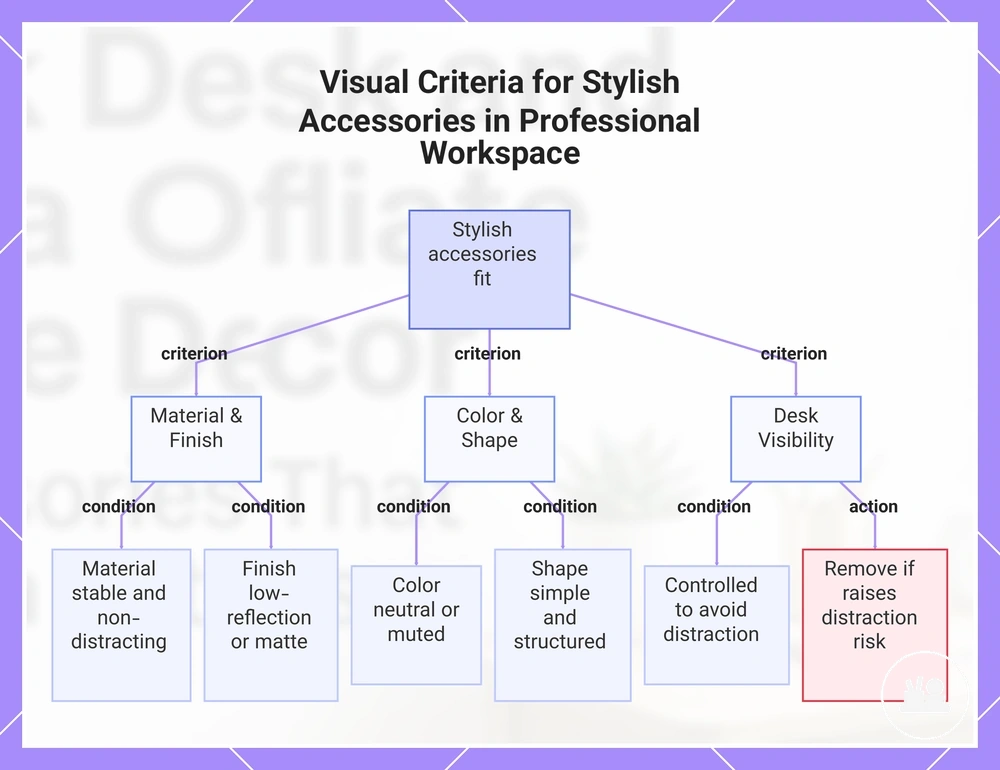
Modern desk decor accessories and stylish accessories fit a work context only when their visual design supports professional use and maintains visual restraint. Their compatibility depends on material, finish, color, shape, and desk visibility working together with functional needs rather than overriding them. Style acts as a compatibility filter, where form is accepted only if it supports work behavior and does not interfere with focus or usability.
In real workspace scenarios, modern accessories often rely on clean materials, muted finishes, controlled color palettes, and simple shapes to align with professional use. These attributes can support coherence when they reduce visual disruption and maintain a consistent desk environment. However, reflective finishes, high-contrast colors, or complex shapes may increase desk visibility in a way that contributes to distraction or reduces clarity in work-surface use.
Modern and stylish accessories that still fit work context can be assessed through visual criteria that determine whether they support or disrupt functional coherence.
- Material → acceptable when stable and non-distracting → keep when it supports visual restraint, replace when it increases visual noise
- Finish → acceptable when matte or low-reflection → keep when coherence is maintained, remove when glare or distraction appears
- Color → acceptable when neutral or muted → keep when it blends into work context, replace when it dominates attention
- Shape → acceptable when simple and structured → keep when clarity is preserved, remove when visual complexity increases
- Desk visibility → acceptable when controlled → keep when focus remains stable, remove when it increases distraction risk
For broader context on selection patterns, modern desk decor accessories can be evaluated as a style group that must remain subordinate to functional workspace needs rather than replacing them.
Even when modern and stylish accessories fit a work context, mismatch risk increases when visual design overrides access, storage, surface protection, device support, or cable control. Style should refine the work setup, not replace functional priorities such as usability and structure.
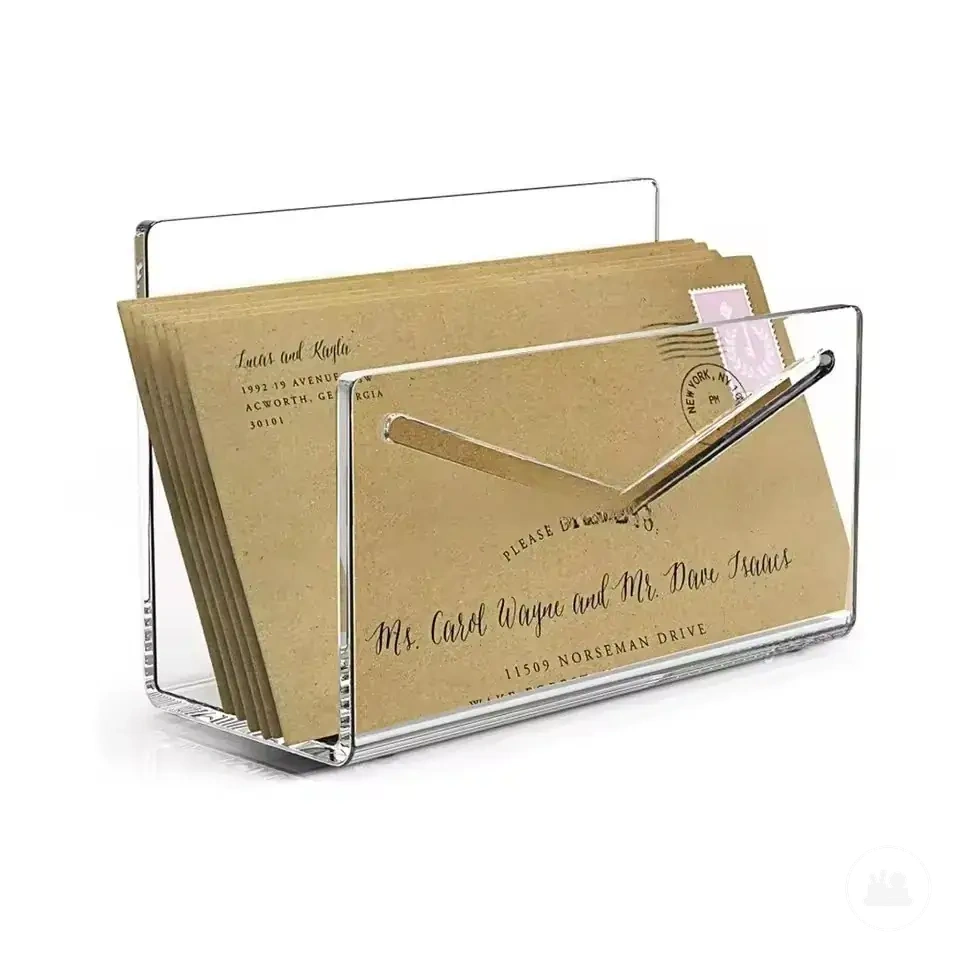
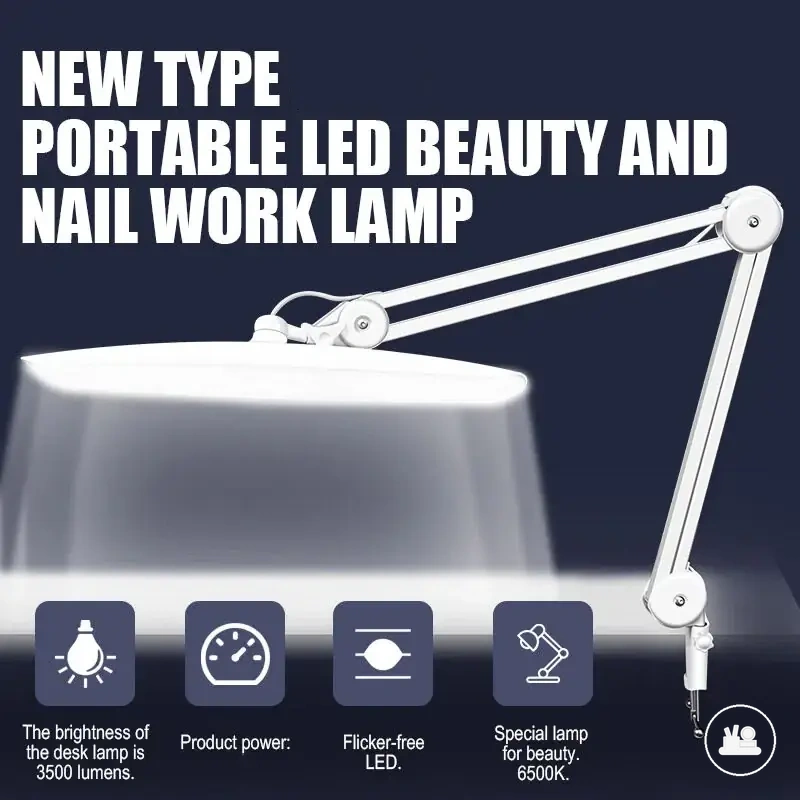
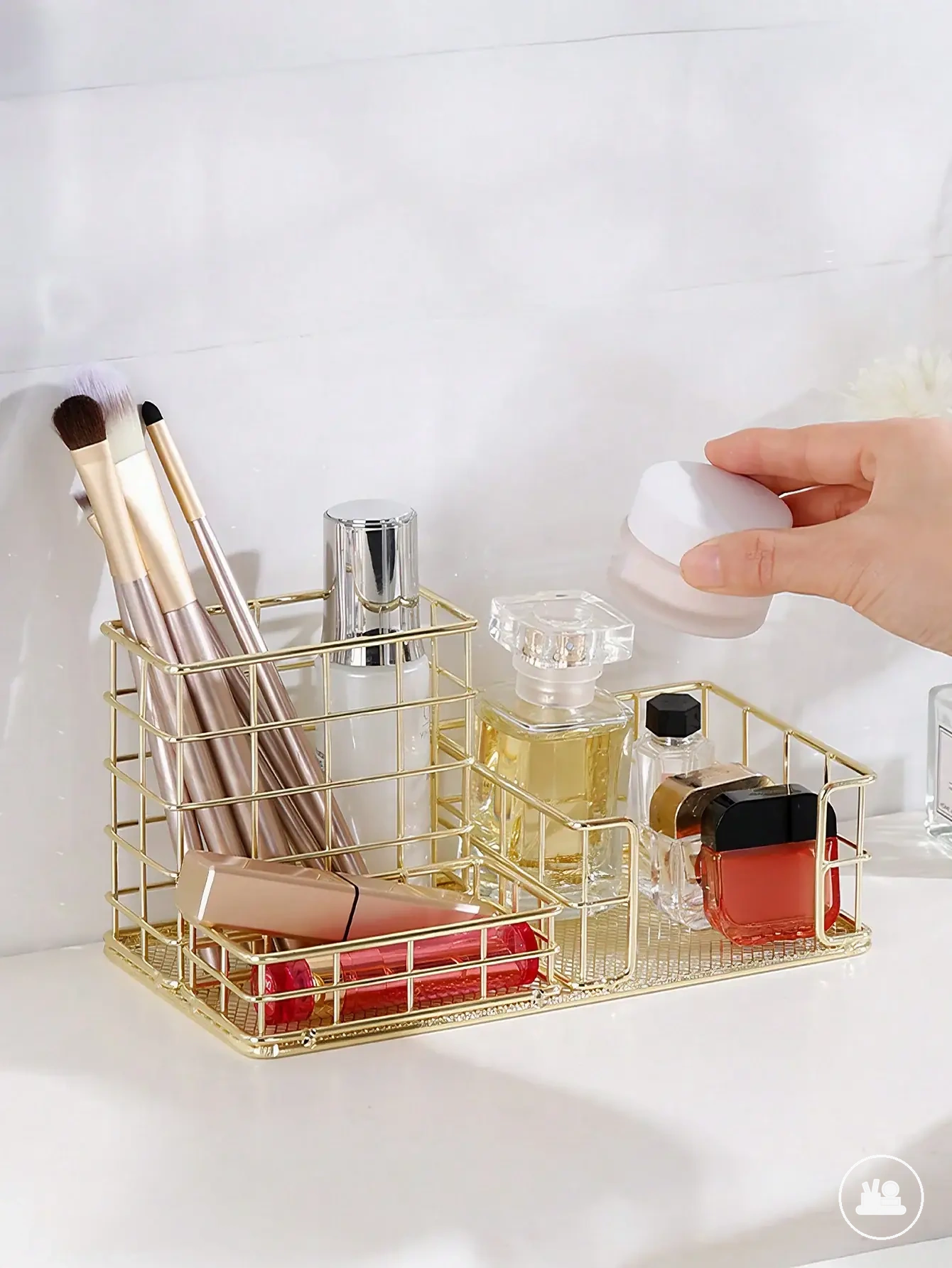
The products below are useful examples for comparing available options. Before buying, check that the compatibility criteria, key features, and product details match your needs.


This chart shows the five visual attributes that determine whether modern desk accessories support focus and professional use.
Accessories that support focus without taking over the desk
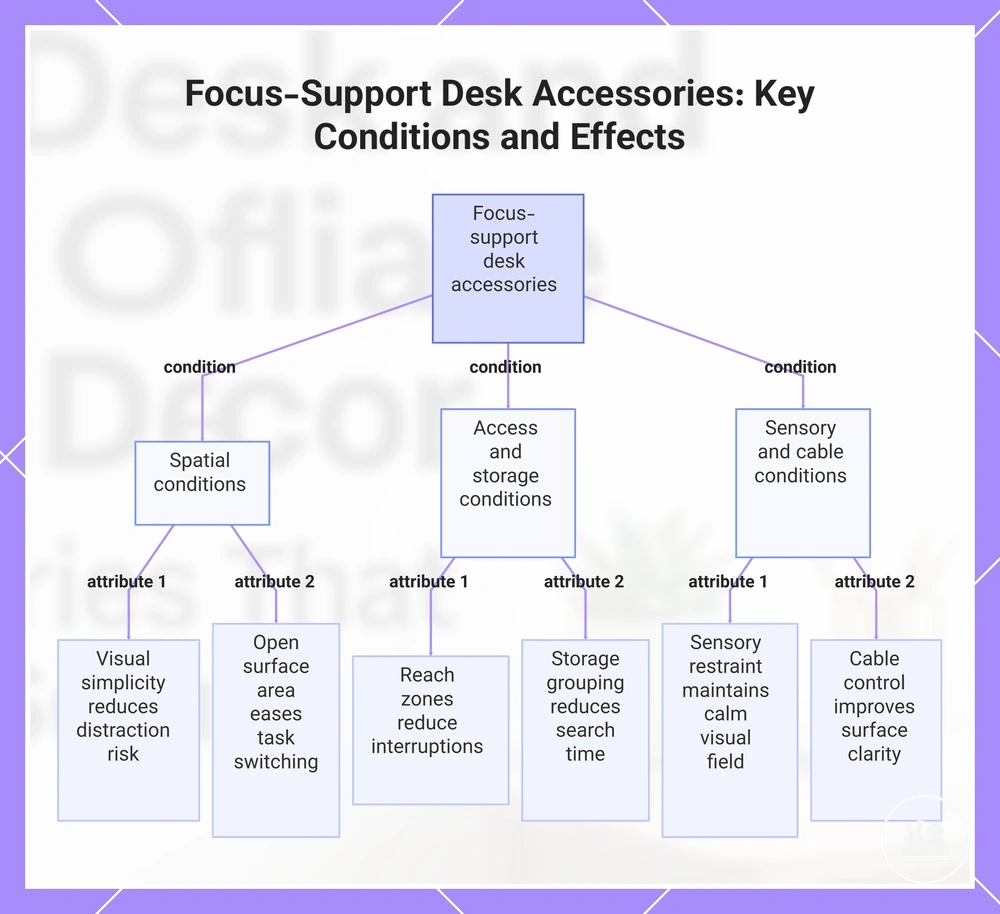
Accessories can support focus when they reduce friction, organize recurring work items, and maintain clear visual boundaries on the desk. This focus support is conditional and depends on user habits, task type, and desk constraints such as open surface area, reach zones, and cable control. When these elements are balanced, accessories help structure the workspace without taking over it.
Friction on a desk often appears when items interrupt movement between recurring work tasks or reduce usable surface clarity. Storage grouping, visual simplicity, and sensory restraint can reduce this friction by keeping essential tools within defined reach zones and limiting unnecessary surface spread. However, when accessories exceed functional needs, they can reduce rather than support focus by increasing visual load.
Accessories that support focus without taking over the desk can be assessed through a simple checklist that connects accessory attributes with likely focus-support conditions and outcomes. Evaluation depends on how they interact with user habits, task type, and workspace constraints.
- Visual simplicity → condition: clean layout with minimal elements → likely effect: supports clearer visual boundaries and reduces distraction risk
- Open surface area → condition: sufficient empty desk space remains → likely effect: supports easier task switching and reduces clutter pressure
- Reach zones → condition: recurring work items placed within easy access → likely effect: reduces interruption during repeated tasks
- Cable control → condition: cables grouped or routed away from active space → likely effect: improves surface clarity and reduces visual friction
- Storage grouping → condition: related items stored together → likely effect: reduces search time and supports structured workflow
- Sensory restraint → condition: low-contrast, non-dominant objects → likely effect: maintains calmer visual field depending on user habits
desk decor accessories for focus provides deeper patterns for aligning workspace setup with focus-oriented usage conditions and constraints.
Even when accessories support focus, limitations still depend on how user habits interact with desk constraints such as space availability and task switching frequency. Overuse of accessories may reduce open surface area or weaken visual simplicity, so adjustments are often needed to maintain balance between structure and flexibility.
The products below are useful examples for comparing available options. Before buying, check that the compatibility criteria, key features, and product details match your needs.
This chart shows the six key workspace conditions that help desk accessories support focus without taking over the desk, along with their positive effects.
When work desk decor accessories are a poor fit
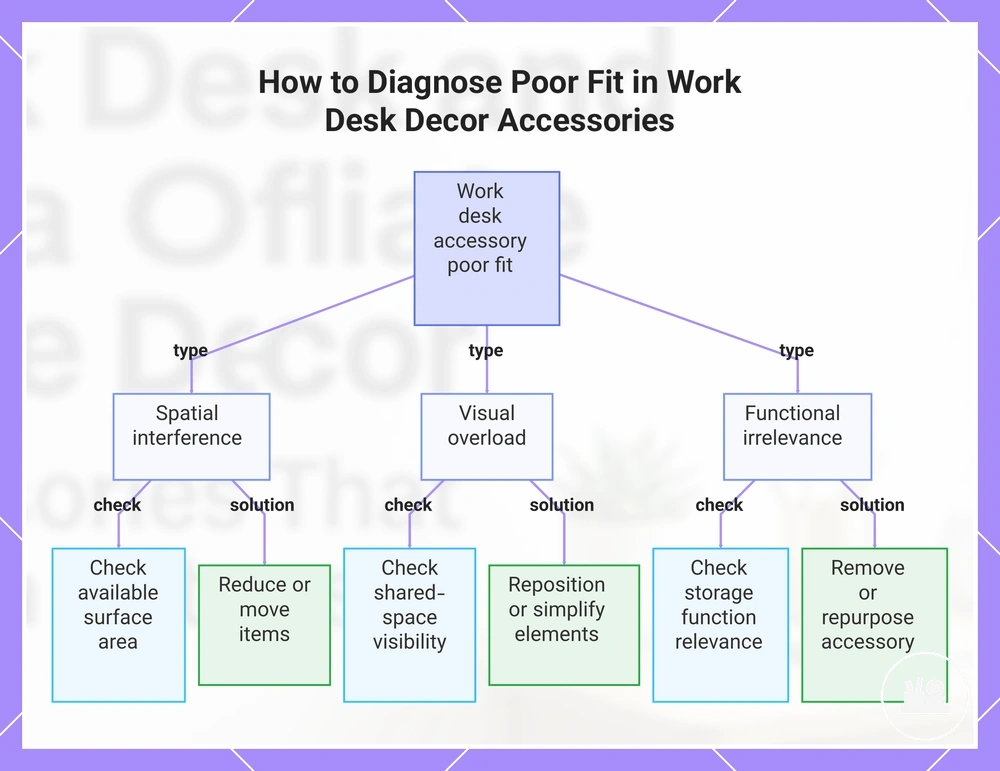
Poor fit in work desk decor accessories appears as crowding, distraction, poor access, visual mismatch, or low usefulness. These are clear signals of reduced workspace compatibility and indicate that an accessory no longer supports the functional balance of the desk.
These mismatch signals should be evaluated based on desk size, task frequency, shared-space visibility, and storage role. A poor fit is not only about appearance but about how the accessory behaves within daily workflow and whether it interferes with usability or clarity.
When work desk decor accessories are a poor fit, the condition can be diagnosed using a structured checklist that connects symptom, likely cause, check, adjustment, and expected improvement.
- Crowding → likely cause: limited desk size or excessive surface occupation → check: available surface area → adjustment: move or reduce items → expected improvement: improved workspace clarity
- Distraction → likely cause: high visual presence or weak visual restraint → check: shared-space visibility → adjustment: reposition or simplify nearby elements → expected improvement: reduced visual load
- Poor access → likely cause: incorrect placement relative to task frequency → check: reach zones and workflow → adjustment: relocate or group items → expected improvement: smoother task handling
- Visual mismatch → likely cause: inconsistency with workspace setup → check: desk coherence → adjustment: reposition or replace → expected improvement: better visual alignment
- Low usefulness → likely cause: weak or unused storage role → check: storage function relevance → adjustment: remove or repurpose → expected improvement: more efficient desk usage
Adjustments depend on whether the issue is caused by placement rather than the accessory itself. In many cases, repositioning or regrouping improves workspace compatibility without replacing functional items.
desk accessory arrangement applies when the issue is related to placement and spatial organization rather than the accessory choice itself.
Poor fit should be treated as a compatibility signal that requires review rather than immediate removal in all cases. Outcomes remain conditional based on desk size, task frequency, and user habits.
This chart categorizes poor fit symptoms into spatial, visual, and functional issues, with key checks and adjustments, keeping in mind that poor fit is a compatibility signal requiring repositioning rather than immediate removal.